TOWARD NET ZERO – DRIVES TRANSPARENCY ON CARBON FOOTPRINT ACROSS THE COFFEE VALUE CHAIN
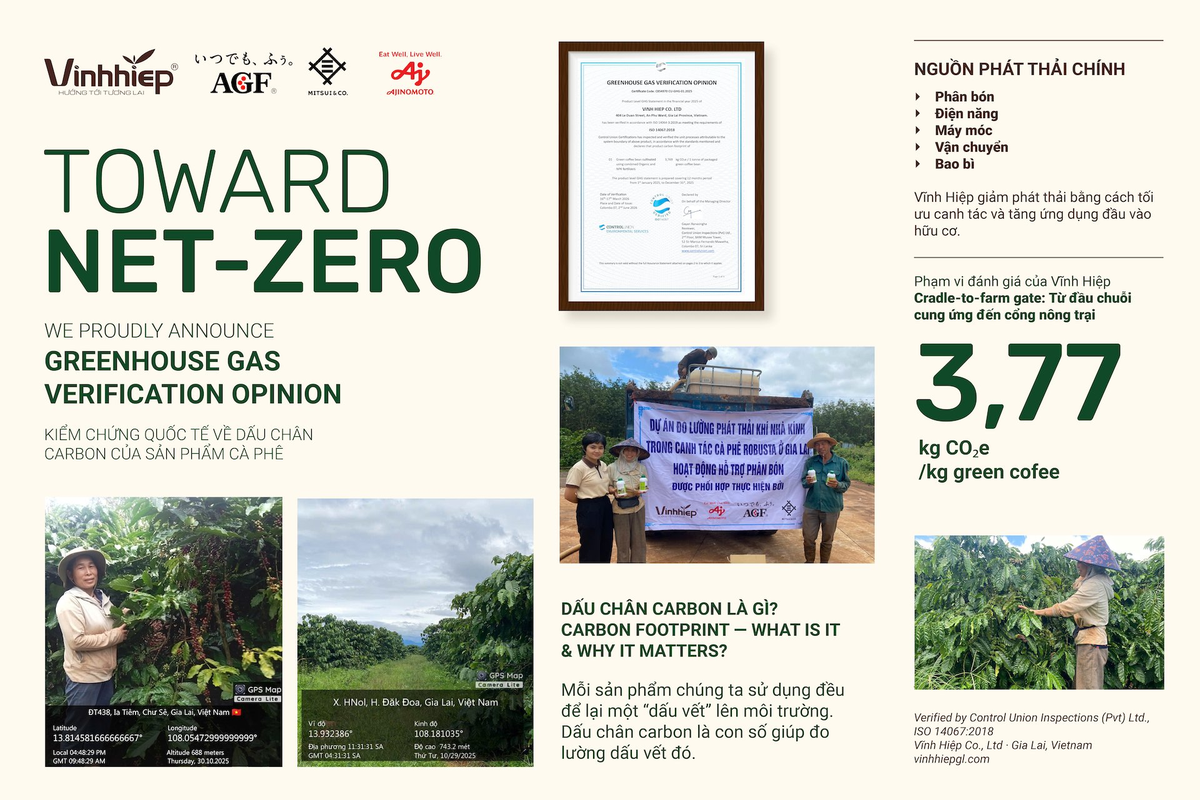
Vinh Hiep is proud to announce the results of an independent verification of the Vietnam coffee carbon footprint for its green coffee bean product, conducted in accordance with the international standard ISO 14067:2018. Verified and issued by Control Union on 2 June 2026, the result is 3.77 kg CO₂e per kilogram of green coffee beans produced, measured to the farm gate.
How is Vietnam’s coffee carbon footprint being measured?
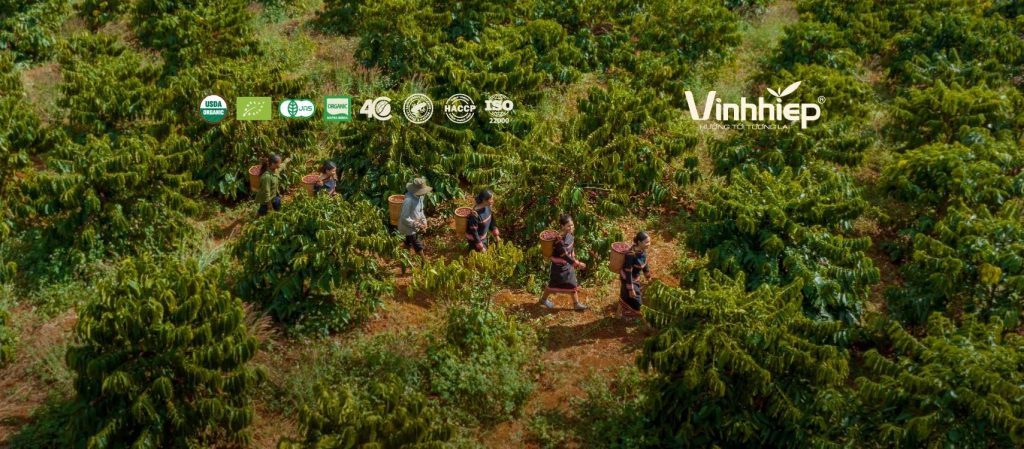
A great cup of coffee comes not only from its flavor, but from how it is made. From cultivation, fertilizer use, and processing to packaging, every kilogram of coffee leaves behind a certain amount of greenhouse gas emissions. For many years, the Vietnam coffee carbon footprint has largely remained a data gap: the domestic coffee sector has focused mainly on farming certifications (4C, Rainforest Alliance, organic) and, more recently, traceability under the EU’s EUDR requirements. Yet quantified, product-level emissions data — independently verified by a third party — has remained rare.
This is precisely the gap that Vinh Hiep, one of Vietnam’s leading Robusta coffee exporters headquartered in Pleiku, Gia Lai, has now filled. Through a research and verification project carried out in 2025, Vinh Hiep has published its Vietnam coffee carbon footprint figure for green coffee beans, measured using a scientific methodology and independently verified against international standards.
What is ISO 14067:2018 and why does it matter?
ISO 14067:2018 is the international standard that defines the methodology for calculating a Product Carbon Footprint (PCF) based on Life Cycle Assessment (LCA). It is used to quantify emissions, after which an independent organization is engaged to verify the accuracy of the results.
The standard requires four core elements:
- A rigorous, science-based product life cycle assessment methodology;
- A clearly defined system boundary;
- Transparent documentation of data sources and assumptions used;
- Independent third-party verification to confirm accuracy, completeness, and the absence of material misstatement.
For the Vietnam coffee carbon footprint, measurement under ISO 14067 with independent verification is becoming an increasingly common requirement from international buyers — especially as major importing markets tighten supply chain (Scope 3) emissions reporting requirements and multinational corporations advance their net-zero commitments.
Project methodology
Vinh Hiep’s Vietnam coffee carbon footprint project was carried out through two independent roles, in line with the transparency principles of ISO 14067:
- Peterson Solutions Australia and Vietnam, a specialized sustainability consultancy, conducted the Life Cycle Assessment (LCA) — collecting real-world data from cultivation, harvesting, drying, and packaging activities at the farming households supplying Vinh Hiep, and calculating and reporting emissions in accordance with ISO 14067:2018.
- Control Union Inspections (Pvt) Ltd., an internationally accredited greenhouse gas verification body, served as the independent reviewer: re-examining all data, calculation methods, and results to confirm that Vinh Hiep’s emissions report is accurate, complete, and free of material misstatement. The Greenhouse Gas Verification Opinion was issued by Control Union on 2 June 2026, following an on-site assessment conducted on 16–17 March 2026.
Vinh Hiep’s Vietnam coffee carbon footprint result
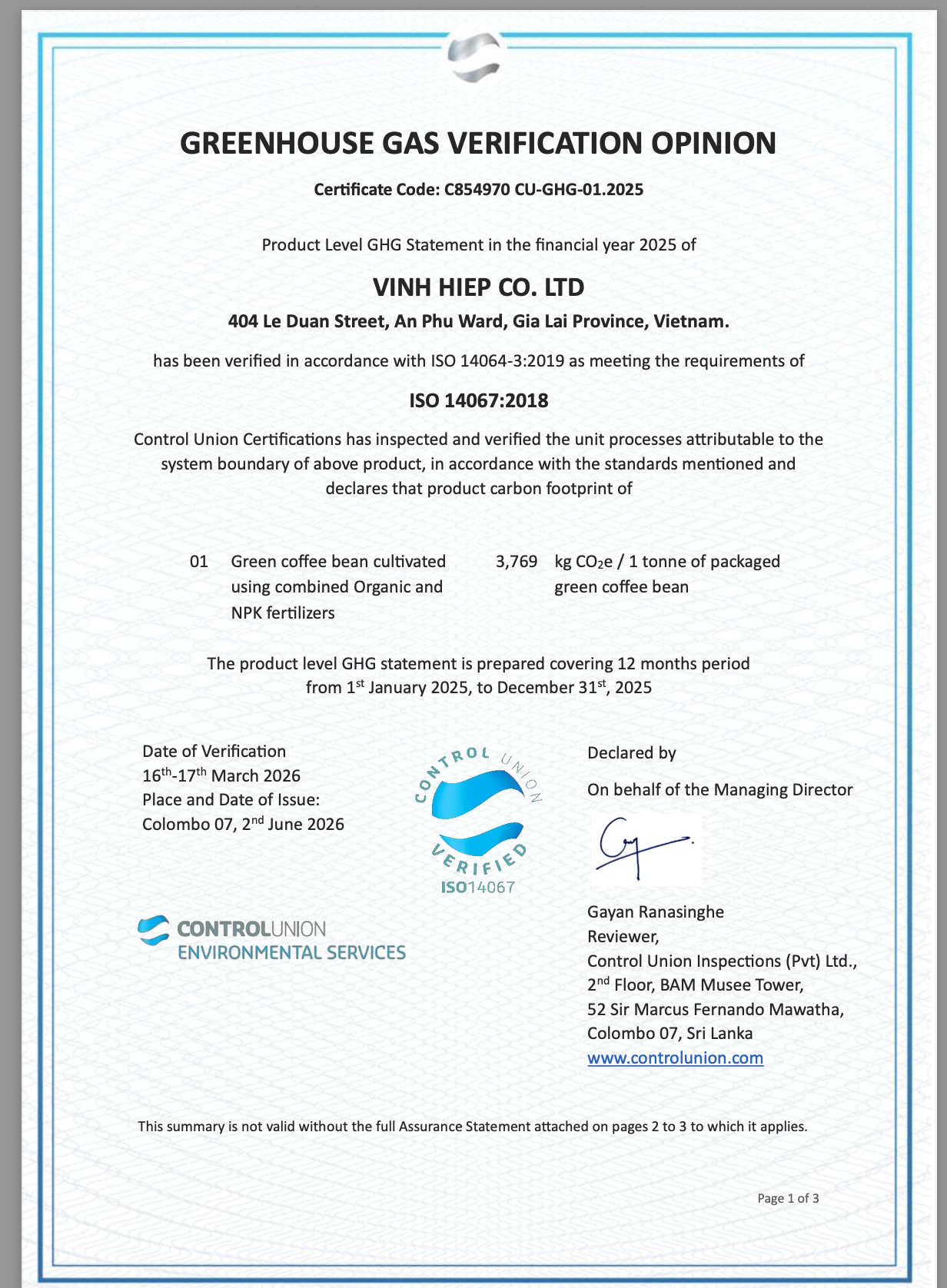
The independently verified results show that producing 1 kg of green coffee beans generates total greenhouse gas emissions equivalent to 3.77 kg CO₂e (equivalent to 3,769 kg CO₂e per tonne of packaged green coffee beans).
The system boundary spans the entire production chain: from cultivation on the farm, through post-harvest processing (drying), to milling and packaging at the farm. This is known as the “farm-to-packaging” boundary for green coffee beans.
All major greenhouse gases are fully accounted for, including CO₂ (Carbon Dioxide), CH₄ (Methane), and N₂O (Nitrous Oxide), using the IPCC AR6 Global Warming Potential factors over a 100-year horizon. The study period covered the 2025 financial year, from 1 January 2025 to 31 December 2025. Control Union concluded, with a reasonable level of assurance — the highest level of assurance among international verification standards — that Vinh Hiep’s greenhouse gas statement was prepared in accordance with ISO 14067:2018 and fairly reflects the company’s data.
Putting the result in the context of the global coffee industry
To properly understand the significance of the 3.77 kg CO₂e/kg figure, it must be considered alongside the measurement boundary, since each international study may cover different stages of the coffee supply chain.
A 2024 CIRAD meta-analysis of 34 international studies on coffee carbon footprints recorded a global median of 3.6 kg CO₂e/kg of green coffee beans, with a wide range from 0.15 to 14.5 kg CO₂e/kg depending on farming methods and measurement scope. Most of these studies only measure up to the farm gate.
Vinh Hiep’s result is close to the global median, while applying a broader system boundary — one that includes post-harvest processing that many other studies exclude. This reflects responsible emissions management across the entire production chain.
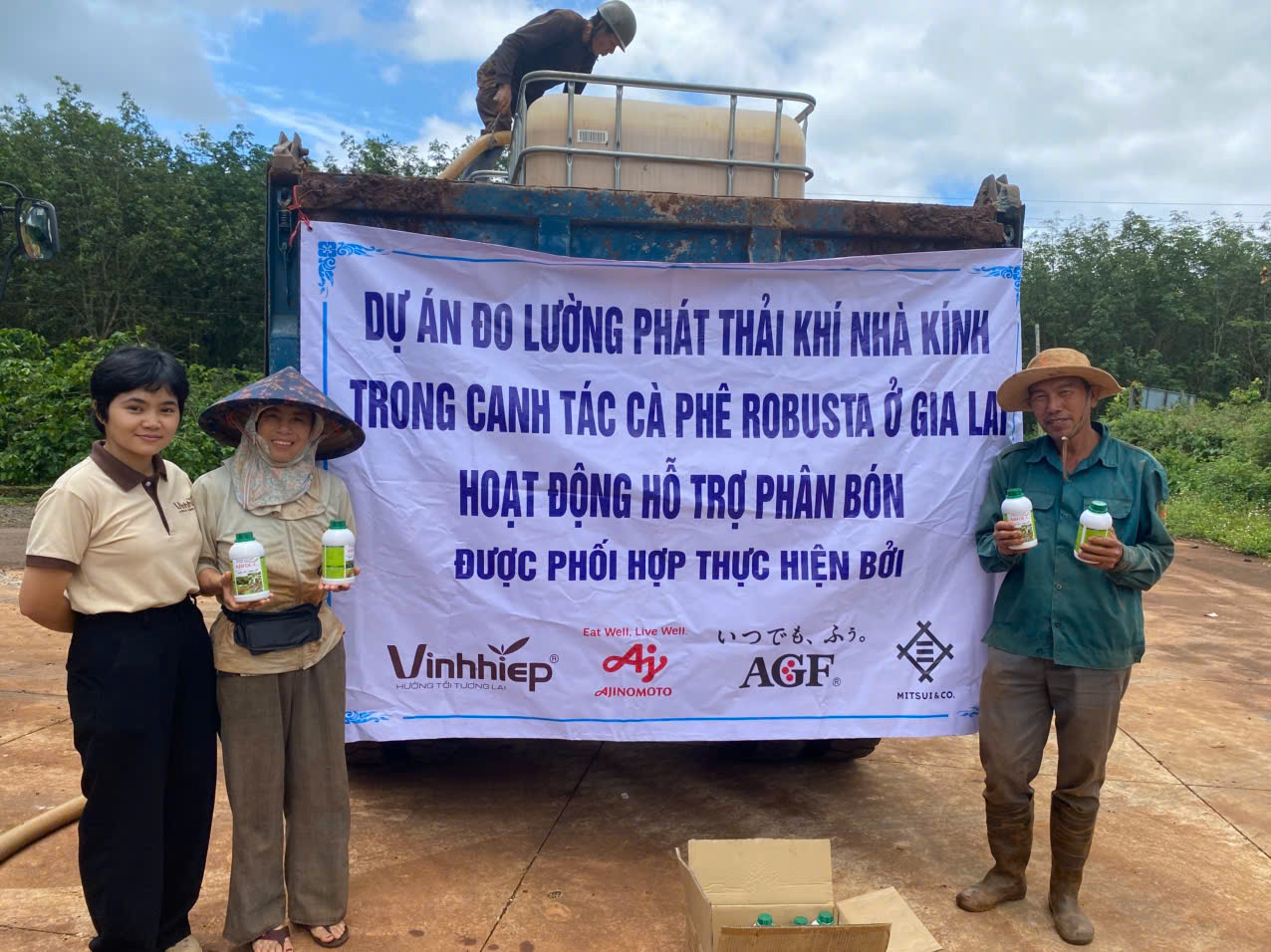
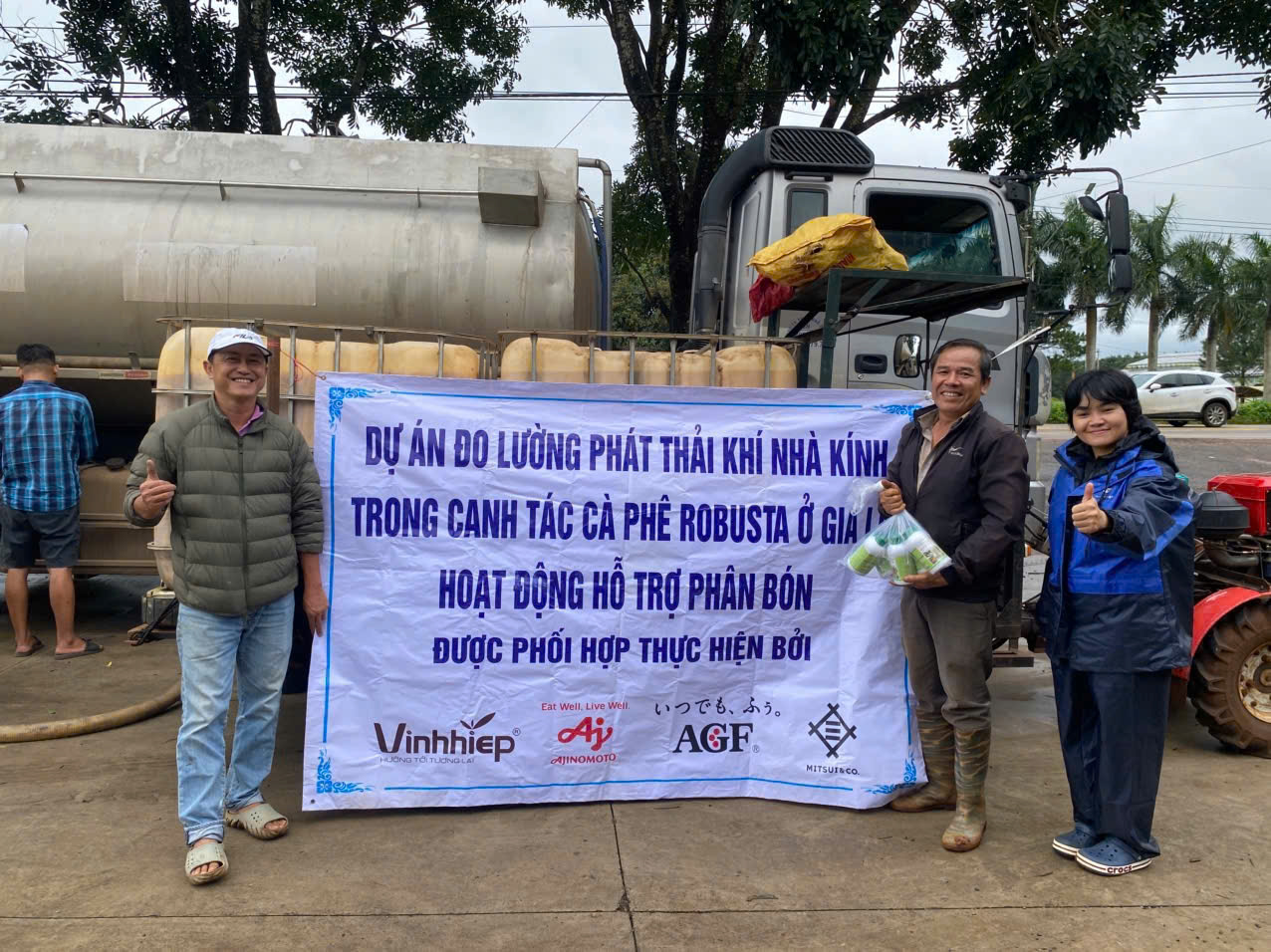
One key factor contributing to this result is the use of organic bio-fertilizer supplied by Ajinomoto Vietnam, combined with NPK mineral fertilizer. Numerous independent studies in the coffee sector show that the production and use of fertilizers — particularly synthetic nitrogen — is one of the largest emission sources in coffee cultivation, due to N₂O released during nitrogen application, a gas with a far stronger heat-trapping capacity than CO₂. Integrating organic inputs helps Vinh Hiep reduce its reliance on synthetic nitrogen, in line with international recommendations for reducing emissions in coffee farming.
The broader picture of Vietnam’s coffee carbon footprint at the sector level is also improving. IDH data shows that farm-gate emissions in Vietnam’s Robusta sector fell significantly between 2015 and 2020, driven by improved fertilizer management in participating supply chains. Vinh Hiep’s result — with its broader measurement scope and independent ISO 14067 verification — further reinforces this trend toward greater transparency and lower emissions in the industry.
What this means for international partners and buyers
Coffee is one of the most heavily traded agricultural commodities in the world, and the industry’s environmental footprint is drawing ever closer scrutiny from buyers, regulators, and consumers. European import requirements, multinational Scope 3 emissions commitments, and responsible sourcing policies increasingly demand that suppliers provide quantified, reliable evidence of their climate impact — rather than unverified sustainability claims.
For partners and buyers seeking a source of Vietnamese coffee with transparent emissions data, Vinh Hiep’s independently verified result delivers three concrete benefits. First, it is data ready to be incorporated into a partner’s own Scope 3 supply chain emissions reporting, easing the burden of collecting primary data. Second, it is independently verified evidence, reducing the risk of unsubstantiated sustainability claims (greenwashing) in procurement records. Third, it is a metric that can be tracked across future harvests, providing a basis for a long-term emissions improvement roadmap within the partnership.
The road ahead in the journey toward carbon transparency
For Vinh Hiep, this result is not merely a technical figure — it establishes a baseline for measuring progress across future harvests. Measurement helps clearly identify the highest-emitting stages in the production chain, guiding specific improvement solutions such as optimizing cultivation practices, expanding the integration of organic nutrition, and reducing emissions in processing and packaging.
As an enterprise deeply rooted in the Gia Lai growing region and its farming communities, Vinh Hiep views the effort to make the Vietnam coffee carbon footprint transparent as part of a long-term commitment to environmental responsibility, community, and future generations.
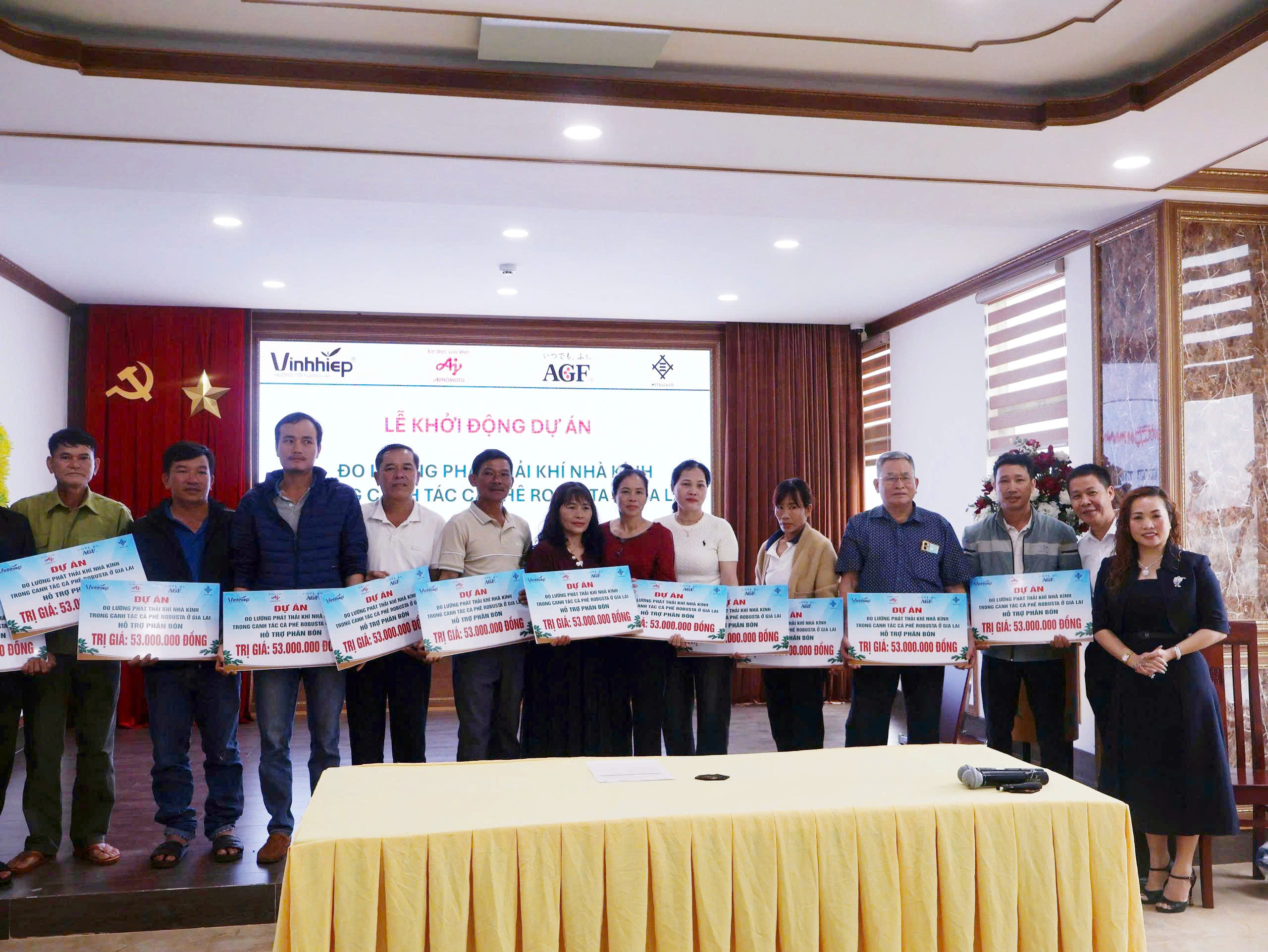
Vinh Hiep sincerely thanks its partners AGF, Mitsui, Peterson Solutions Australia and Vietnam, and Control Union, along with the technical team and farming communities who accompanied this project.
(This article was published by Vinh Hiep Co., Ltd. based on the Greenhouse Gas Verification Opinion issued by Control Union Inspections (Pvt) Ltd. on 2 June 2026, certificate code C854970 CU-GHG-01.2025.)