


Sourcing Vietnamese Green Coffee for Your Roastery
The useful starting point for sourcing Vietnamese green coffee is the product your roastery needs to make. You may be developing a phin coffee, looking for a candidate ingredient in an espresso blend or replacing a material while keeping an established product recognisable. Each situation calls for a different comparison, even when all three buyers begin with Robusta.
If you have no reference material yet, S16 Clean is one option to discuss from Vinh Hiep’s green coffee range. Its black-bean, broken-bean and foreign-matter limits are stated separately, giving you a defined physical requirement for the first trial. If you already have a working recipe, begin with that recipe and the current ingredient as your reference. The aim is to choose a manageable product route and know what the next trial needs to decide.
Start with the job the coffee must do
A broad request for Vietnamese Robusta identifies an interest, but it leaves the roasting task undefined. Write down the intended preparation and where the coffee belongs in your range. Is it the main material for a new product, one component of a blend or a candidate replacement? That choice will shape the trial and the information you need from a supplier.
A new product needs an initial direction
For a new phin product, decide how the coffee will be prepared during development and what you want to explore in the cup. For a new espresso blend, identify the role you want the candidate component to play. A direction gives the first trial a purpose without requiring a finished recipe before you have evaluated any material.
You can describe your taste objective in ordinary language. Keep it as an evaluation target rather than assigning that flavour to an untested grade. Screen size and physical defect limits help identify a product; they do not establish the final flavour on your equipment.
An existing product needs a reference
If customers already buy the coffee, identify what should remain recognisable. Keep a record of the current ingredient, roast approach and preparation used for comparison. A replacement trial then asks a specific question: can the candidate support the product, and what development would be needed before changing production?
This reference also helps a supplier understand the request. Instead of asking for the best coffee, you can explain that you need a candidate compatible with an incoming specification and a defined application. The conversation becomes about a product route rather than a ranking of the entire catalogue.
Choose a first candidate without testing everything
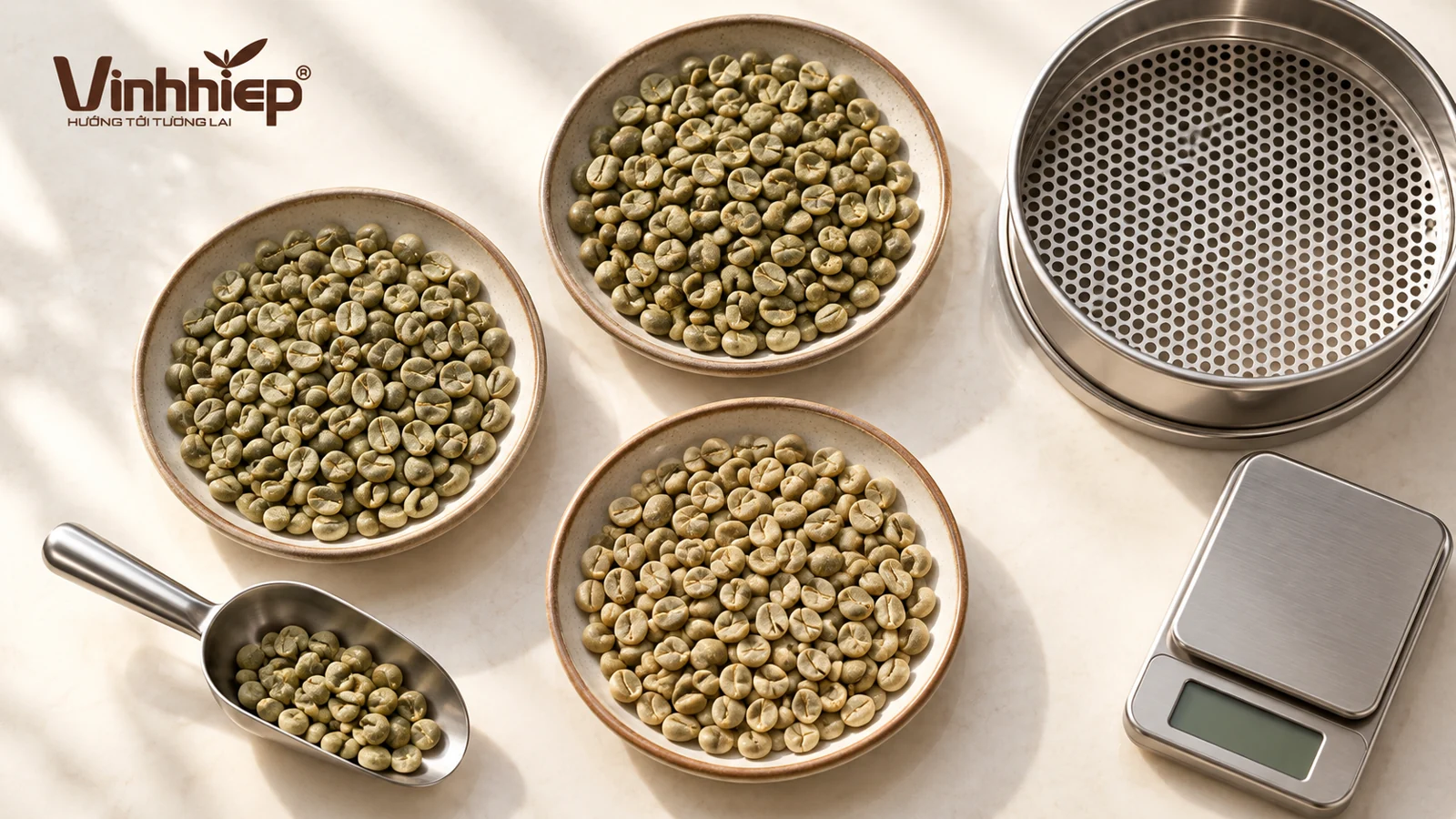
The English catalogue introduces S16 Clean, S16 Standard, S18 Clean, S18 Standard and S13 Standard. Use your task to narrow those options. Trying every product can be worthwhile for a particular development programme, but it is not a requirement for making a sensible first purchase decision.
No reference yet: establish one product trial
S16 Clean is a practical starting option when you want separately published physical limits to define the material. Choose one application, arrange the relevant sample discussion and record the trial. The first outcome may be a direction for adjusting the roast rather than an immediate decision to compare several other grades.
After that session, decide whether the unresolved issue concerns the material or the preparation. If the green specification fits but the roast approach needs work, continue on the same material. If a physical limit does not match your requirement, return to product selection. This distinction keeps the next sample request useful.
Current screen specification: start there
If your production requirement already identifies a screen class, use it to select the first candidate. A business buying to screen 13 should not automatically move to screen 18 because the number is larger. Establish why you want to change the material before choosing a different size class.
Where you want to explore a size change, S18 Clean can be an identified comparison candidate beside your current material. The comparison should answer whether the change is useful in your product. It does not imply that a larger bean is reserved for more experienced roasters or produces a better cup in every application.
Same screen, different limits: compare the relevant pair
If your question concerns Clean and Standard, the S16 pair lets you examine the published differences while retaining the same screen designation. Read the limits against your own requirements first, then decide whether one or both products deserve a roasting trial. That is more efficient than testing a grade that cannot meet a mandatory incoming limit.
When you have chosen a route, ask Vinh Hiep about the candidate and sample arrangements. A request such as “S16 Clean for a first phin development trial” gives the discussion a useful starting task without pretending the final recipe is already known.
Match physical limits to your buying requirement
A grade name becomes useful through its specification. Keep the screen percentage, moisture maximum, defect limits and foreign-matter limit together when recording a product. Each describes a different attribute, so matching one does not establish that the others meet your requirement.
For S16 Clean, Vinh Hiep publishes black beans at 0.1% maximum, broken beans at 0.5% maximum and foreign matter at 0.1% maximum. S16 Standard publishes a combined black-and-broken limit of 2% maximum and foreign matter at 0.5% maximum. Both publish moisture at 12.5% maximum and screen 16 at 90% minimum.
Use the limit that actually decides eligibility
Suppose your incoming requirement sets foreign matter at no more than 0.1%. The published Clean limit matches it; the Standard limit does not establish that same maximum. In that situation, Clean is the relevant starting candidate unless a different product-specific arrangement is confirmed.
If your requirement accepts the published Standard limits, you can consider S16 Standard alongside Clean and evaluate the candidates for your product. A commercial comparison then needs quotations on a consistent basis. Do not assume the price difference or its value before receiving the actual offers and trial results.
Preserve how the limits are expressed
Separate black and broken limits are not the same presentation as a combined black-and-broken limit. Do not split the Standard figure into invented individual percentages. Keep maximum and minimum qualifiers attached to every number, and distinguish published limits from measured results for a particular sample.
If your buying sheet asks for information expressed differently, explain the requirement to the supplier. Clarifying that point before evaluation helps the roasting and purchasing teams avoid approving different things. The product needs to be both identifiable and suitable for the criteria your business actually uses.
Plan a comparison around the production decision
Give each evaluation round a question. An initial material comparison, roast development and a blend-proportion trial are different tasks. Record them separately so the result can lead to the next useful action rather than becoming a general judgement that one sample was nicer.
For a new product, you might first establish a workable direction with one candidate. Then refine the preparation. An alternative grade becomes useful when the first work leaves a material question unanswered. For a replacement, compare the candidate with the existing ingredient and identify which product characteristics must remain.
Keep the changed ingredient visible
In an espresso blend trial, record which component changed and the proportion used. If other ingredients or preparation settings also change, record those differences. Otherwise the team may attribute a result to the new material when the recipe changed in several places.
For a phin product, include the preparation you intend customers or staff to use. A preliminary tasting can identify promising directions, but the selected material needs to work in the product being developed. Keep the relevant preparation record with the sample reference so the supplier conversation can continue from the material actually tested.
End with a task
The outcome may be to continue, repeat, compare a specified alternative or proceed to a quotation. Write a short reason. If the trial was affected by an obvious preparation problem, resolve that before treating the result as a firm assessment of the green coffee.
The green coffee sample evaluation guide explains the method in more detail. When the candidate works well enough to take forward, send Vinh Hiep the selected grade and intended purchase quantity to discuss the next commercial step.
Compare commercial offers on the same basis
A meaningful price comparison needs the same product definition and a clear understanding of delivery responsibilities. Record the grade, quantity, unit, packing and destination connected with each quotation. Ask what is included before treating two headline numbers as directly comparable.
This matters when one offer concerns a different grade, a different quantity or a different delivery arrangement. Those differences may be commercially relevant, but they need to be visible. Compare the offer that fits your production requirement rather than selecting a lower headline figure and discovering later that it describes a different purchase.
Separate a trial estimate from a production order
If you are still developing the product, distinguish the material needed for evaluation from the volume estimated after approval. The first trial does not establish a recurring order. Equally, a later production estimate does not establish a sample arrangement until that has been discussed.
Explain the destination and your role in the transaction. A roaster importing for its own use, an importer supplying customers and a trader arranging material for another buyer may need different discussions. State what you already know and identify the part that needs a proposed arrangement.
Settle the remaining terms before committing
Availability, sample conditions, packing, payment, delivery timing and relevant documentation need agreement for the actual request. If a deadline is important to your production, state it as your requirement and ask what can be proposed. Do not convert an intended schedule into a confirmed delivery date before that discussion.
This guide does not publish a universal minimum order, sample price or lead time. Those details belong to the product and transaction being considered. Keeping them explicit helps your team plan production from agreed information.
Move the selected product towards purchase
Once the trial has selected a candidate, assemble the useful result into one buying request. Include the full product name, the specification that matters, the estimated quantity and destination. If sample approval forms part of the proposed transaction, identify the sample and the understanding you want to agree about its relationship to the order.
Origin requirements should enter at the same stage as other mandatory conditions. If you intend to describe the roasted coffee as coming from a named region, say so before finalising packaging. The Gia Lai origin guide provides regional context, while the information for the actual material needs to be established in the purchase discussion.
For a first enquiry, the buyer enquiry guide includes practical examples. Contact Vinh Hiep about the grade you want to take forward. The green coffee knowledge collection is available when a particular technical term needs more explanation; it does not need to delay a defined product enquiry.
Plan the handover into production
For a new roastery, selecting a promising material is one stage in building a product. Before treating it as the production ingredient, identify which roast and preparation have been repeated and what the team still needs to establish. The first positive tasting can justify further work without settling the complete commercial requirement.
If the material is replacing an established ingredient, plan the change around the product customers already know. Keep the previous recipe and ingredient information available for the comparison. Decide which observations would justify continuing and which would require more development. This gives the team a reference when the first production-oriented trial is discussed.
Purchasing also needs a clear account of the candidate selected. Give it the full grade name, the physical requirement, the evaluation reference and the estimated quantity. If a particular origin description or information package is mandatory, include it in the same handover. A buyer arranging delivery should not have to reconstruct those conditions from informal tasting comments.
Then agree which decision needs a supplier answer. It may concern the proposed commercial material, quotation basis, packing or timing. Address that question directly rather than requesting another sample by default. This allows development and buying to progress together while preserving the distinction between a candidate the roaster likes and a purchase the business is ready to confirm.
Common sourcing questions
Should a new roastery start with S16 Clean?
It is one starting option when separately published physical limits help define the first trial. Choose an application and assess the material before deciding whether to develop it further or compare another candidate.
Can Standard be considered for the same product?
First check whether its published physical limits meet your buying requirement. If they do, evaluate it in the intended product and compare actual commercial offers on a consistent basis.
Does screen size tell me which coffee will taste best?
It identifies a size classification. Suitability depends on the wider specification and performance in your roasting and brewing application. Use a size change as a trial question rather than a flavour conclusion.
What is the most useful next step after a promising sample?
Identify the grade, sample reference, purchase quantity and destination, then discuss the commercial conditions. Resolve any remaining product or origin requirement before confirming the order.
Product references
- Vinh Hiep S16 Clean: separately published physical limits.
- Vinh Hiep S16 Standard: combined defect and foreign-matter limits.
- Vinh Hiep S18 Clean: identified candidate for a screen-size comparison.
- Vinh Hiep green coffee catalogue: the English product range.