


Vietnam’s Central Highlands Coffee: Origins and Green Robusta
A roaster opening a bag of Vietnamese green coffee is meeting the last visible part of a much longer journey. Before the beans reached the sample tray, people grew, harvested, processed and sorted them. Vietnam’s Central Highlands provides the geographical setting for much of that story. For a buyer, understanding the region becomes useful when it leads to a clear choice of coffee, a meaningful trial and an accurate account of origin.
Vinh Hiep’s history includes the establishment of its Pleiku office in 1999 and direct export activity from 2004. Our green coffee range introduces Robusta products in several screen sizes and grades. If you are planning a Vietnamese coffee product, tell Vinh Hiep what you intend to roast. We can begin with the product and the information you need to make your next buying decision.
Put the region on your sourcing map
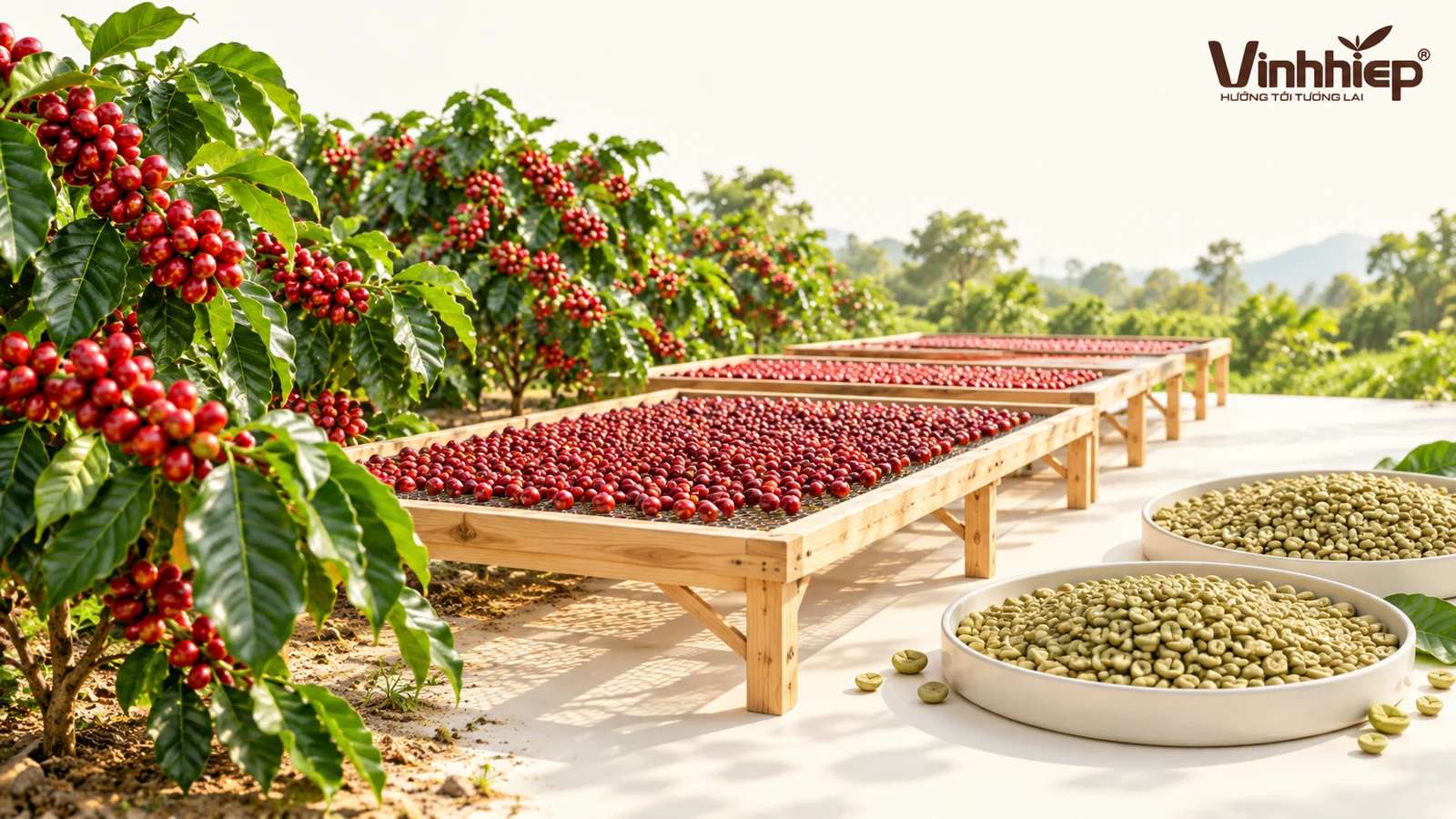
The Central Highlands is a geographical and cultural name used throughout writing about Vietnamese coffee. The International Coffee Organization’s 2019 country profile identifies Dak Lak, Lam Dong, Dak Nong, Gia Lai and Kon Tum among the coffee areas described at that time. Those historical administrative names help readers understand older maps and reports. Their geographical scope should be retained when comparing them with newer addresses or sourcing information.
For purchasing, move one level closer than a broad regional name. A supplier’s address, the location of a processing facility and the growing origin of a particular coffee answer different questions. They may belong to the same supply chain without being the same place. If you want an origin statement for packaging, establish which location describes the coffee you will buy before writing the front of the bag.
This approach also makes regional research more manageable. You do not need to compare every producing area before choosing your first trial. Decide whether the immediate task is to develop a product, replace an ingredient or build a traceable origin story. Then collect the geographical detail that task requires. Our coffee origins section develops the regional context, while the product trial turns it into a practical roasting choice.
Gia Lai and Vinh Hiep’s place in the story
Gia Lai provides a concrete starting point for understanding Vinh Hiep. The company’s published history connects its development with Pleiku, and its news archive records activities involving growers and cooperatives in Gia Lai. These accounts add people and work to the regional description. They are particularly useful for a buyer who wants to understand what the company has published about its connections with coffee production.
One dated example is the launch of a Gia Lai quality-coffee linkage project on 8 October 2021, covering the 2021–2025 period. The event report describes participation by cooperatives and farming households, together with proposed Honey and Natural processing directions. It is a historical account of the initiative and its intentions. Current products and the information applicable to a selected coffee should be discussed separately.
If Gia Lai is central to your planned product, start with our Gia Lai coffee origin guide. Then decide what the claim on your own product needs to say. A roaster selling a named-origin coffee needs appropriate origin information for the coffee selected; a roaster buying a blend ingredient may initially need a more detailed conversation about specifications and application. Both can begin with a clearly defined product requirement.
Separate origin, processing and grade
Three words can appear close together in a coffee description while describing different parts of the journey. Origin names the place being represented. Processing describes how the fruit and seed were handled after harvest. Grade or screen information describes selected commercial or physical characteristics. Keeping these categories separate makes a short product description more informative and prevents a familiar place name from carrying claims it cannot establish.
For example, Natural commonly refers to drying the coffee in the whole fruit before removing the dried outer layers. Washed processing removes the fruit and mucilage before drying the parchment coffee; Honey processing retains mucilage during drying after pulping. These broad descriptions explain the terminology. They do not establish which processing options are currently available from any supplier or predict the taste of a particular sample.
Likewise, S16 and S18 concern screening rather than a promise of a particular flavour. Clean and Standard should be read against the limits published for the actual product. A buyer who keeps these distinctions clear can write a more useful enquiry: the desired origin information, the product grade under consideration and the beverage being developed. Unfamiliar terms can be explored in green coffee knowledge as they become relevant to a decision.
Give a first Robusta trial a narrow starting point
The buyer’s starting position changes how much regional detail is useful immediately. A new roaster developing a coffee around its place of origin may need to work on two connected pieces: a sample that can become the product and an origin description that can accompany it. An existing roaster replacing a blend ingredient can initially focus on performance and purchasing requirements, then establish the origin wording appropriate to the chosen ingredient. Neither route requires a flavour promise drawn from geography alone.
Keep those tasks visible in the product brief. For example, write a short statement of the drink being developed, followed by the geographical information that must appear in its description. During evaluation, record whether the candidate fits the application and whether the intended story is supported. This prevents an attractive regional narrative from becoming the only reason to accept an unsuitable ingredient, while also avoiding a technically successful trial that leaves important packaging information unresolved.
A newcomer to green coffee can quickly accumulate more choices than useful questions. Instead of requesting every available screen and grade at once, choose one defined starting product and one beverage application. Robusta Grade 1 S16 Clean is a possible starting point because its published description separates the limits for black beans, broken beans and foreign matter. That provides a clear physical specification to identify the product being discussed.
The next question is what you want to make with it. For a phin product, plan a trial that includes phin brewing. For an espresso blend, include the coffee in the intended blend rather than deciding entirely from a cup of the ingredient on its own. The purpose of the first trial is to decide whether the product deserves further development for your application, not to declare one screen size best for all roasting.
Discuss an S16 Clean trial with Vinh Hiep and describe the intended use. Sample arrangements and commercial conditions need to be agreed for the enquiry. If your trial identifies a specific limitation or a promising direction, bring that observation into the next conversation. A result connected to a named sample and a beverage provides a much stronger basis for choosing the next step than a general request for “better coffee.”
Use an existing product as the comparison point
An established roaster has an advantage: a product that can serve as a reference. Start by identifying what must remain recognisable when an ingredient changes. That might be the way a house coffee performs in its normal drink, the physical requirements used for purchasing or the origin information carried on the label. State those requirements before bringing a new sample into the roasting schedule.
Change one part of the comparison deliberately. If the question concerns grade within S16, compare the relevant S16 products. If the question concerns a different screen size, include S18 as a separate comparison against the current ingredient. Keep the trial records so a change in roasting or brewing is not mistaken for an effect caused entirely by the coffee. A larger bean is not automatically a better ingredient for your product.
After the initial comparison, decide whether to develop the candidate further, repeat an uncertain trial or stop. This is where a clear reference saves time. The result can be expressed as a purchasing or production decision rather than a long list of disconnected tasting notes. Our sampling guide for espresso and blends explains how to connect those observations with the drink you intend to serve.
Plan the route from approved coffee to the roastery
Once a product has earned a place in your plan, the practical questions become more specific. How much green coffee does the production schedule require? Where will it be received? Which packaging and delivery arrangements need to be discussed? A harvest description cannot answer those questions on its own. Coffee still passes through preparation and movement after the cherries leave the tree, and the conditions of an order require their own agreement.
Use quantities on a consistent basis. If your roasting plan is expressed as green coffee input, compare it with usable green coffee stock rather than with the weight of roasted products sold. This simple distinction prevents a misleading estimate of coverage. It also helps you decide how much time is available for evaluation before the next purchase becomes urgent. Your own consumption records are the best starting point for that calculation.
For imported coffee, identify the receiving location and the parties who need to participate in the commercial discussion. The appropriate shipment, documentation and delivery arrangements depend on the transaction and destination. Share your sourcing plan with Vinh Hiep once the product direction is clear. Our coffee sourcing section supports this move from understanding the origin to preparing a concrete purchase enquiry.
Tell the origin story your selected coffee supports
A regional coffee story becomes stronger when it follows the actual product. Begin with the location information established for the coffee, add the relevant processing description and then explain your own work as a roaster. Your contribution may include the roast development, blend role or recommended preparation. These details give customers something concrete to understand without borrowing a sensory description from another coffee grown in the same region.
Historical projects can enrich that background when their dates remain clear. For example, a report about a 2021 partnership explains an activity at that time. It should not be rewritten as proof that every coffee currently supplied belongs to that programme. If a particular partnership claim is important to your product, discuss the connection to the selected coffee before printing it. This keeps the story useful for both purchasing and customer communication.
When an ingredient or origin changes, review the description alongside the production recipe. A label and a website can otherwise continue telling a story that no longer fits the coffee being used. Keeping a short approved description with the product record makes that review easier. For more specific application choices, see Gia Lai Robusta for roasters rather than stretching a regional overview into a complete product specification.
Begin with the decision you need to make
If you are exploring Vietnamese Robusta for the first time, choose one application and a defined starting grade. If you already roast Robusta, use your current ingredient and product as the reference. If origin communication is the priority, establish the geographical information applicable to the coffee before finalising the label. These are different starting points, but each gives the next trial or discussion a clear purpose.
Contact Vinh Hiep about Central Highlands green coffee with the product you are developing and the choice you need to resolve. The regional story provides the setting. Your application, the selected coffee and the agreed commercial details turn that story into a workable sourcing plan.
Questions buyers often ask
Does a regional name establish the taste of a coffee?
It provides geographical context. A useful sensory description should relate to the selected coffee and the conditions under which it was assessed. Develop the description from your own evaluation and the applicable product information rather than assigning one flavour profile to an entire region.
Should a first-time buyer start with S18?
Experience does not determine screen size. A defined S16 product can provide a manageable starting point; S18 can be included when there is a reason to compare sizes. The useful question is which trial will help you choose an ingredient for your intended drink.
Can a project report be used in our product story?
It can provide dated background. Any statement connecting your selected coffee to that project needs an appropriate basis. Discuss the proposed wording and the coffee involved before using it as a claim about the product.
References
- ICO: Profile of the coffee sector in Vietnam, 2019: historical regional context and geographical names.
- Vinh Hiep company introduction: published company milestones.
- Vinh Hiep’s Gia Lai linkage project announcement, 2021: dated project background.
- CBI coffee value-chain analysis, Annex VII: general processing terminology; not evidence of current Vinh Hiep product availability.