

Sustainable coffee
Browse by topic
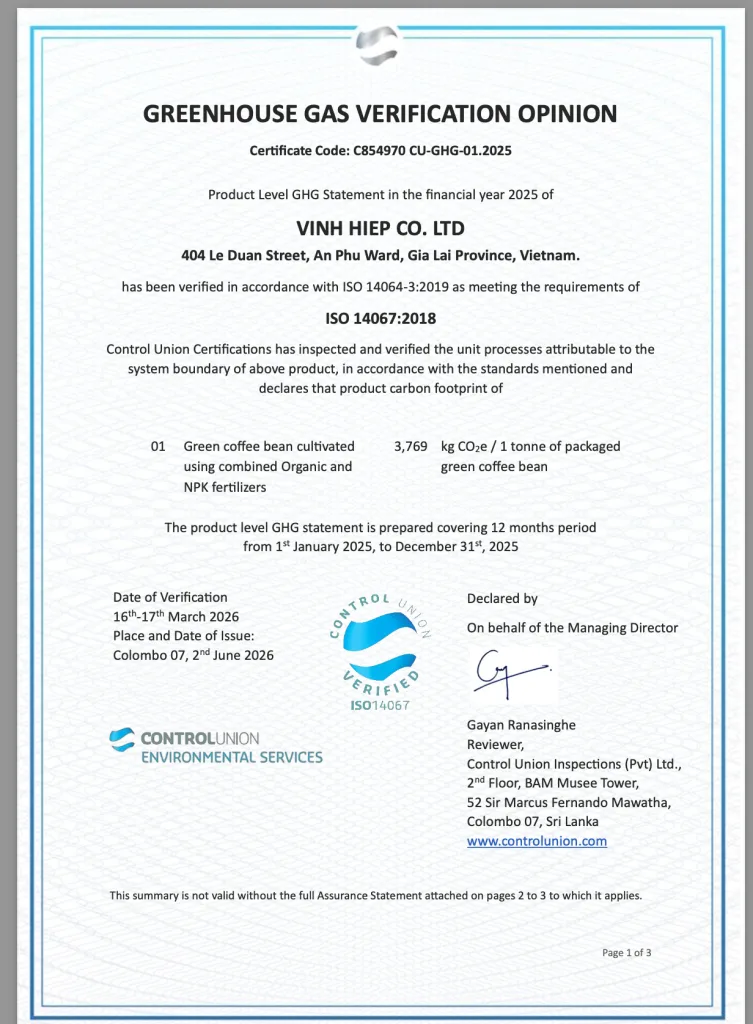
Vinh Hiep’s verified green coffee carbon footprint: scope, method and buyer questions
Vinh Hiep has published a product-level greenhouse-gas verification opinion for green coffee assessed for the 2025 financial year. The summary reports 3,769 kg CO₂e per tonne of packaged green coffee beans, equivalent to 3.769 kg
Read more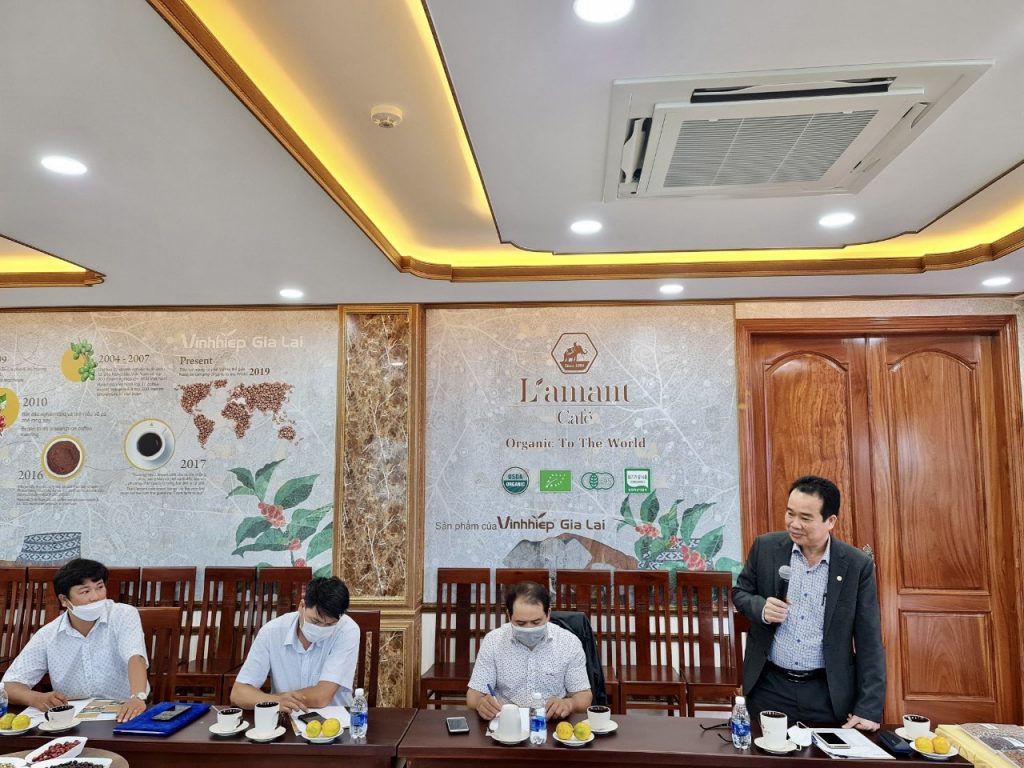
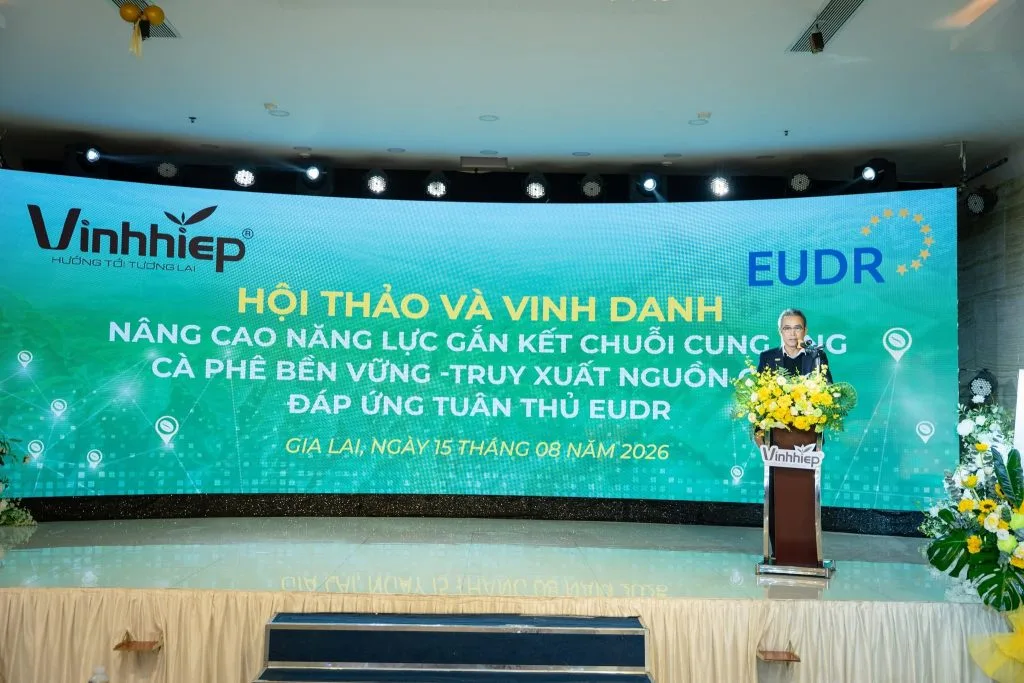
Vinh Hiep workshop connects sustainable coffee suppliers and growers
On 15 August 2026 in Pleiku, Vinh Hiep held a workshop and recognition programme focused on strengthening sustainable coffee supply-chain connections and traceability. The event brought together domestic and international partners, nearly 300 linked businesses
Read more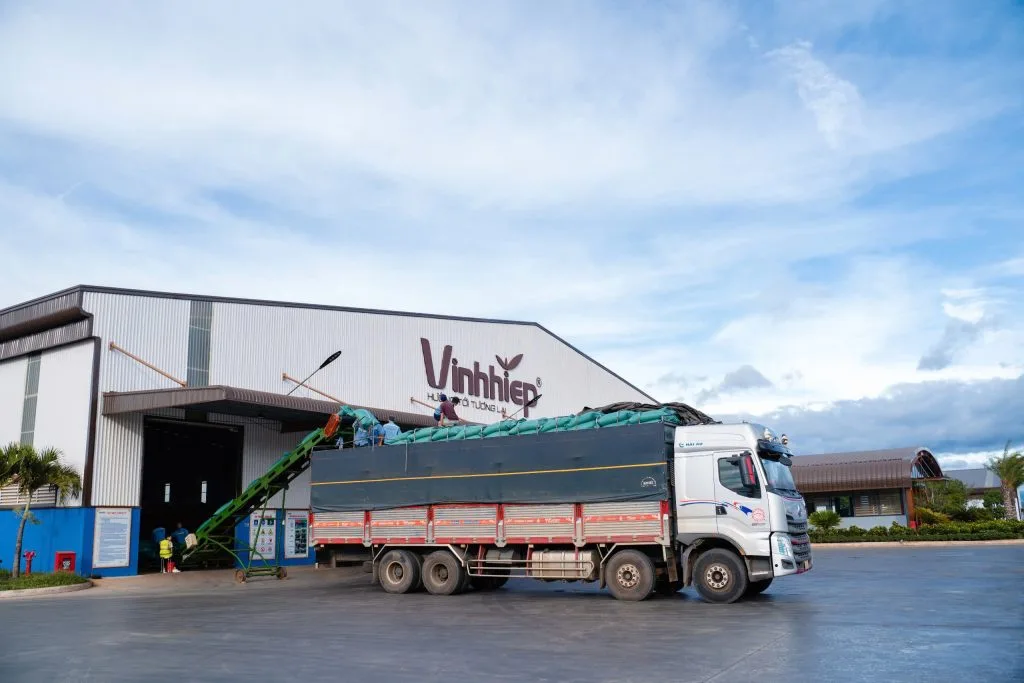
Vinh Hiep named in 2026 ESG10 high-tech agriculture recognition
Vinh Hiep reported its inclusion in the Top 10 ESG Vietnam Green Enterprises 2026 for the high-tech agriculture sector. The programme was organised by Viet Research in cooperation with Finance–Investment newspaper under the Ministry of
Read more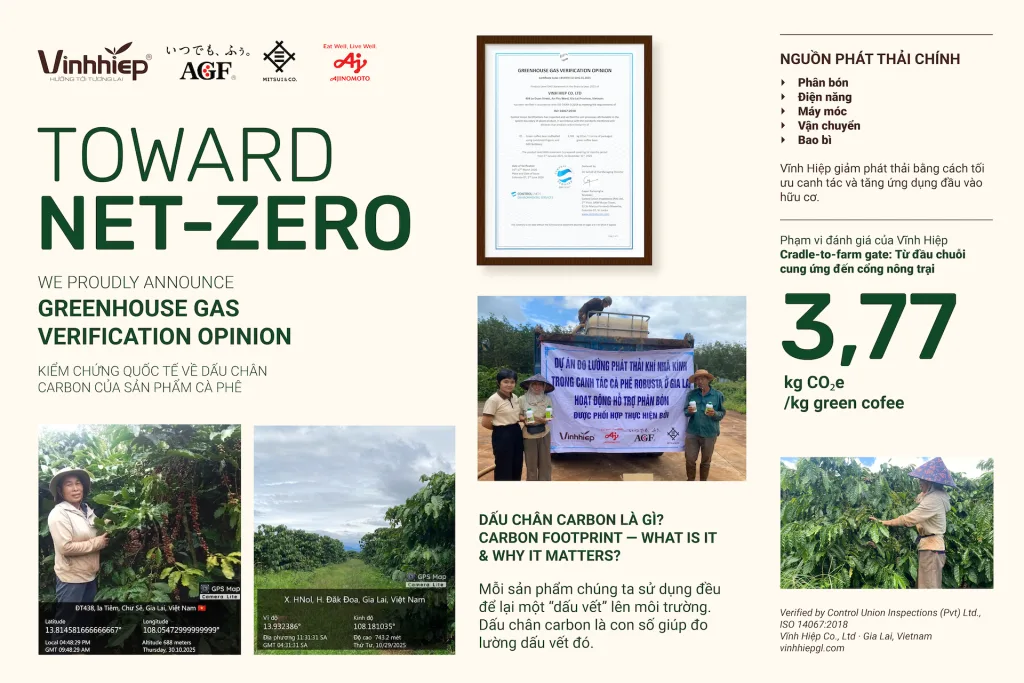
Vinh Hiep’s verified green coffee carbon footprint: 2025 study
Control Union Inspections (Pvt) Ltd. issued a greenhouse gas verification opinion for Vinh Hiep on 2 June 2026. The published summary identifies the assessed product as green coffee beans cultivated using combined organic and NPK
Read more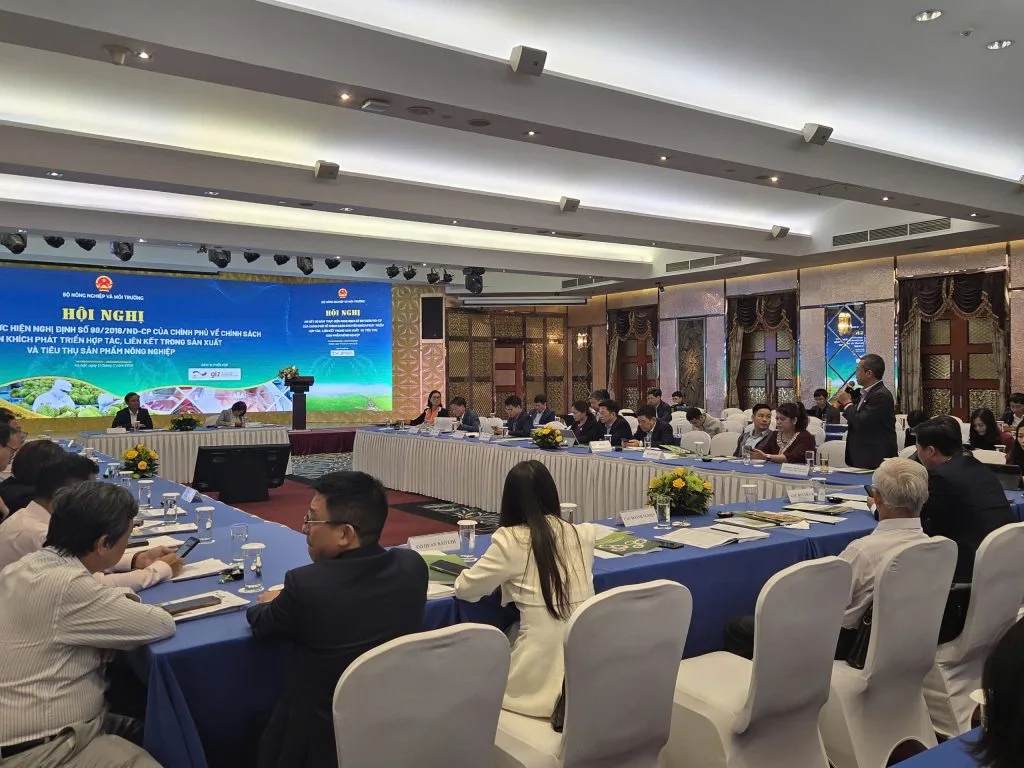
Vinh Hiep shares farmer-linkage experience at six-year policy review
On 11 November 2025 in Hanoi, Vinh Hiep took part in a six-year review of the policy supporting cooperation and linkages in agricultural production and consumption under Decree 98/2018. The company shared experience from organising
Read more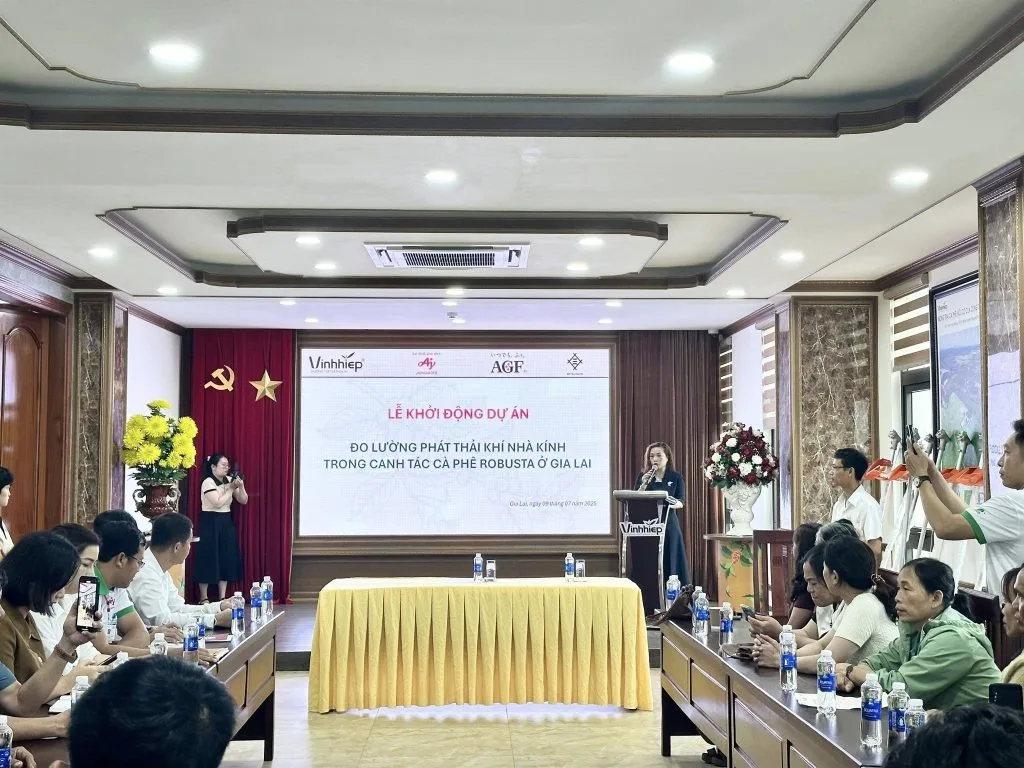
Gia Lai coffee project introduces greenhouse-gas measurement and fertiliser trials
On 9 July 2025, Vinh Hiep joined partners in introducing a greenhouse-gas measurement project for coffee production in Gia Lai. The cooperation involved Mitsui, Ajinomoto and AGF and included work on biological organic fertiliser alongside
Read more
Vinh Hiep joins SAFE project launch on agriculture, forests and livelihoods
On 22 April 2025 in Hanoi, Vinh Hiep participated in the launch of the SAFE project. The programme connected sustainable agriculture, forests and livelihoods, with support involving the European Union, Germany and the Netherlands and
Read more- 1
- 2
Sustainable Coffee and Grower Partnerships at Vinh Hiep
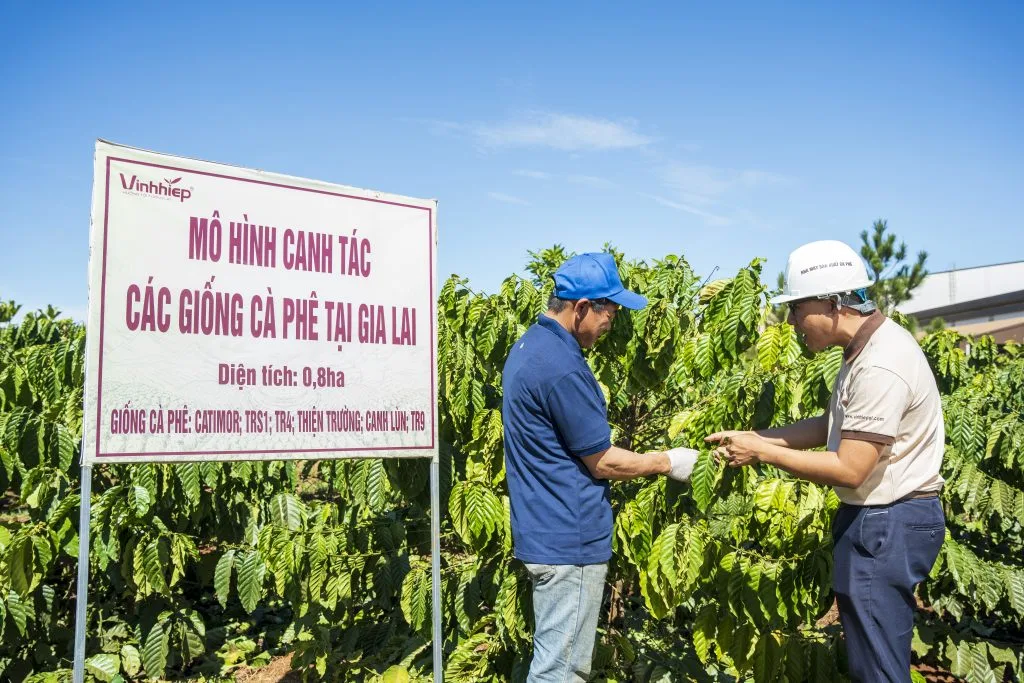
Coffee connects work on a farm with decisions at a roastery, an importing business and the final point of sale. Sustainable coffee discussions become useful when those relationships lead to defined work: organising a harvest, coordinating material after picking or developing a product with a clear sourcing objective. This collection introduces Vinh Hiep's published activities and the practical questions behind cooperation.
For a buying project, begin with a product from our green coffee range and tell Vinh Hiep what you want to make or organise. The immediate task may be a roasting trial, an origin question or a cooperation proposal. Identifying it allows the discussion to address a specific next step.
One historical milestone is the launch and signing event reported on 8 October 2021 for a Gia Lai high-quality coffee linkage programme covering 2021–2025. That report provides context for the activity introduced at the time. Current material, participation and project arrangements need to be discussed for the proposal you are bringing today.
Growers, cooperatives, processors and buyers have different parts to contribute. A useful introduction explains the work, the people involved and the period you have in mind. For a roastery, it also identifies the coffee application and the information needed to present the resulting product accurately.
You can follow the articles below by the decision closest to your project. Choose product guidance when selecting material, partnership reporting when learning about an activity, and practical cooperation discussion when you can describe a task your organisation wants to take forward.
Keep the immediate request separate from the longer-term ambition, so a sample trial or first project discussion has a clear purpose and a result to review.
Keep the proposed work visible
An ambition becomes easier to discuss when attached to a task. If a cooperative wants to organise a receiving arrangement, its introduction can describe the location, the proposed participants and how material currently moves. If a roaster wants to develop a regional product, it can describe the application and the origin information it intends to use.
These starting points give the next party something concrete to assess. They also show what is already possible and which part requires cooperation. A project can expand after the first scope is understood, rather than asking an initial conversation to settle every sustainability objective at once.
Read the date alongside the activity
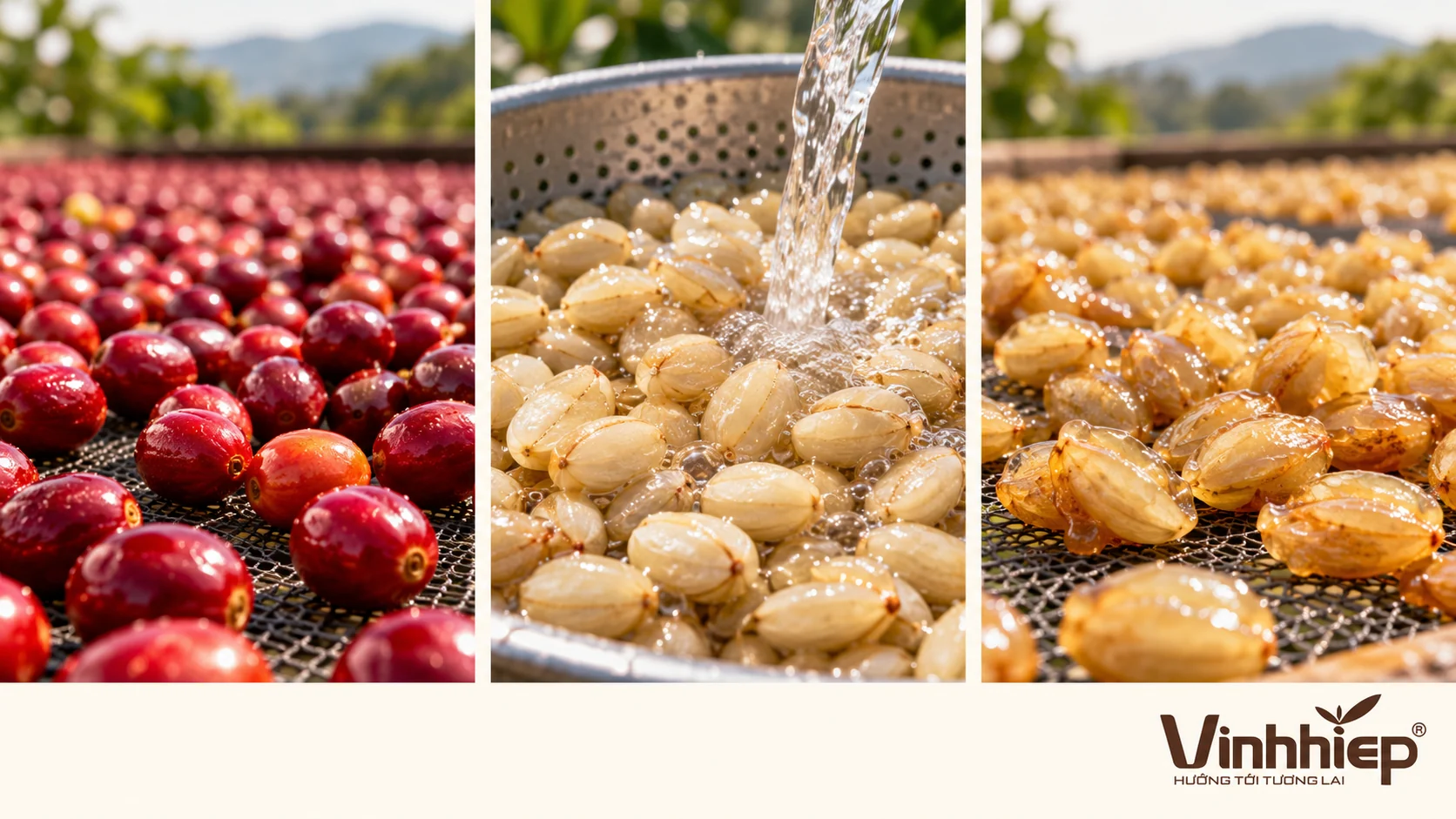
Vinh Hiep's 2021 Gia Lai partnership report records a launch involving growers and cooperatives and mentions Honey and Natural processing directions. It is useful for understanding that milestone within the company's history.
A historical launch and a current product enquiry answer different questions. Use the event to identify the subject relevant to your business, then ask about the work or material proposed for the present discussion. This keeps both the history and the new request understandable.
Connect the sourcing objective with a usable product
Roasters still need coffee suited to the product they sell. If you are new to green Robusta, S16 Clean is one starting candidate to discuss because its physical limits are published separately. Give the first trial a defined application before adding more grades to the comparison.
An established roastery can begin with its current ingredient and specification. Identify the change you want to test, then assess it in the intended recipe. The green coffee sourcing guide explains this route. Origin or cooperation objectives can develop alongside the trial, with the information for the material established before publication.
Use a realistic scope when following progress
Sector guidance considers economic, social and environmental dimensions. A particular activity may address only part of that work. A harvesting coordination proposal, for example, should explain the task it is intended to organise and the period over which participants will review it.
The Global Coffee Platform's sustainability reference provides a broader framework. For a specific project, choose information appropriate to the task rather than treating the framework as proof of an outcome. If a purchase requires certification, identify the scheme and relevant product or transaction so the applicable documentation can be discussed.
Prepare a cooperation introduction
Lead with the work you want to undertake, its location, proposed participants and intended period. Explain the support sought and what your organisation can contribute. A brief description of existing arrangements can make the introduction more useful than an extensive presentation with no defined request.
For buying material, include the application, grade or specification, estimated quantity and destination. If evaluation must happen first, keep that immediate need separate from the potential commercial purchase. Sample, price and delivery conditions still need agreement for the actual transaction.
Take the next step with Vinh Hiep
The company-level grower partnership guide develops the subject in more detail, while Vinh Hiep's sustainable development overview introduces the stated company direction. These provide background for a proposal rooted in work your business wants to perform.
Contact Vinh Hiep about your coffee or cooperation project. Describe the immediate decision and the information needed to move it forward. Keep any photographs, participant names and product-origin statements within the permissions and scope established for the project.