


Green coffee knowledge
Browse by topic


Green coffee knowledge: understanding specifications and samples
Green coffee is the raw material a roaster evaluates before deciding how to use it. A useful assessment brings together the product description, physical characteristics, sample results and intended application. This category explains those connections for purchasing teams, roasters and readers who are starting to source Vietnamese coffee. The guides focus on questions you can use in a real supplier conversation, from understanding a screen designation to keeping a clear record of a sample evaluation.
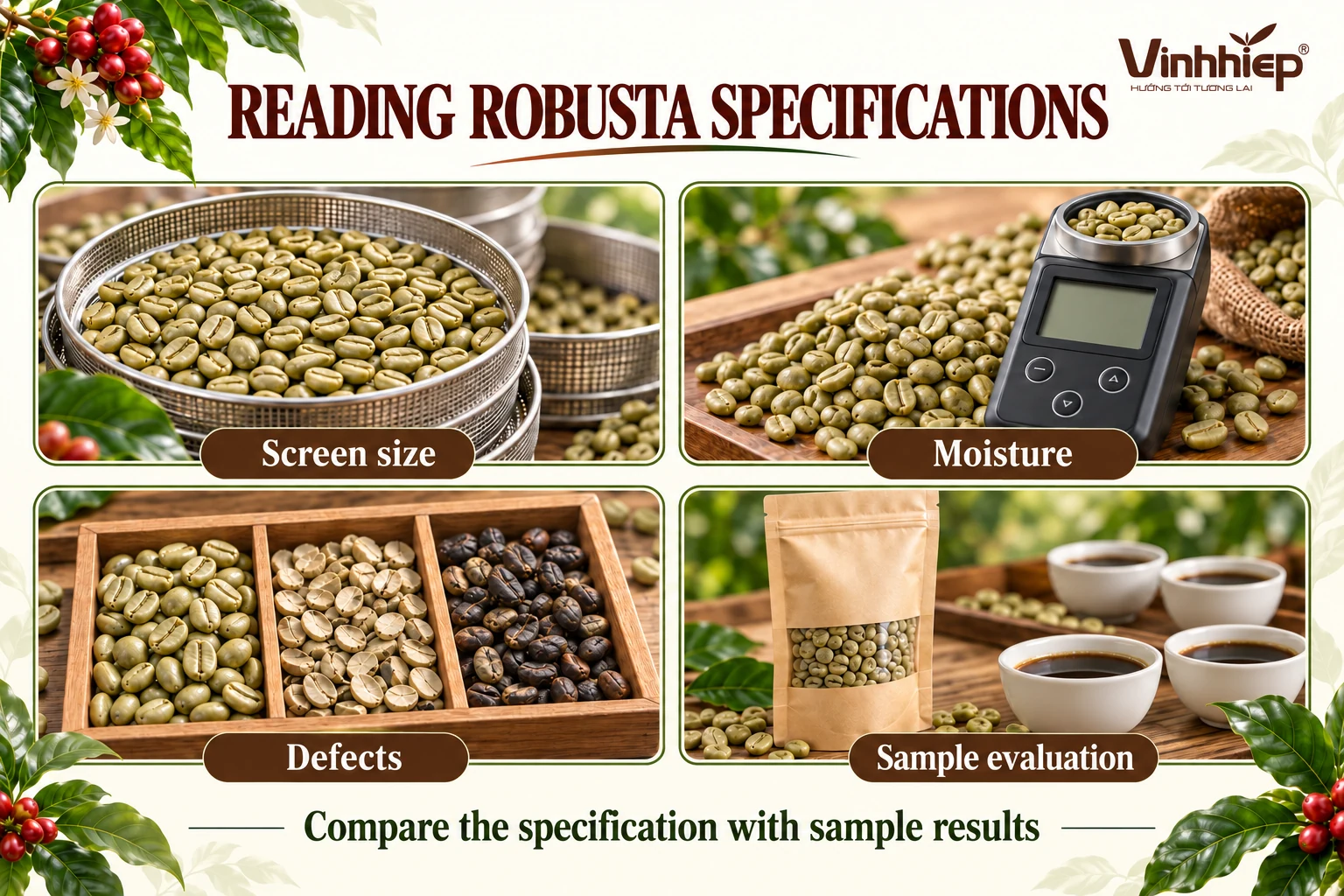
A short description such as Robusta S18 provides only part of the information needed for a purchase. Screen size relates to physical sorting, while moisture, foreign matter, black beans and broken beans require their own definitions and limits. Coffees with the same screen designation may produce different results in a roast trial. Comparing a specification with an identified sample gives the buyer a more useful basis for discussion than relying on the product name alone.
Start with Vietnamese Robusta specifications and sample checks if you need help reading a product sheet. Continue with green coffee sample evaluation when preparing a receiving and testing record. You can then compare the green coffee product range and identify which questions remain open. Before requesting a sample, explain its intended use, the characteristics you need and how you plan to assess it. This helps both parties discuss the same requirements, record any differences and decide what should be checked next. The material here supports that preparation; the agreed specifications and the records for a proposed lot remain the basis for the actual transaction.
The sections below explain how to keep those checks organised. Keep the product sheet beside your sample record as you read, and note any term that needs clarification. A short list of specific questions is easier to resolve than a broad request to confirm quality.
Read each specification as a separate requirement
A specification is most useful when every line has a clear meaning. Check the screen designation, retention requirement, moisture limit and defect categories individually. Ask whether a figure combines several defects or describes a single one, and confirm how the result is measured. Do not substitute a limit from another grade simply because the names look similar. When comparing offers, put the same fields alongside one another and mark missing information as a question. This creates a practical comparison sheet that can be updated after the supplier responds, without turning an assumption into an agreed requirement. Retain the supplier’s wording in your notes until any difference has been explained. A shared definition is particularly useful when several colleagues are comparing products or recording the outcome of separate sample trials.
Keep sample identity attached to the results
Label each sample with a reference, date received, sender and the product or lot it is meant to represent. Record its packaging and condition on arrival before starting an assessment. If several people evaluate the coffee, use a shared record so their observations can be compared. Keep photographs and measurement notes connected to the same reference. When a replacement sample arrives, give it a distinct entry rather than overwriting the first result. These simple records make it easier to explain why a sample was accepted for further testing or why clarification was requested.
Separate physical checks from the roast trial
Physical observations and roast results answer different questions. The receiving record may include appearance, visible defects, measurements and unusual odours. A roast trial adds information about how the sample behaves under the chosen conditions and how it performs in evaluation. Keep the roast settings and assessment conditions with the result so the next trial has a useful reference. A positive result should still be considered alongside the intended blend or finished product. If the buyer changes that intended use, the evaluation criteria may also need to be reviewed before a purchasing decision.
Make comparisons under consistent conditions
A comparison becomes harder to interpret when the storage, roasting or evaluation conditions change between samples. Decide which conditions you can keep consistent and record those that vary. Avoid presenting one tasting impression as a complete description of every delivery carrying the same product name. Where an observation is uncertain, explain what happened and what should be repeated. The purpose of the record is to support a clear decision: continue testing, ask a question, request another sample or discuss a change to the requirement. That decision should be understandable to another member of the purchasing team.
Turn technical questions into a purchasing brief
Once you understand the terminology, prepare a brief that states the coffee type, intended application, required physical limits and the supporting information you need. Separate essential conditions from preferences that can be discussed after evaluation. Add the sample reference and the questions raised during testing. The coffee sourcing and export category explains how to carry this work into supplier assessment. When contacting Vinh Hiep, use the brief to request the relevant product information and confirm the next step. Availability, lot details and commercial terms need to be established for the specific enquiry.