


Gia Lai Coffee Export: Robusta Origins and Vinh Hiep Products
A search for Gia Lai coffee export can begin with a place name and end at a very practical decision: which green coffee should your roastery or importing business evaluate? The regional story matters, but it needs to connect with a defined product, an intended application and the information required for a purchase.
Vinh Hiep’s history records an office in Pleiku from 1999 and the start of direct exports in 2004. Our green coffee range includes Robusta products identified by screen size and grade. If you are approaching Vietnamese Robusta without a reference sample, S16 Clean is one option to discuss for a first trial because its black-bean, broken-bean and foreign-matter limits are published separately. Begin with the product you want to roast, then establish the origin and commercial information needed to proceed.
Place Gia Lai in the sourcing conversation
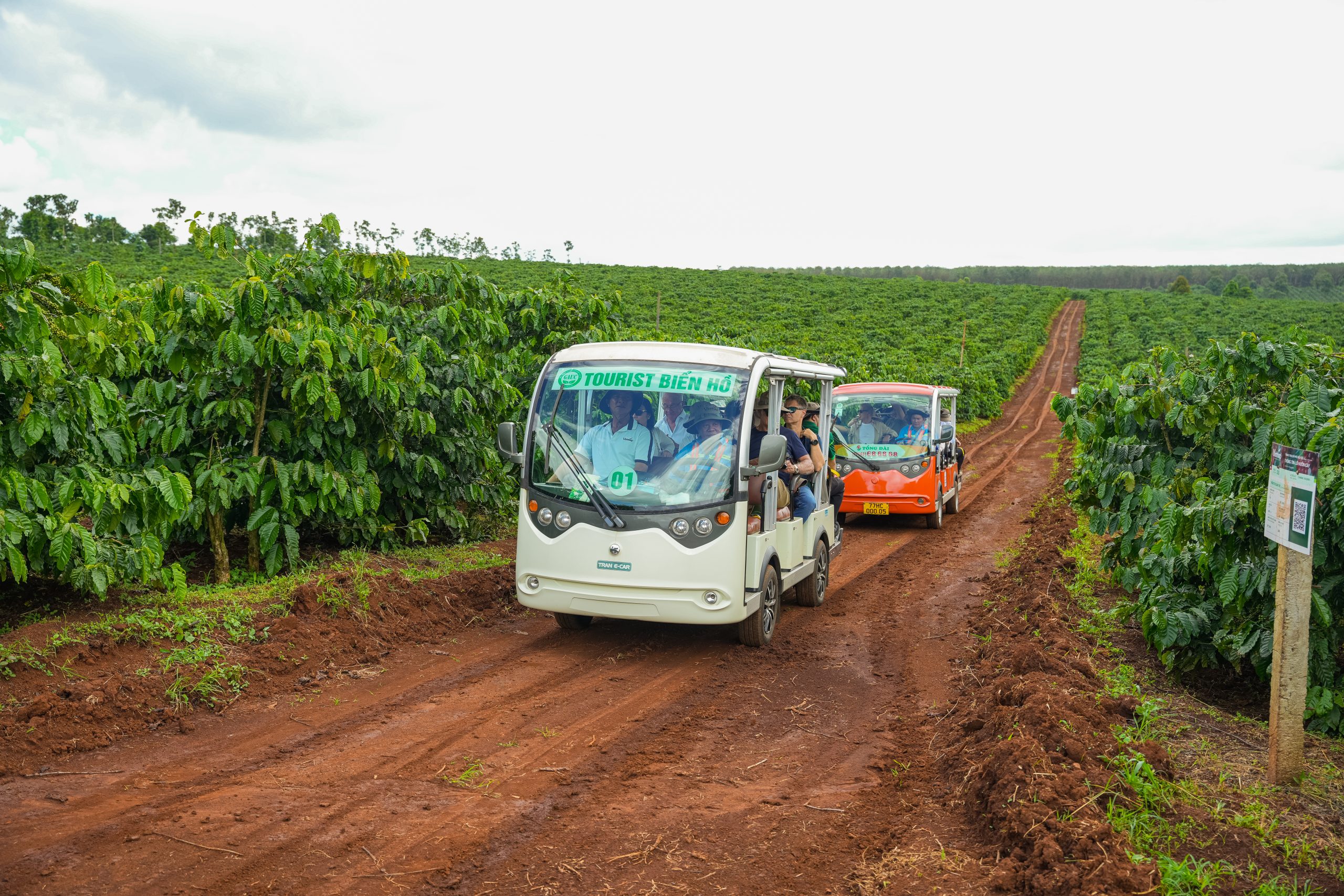
Gia Lai appears within Vietnam’s Central Highlands coffee context. The USDA Foreign Agricultural Service’s May 2025 Vietnam coffee report includes Gia Lai in its description of the region’s production geography. That dated report provides a useful agricultural context; its geographic description should be read within the period it covers rather than treated as a current administrative boundary guide.
For a buyer, the next step is to decide what the place name needs to mean in the transaction. Are you interested in a business based in Gia Lai, coffee grown within a particular area, or a product whose retail description will name that origin? These requests can lead to different information requirements. Make your intended meaning explicit before shortlisting material.
An importer preparing a regional offer for customers may need origin information early. A roaster exploring a new blend may initially prioritise a defined grade and trial results. Both can ask about origin, but they should explain how the information will be used. This gives the supplier a specific sourcing question to answer.
Use regional context to guide questions
The regional story can help you understand the production setting and the people involved. It should then lead to a question about the coffee actually proposed. Ask what origin information can be supplied for that product and how it relates to the sample or lot under discussion.
If you want to learn how information connects through the chain, the coffee traceability guide explains product, sample and lot references. For a purchase, keep those references with your own evaluation notes so the origin discussion remains attached to the material you tested.
Connect the regional story with Vinh Hiep
Vinh Hiep’s published history places the Pleiku office milestone in 1999 and direct exporting in 2004. These dates help explain the company’s relationship with coffee processing and trade over time. They provide a company background rather than a promise about a particular grade being available for a new order.
One published partnership milestone is the launch and signing event on 8 October 2021 for a Gia Lai high-quality coffee linkage programme covering 2021–2025, alongside a specialty coffee project. The report refers to cooperatives, growers and Honey and Natural processing directions. It records the initiative as introduced at that time.
What a dated activity helps a buyer understand
A partnership report can show which subjects the company was working on and which participants were involved. It can be a useful starting point when your own interest concerns grower relationships or a processing direction. For today’s enquiry, connect that interest with a current product question rather than assuming the event report establishes the details of an offered lot.
For example, a roaster developing a regional release could explain the intended application and ask what origin and processing information is available for the material proposed. A cooperative considering collaboration could describe its location and the work it wants to organise. Each enquiry moves from a published company activity to a defined next conversation.
The Vinh Hiep English homepage introduces our product and sourcing routes. If Gia Lai origin is central to the coffee you intend to buy, send the grade, application and origin wording you need to discuss. This allows the commercial discussion to address the material and its story together.
Choose a defined green Robusta product
The English catalogue introduces S16 Clean, S16 Standard, S18 Clean, S18 Standard and S13 Standard. These names narrow the product discussion. The screen designation concerns size classification; the Clean or Standard designation needs to be read with the published physical limits for that specific product.
New to green Robusta: begin with a manageable trial
You do not need to evaluate the entire catalogue in the first session. S16 Clean provides a defined starting point if you need separately stated black-bean, broken-bean and foreign-matter limits. Use it for a particular task, such as developing a phin coffee or evaluating a candidate component for an espresso blend.
After the first trial, decide what remains unresolved. You may need to adjust the roast on the same material, or compare another product because a physical requirement differs. This gives the second trial a reason. Adding grades before knowing the question can leave you with more cups and less useful information.
Already have a product: use it as the reference
If your roastery already sells an established blend, keep the current ingredient as a reference. Choose a candidate that fits your incoming specification, then test whether it supports the characteristics you need to retain. If you are exploring another screen size, S18 Clean can be a comparison candidate; its larger screen designation does not establish a better flavour or a special suitability for espresso.
If your decision concerns defect limits rather than size, compare products within the same screen designation. The S16 pair is useful here: Clean publishes separate limits for black and broken beans, while Standard publishes a combined limit. Keep that distinction when comparing against your own specification.
| Published S16 characteristic | Clean | Standard |
|---|---|---|
| Black beans | 0.1% maximum | Included in the combined black-and-broken limit |
| Broken beans | 0.5% maximum | Included in the combined black-and-broken limit |
| Black and broken beans combined | Published separately as above | 2% maximum |
| Foreign matter | 0.1% maximum | 0.5% maximum |
| Moisture | 12.5% maximum | 12.5% maximum |
| Screen 16 | 90% minimum | 90% minimum |
If your buying specification requires foreign matter at no more than 0.1%, the published Clean limit matches that requirement. The Standard limit does not establish the same maximum. That is a physical specification decision; the performance of either material in your roasted product still needs evaluation.
Understand where processing fits
Processing terms describe work after harvesting, while screen and grade terms describe other aspects of the green product. Keep these layers separate when writing an enquiry. A screen designation alone does not tell you whether the coffee follows the processing method you require.
The 2021 Vinh Hiep event report mentions Honey and Natural as project directions. If either is important to your proposed purchase, state the processing requirement and ask which material can be discussed. Do not assume a particular catalogue grade carries that processing description unless it has been confirmed for the product offered.
The same care helps when writing tasting notes. Your own evaluation may find characteristics worth developing, but a favourable cup does not establish an unconfirmed processing method. Record the sensory result as your observation and the processing information as the supplier’s product information.
Keep the request proportionate to the project
For an initial blend experiment, you may need a defined material and enough information to run a sensible trial. For a coffee marketed around a particular process and origin, those details become part of the buying requirement from the beginning. Explain the intended use so the discussion can cover the right depth without a generic request for every possible coffee story.
Evaluate coffee for the product you sell
Set a trial question before roasting. A new product trial might ask whether the selected material supports the intended phin preparation. A replacement trial might ask whether the candidate can work in an existing espresso blend without changing the qualities your customers expect. The question determines what you should hold consistent and what you deliberately change.
Keep the sample identity, preparation details and observations together. When comparing two materials, record the roasting and brewing conditions used for each. If you later optimise their roast approaches separately, treat that as a new stage of development. It answers a different question from an initial comparison under shared conditions.
Work through a clear development sequence
In a hypothetical first trial, a roaster selects S16 Clean and prepares it for a planned phin product. The first round reveals questions about the roast approach. The next useful step is another roast on the same material, with the changed variable recorded. A second green grade becomes useful when there is a specific product question it can answer.
For an espresso blend, trial the candidate as an identifiable component and then in the intended recipe. Record the proportion and the other ingredients used. The result should support a decision: continue development, repeat the trial, compare another material or proceed to a commercial discussion.
The green coffee sample evaluation guide develops this method in more detail. When a trial points towards a purchase, contact Vinh Hiep with the selected grade and intended quantity to discuss sample arrangements or the terms for proceeding.
Move from origin interest to an export enquiry
An overseas enquiry needs a defined product route and a destination. State the application, grade or required specification, estimated volume and receiving location. If you are still at the evaluation stage, distinguish the immediate sample need from the later purchase estimate. These are different quantities with different purposes.
Explain your role too. A roaster importing for its own production may organise the transaction differently from a trader supplying another buyer. Naming the receiving market and the parties involved helps identify what needs to be discussed about packing, delivery and information requirements.
Agree commercial details for the actual request
Ask which product can be proposed, how evaluation material relates to that offer and what the quotation covers. Packing, delivery responsibilities, payment and timing should be agreed for the transaction being considered. A catalogue and company history provide context; they do not replace the terms of a particular purchase.
If the origin story will appear on the roasted product, include the wording or level of detail you need. That gives the sourcing discussion a concrete task alongside product selection. Permissions for photographs or named participants should also be discussed before those materials enter packaging or sales literature.
For a first message, the green coffee enquiry guide includes examples for different buying stages. Send Vinh Hiep your Gia Lai coffee enquiry with the product you intend to make and the requirement you need to resolve next.
Coordinate the importer and roastery decisions
If your business supplies several roasteries, separate the common product requirement from each customer’s development work. The importer may need a defined grade, origin description and delivery arrangement, while the individual roaster still needs to decide how that material works in its recipe. Agree which part of the evaluation is shared and which part remains a customer-specific decision.
Keep the candidate’s reference with the information presented to customers. If a roastery asks about an observation from its trial, you can identify the material concerned rather than replying from a general product description. If a different material is later proposed, make that change visible before the earlier result is used to support a purchase.
For a regional offer, the same coordination applies to the story. Establish the origin wording that can be used, then preserve it when adapting the sales information for different customers. A roastery can add its own roasting observations, but those observations should remain separate from facts about the growing area and material supplied.
This approach gives each participant a clear next task: the supplier identifies the proposed material, the importer establishes a consistent commercial and information basis, and the roastery evaluates its application. It also prevents a successful trial by one business from being presented as a universal recipe or flavour result for every buyer.
Common questions
Does buying from a Gia Lai business establish the growing origin?
The supplier’s location and the growing origin are different pieces of information. State the origin required for the proposed purchase and ask how it is described for that material.
Which product can a first-time roaster discuss?
S16 Clean is one starting option because its separate physical limits make the incoming material requirement clear. Choose an application and evaluate the sample before deciding whether to develop it further.
Is a larger screen automatically better for an export order?
Screen size is one physical characteristic. The suitable product depends on the buyer’s specification, application and evaluation. A higher screen number alone does not settle those questions.
Does the 2021 partnership report confirm current product availability?
It documents an activity and project direction at that time. Current material, origin information and commercial conditions need to be discussed for the new enquiry.
References
- USDA FAS, Vietnam Coffee Annual, May 2025: dated national and regional production context.
- Vinh Hiep company history: Pleiku and direct-export milestones.
- Vinh Hiep’s 8 October 2021 Gia Lai event report: historical partnership and processing directions.
- Vinh Hiep green coffee catalogue: product names and links to specifications.