


Green Coffee Sample Evaluation for Roasters
A sample trial should leave you with a decision you can explain. You might continue developing the coffee, compare another grade, repeat a roast that went wrong or move towards a purchase. Green coffee sample evaluation becomes useful when physical observations, preparation conditions and tasting results are connected to that decision.
For a first Vietnamese Robusta trial, S16 Clean is one option in Vinh Hiep’s green coffee range to discuss because its black-bean, broken-bean and foreign-matter limits are stated separately. Give the trial a defined application, such as a phin product or a candidate component for an espresso blend. If you already have a successful product, use the current material as your reference instead of starting the comparison from memory.
Decide what the trial needs to answer
“Which sample is best?” is often too broad to guide a roasting session. Best for an established espresso blend, a new phin coffee and a regional retail release can mean different things. Begin with the product and the choice you face, then select the trial that can inform it.
If you are replacing an ingredient, identify the characteristics you need to preserve. If you are developing a new product, choose an initial direction and accept that the first trial may identify the next question rather than finish the development. A clear purpose keeps the evaluation from becoming a collection of disconnected tasting notes.
Separate comparison from optimisation
An initial comparison can use a shared preparation approach to observe the candidates under defined conditions. Later, you may develop a different roast approach for each candidate. Those stages provide different information. Keep their records separate so a colleague can see whether a preference concerns the material under common conditions or a developed finished product.
Write the purpose in one sentence before starting. For example: “Compare the current ingredient with the candidate in our existing blend before deciding whether to develop a new roast.” This is an illustrative trial question, not a result claimed for any Vinh Hiep coffee.
The coffee sourcing guide for roasteries helps choose the product route before sampling. Once the route is clear, the evaluation can focus on the uncertainty that actually remains.
Identify and inspect the green sample
Keep the supplied product name and reference with the beans. Record when the sample was received, and preserve identification if you move it into a jar or tray. Several similar-looking samples can otherwise become difficult to connect with the original offer, especially when one person prepares them and another roasts them.
Confirm what the sample is intended to represent. It may be material introduced for product development or material linked to a particular commercial discussion. Ask how it relates to the coffee being proposed before making assumptions about a future purchase. The coffee traceability guide explains these reference relationships.
Observe before interpreting
Spread a portion on a clean, well-lit surface. Note visible differences in size, shape, colour and any unusual material. Use photographs to support a specific question rather than treating appearance as a complete evaluation. A clear image of what you noticed is more useful than a general comment that the beans look wrong.
Where the decision requires a numerical result, use an appropriate sampling and measurement method. A visual impression is not a measurement of moisture or the defect rate of a full commercial lot. Record the method and sample identity with any numerical finding so it can be understood by someone who was not present.
Read the grade as a set of characteristics
Screen size, moisture and defect limits concern different physical attributes. Keep maximum and minimum qualifiers attached to their numbers. For example, Vinh Hiep S16 Clean publishes screen 16 at 90% minimum and moisture at 12.5% maximum. These are product limits, not tasting results or measured values for every sample.
If your incoming specification already sets a requirement, check it before spending time developing an unsuitable candidate. When the specification is still open, use the first evaluation to establish the questions that need further discussion. Contact Vinh Hiep about S16 Clean or your existing specification if you need to define the material for the next trial.
Prepare a comparison you can interpret
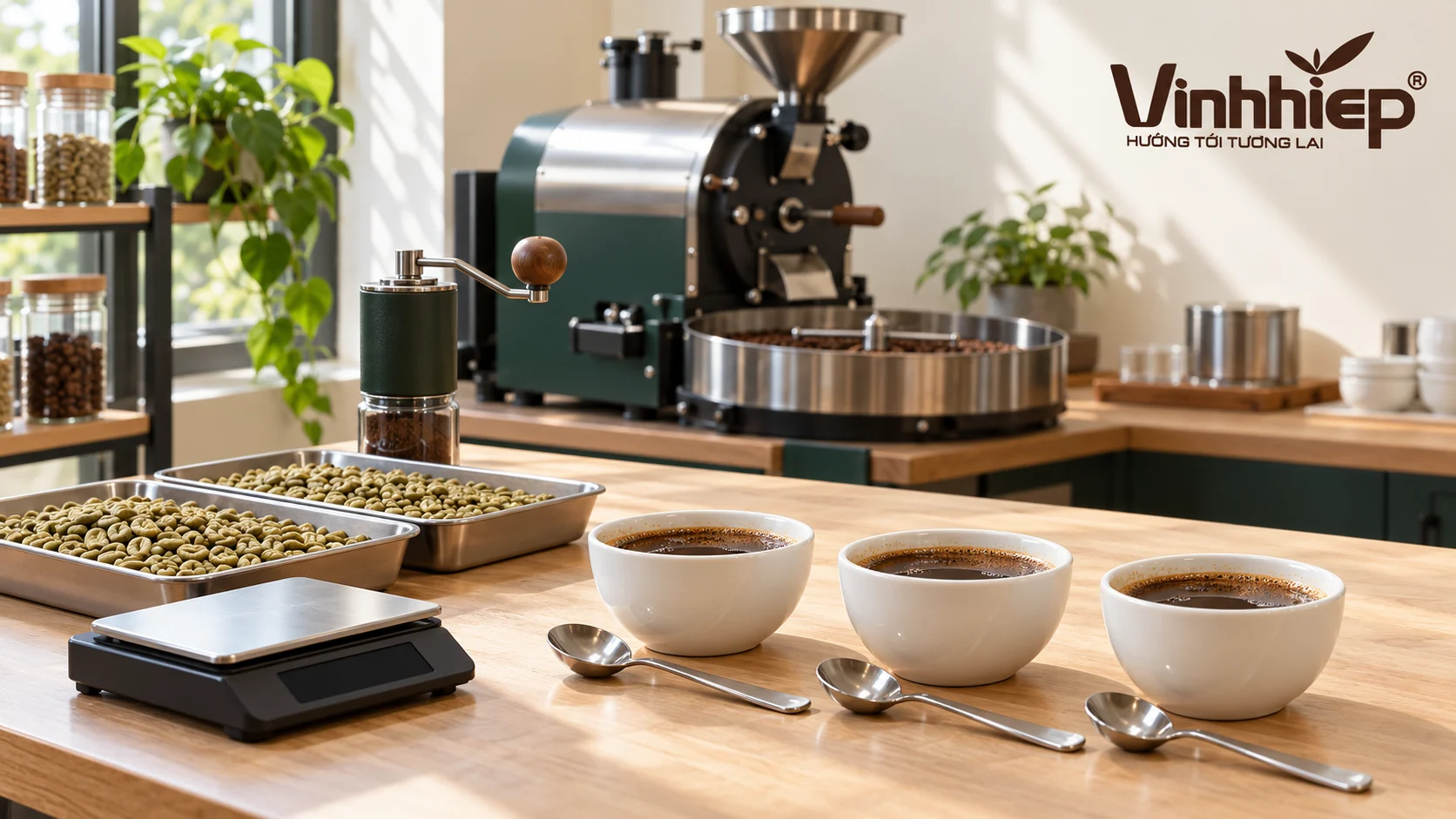
An interpretable trial has identifiable changes. If you change the material, roast, water and brewing recipe together, the difference in the cup is difficult to explain. Decide which factor you intend to examine and record the other conditions closely enough to repeat the work.
This does not require every roastery to use the same internal worksheet. It requires a record suited to the equipment, people and decision involved. A short record that another roaster can follow is more valuable than an elaborate sheet filled with unexplained shorthand.
| Trial purpose | Deliberate change | Decision the result should support |
|---|---|---|
| Compare candidate ingredients | Green coffee material | Which candidate deserves product development? |
| Develop one selected coffee | Roast approach | Which direction should be repeated or refined? |
| Assess a blend component | Component or proportion | Does the change support the intended finished product? |
| Investigate a surprising result | Repeat under recorded conditions | Does the observation recur or was the first trial unreliable? |
Use the method appropriate to the assessment
For formal sensory work, select and name the protocol being used. SCA 102-2024 covers sample preparation and tasting mechanics. Its stated design scope is green Arabica, with adaptation possible for other coffee species. For Robusta work, be clear about the method selected and any relevant adaptation instead of describing every tasting session as automatically following that standard.
An internal development tasting may have a narrower purpose than a formal assessment. That is useful when the method and limits are clear. Record what you did, the question it answered and whether the result needs a more controlled follow-up before purchase.
Record problems rather than hiding them in the result
If a roast departs from the intended approach or a brew uses the wrong amount of water, note the event. Decide whether that sample can still answer the trial question. Repeating an affected preparation may be more useful than drawing a firm conclusion about the green coffee from it.
Where practical, use simple sample codes during the first tasting discussion. Reveal the product details when reviewing the whole decision. This can help the group distinguish observations from expectations associated with a familiar product name or origin story.
Record sensory observations separately from preference
“Noticeable bitterness,” “a heavier sensation in the mouth” and “I prefer this for our phin product” do different jobs. The first two describe a perception. The last expresses a preference in an application. Keeping them separate helps colleagues understand why they may agree on a characteristic while choosing different candidates.
Start with descriptions you can recognise and explain. There is no need to produce a long list of flavour names to make a useful note. If the group disagrees, preserve the individual observations and identify whether another preparation or a later tasting could clarify the issue.
Include the conditions behind the observation
Record when the coffee was tasted in the session and any preparation difference that matters. If one sample was evaluated at a different stage from another, that context belongs with the comparison. A later reader should not have to guess why apparently conflicting comments were recorded.
Keep the language proportional to the trial. A note about one prepared sample is an observation about that evaluation. It should not become an unsupported claim about every coffee from the same region, every product with the same screen designation or all future deliveries of a grade.
The SCA standards collection separates preparation, descriptive assessment and affective assessment into different documents. That distinction is useful when deciding what kind of conclusion your own session can support. Formal scoring and an internal product preference should be identified accurately.
Test the coffee in its intended application
An initial assessment can reveal useful directions, but your customers will drink a prepared product. Continue promising candidates in the application you intend to sell. For phin coffee, include the intended phin preparation. For an espresso blend, test the candidate in the blend rather than relying entirely on how it performs alone.
In a hypothetical new-product trial, a roaster begins with S16 Clean and develops one phin direction. The first session suggests a roast adjustment. The next session changes that approach while retaining the sample identity and brewing record. Another grade becomes useful when there is a remaining question about the green material, rather than simply because it is available in the catalogue.
Use your current product as a real reference
For an established blend, prepare the existing product alongside the candidate version where the comparison is meaningful. Record which ingredient changed and the proportion used. Ask whether the revised version preserves the characteristics that matter to the product, and whether it introduces a change worth developing.
A larger screen number does not establish the answer. If you want to trial S18 Clean beside an existing ingredient, make it a defined comparison and assess the result. The physical designation helps identify the candidate; it does not substitute for performance in the actual recipe.
When the evaluation produces a promising direction, ask Vinh Hiep about the selected grade and the next sample or purchase step. Send the reference and application so the discussion continues from the coffee you tested, with the relevant commercial arrangements confirmed separately.
Turn the result into a buying step
End the session with a practical conclusion. Continue the candidate, repeat a questionable result, compare a particular alternative or move towards purchase. Include a short reason and the sample reference. This gives the next person a task without requiring them to reconstruct every comment from the tasting table.
If moving towards purchase, connect the chosen material with the proposed offer. State the grade, estimated quantity and destination. Identify any remaining requirement, such as a physical limit, origin description or agreed evaluation step. Ask what the quotation covers and which conditions need to be settled before an order.
For a future repeat order, retain the development record as a reference. It can help the team identify what must stay consistent and what requires fresh evaluation when new material is proposed. A previous success is useful context; the reference needs to be connected to the current purchase discussion.
The first green coffee enquiry guide offers examples for that handover. Send your selected grade and purchase requirements to Vinh Hiep when the trial has identified the material you want to take forward. Optional explanations of screen and grade terminology are available in green coffee knowledge.
Write a conclusion another roaster can use
A useful trial conclusion identifies the candidate, the application and the next action. For example, an illustrative note might read: “Continue this candidate for the planned phin product. Repeat the selected roast approach before changing the green material. The first comparison used the recorded recipe; one preparation was excluded because the water quantity was wrong.” This describes work and its limits without inventing a sensory score.
Another outcome might be: “Do not proceed to a production quotation yet. Compare the candidate with the current ingredient again in the existing blend, because both the ingredient and blend proportion changed in the first session.” That result is still productive. It identifies why the first evaluation cannot settle the buying question and specifies the next test.
Keep detailed observations behind that short conclusion. The person scheduling the next session needs to know what to do, while the roaster preparing it needs access to the conditions and notes. If the trial is handed to another colleague, preserve the sample reference and the reason for any excluded result.
When the candidate advances, distinguish approval for further development from approval for a commercial purchase. Your team can be interested in the material while still resolving origin, specification or delivery questions. A clear conclusion states which stage has been reached and which decision remains, so the next discussion with the supplier starts at the right point.
Practical questions
Can appearance alone establish suitability?
Appearance contributes physical observations. Suitability for a roasted product also depends on the applicable specification and performance in a relevant preparation. Use those pieces together when selecting a candidate.
Must every trial produce a cupping score?
Use the assessment method required by the task. A formal score needs an identified method and appropriate assessment. An internal development trial can produce a useful decision without presenting its preference as a formal score.
Should I try every grade at once?
Begin with the question you need to answer. One defined candidate and a relevant reference can provide a clearer first trial than an unfocused session covering the full catalogue.
Are sample terms published as a universal offer?
Ask about sample quantity, cost, dispatch and destination arrangements for your request. This guide does not establish a free-sample policy or a delivery commitment.
References
- SCA 102-2024: Sample Preparation and Tasting Mechanics: method and scope for preparation and tasting.
- SCA standards: separation of preparation, descriptive and affective assessment.
- Vinh Hiep S16 Clean: published physical limits cited in the example.