Vinh Hiep’s verified green coffee carbon footprint: scope, method and buyer questions
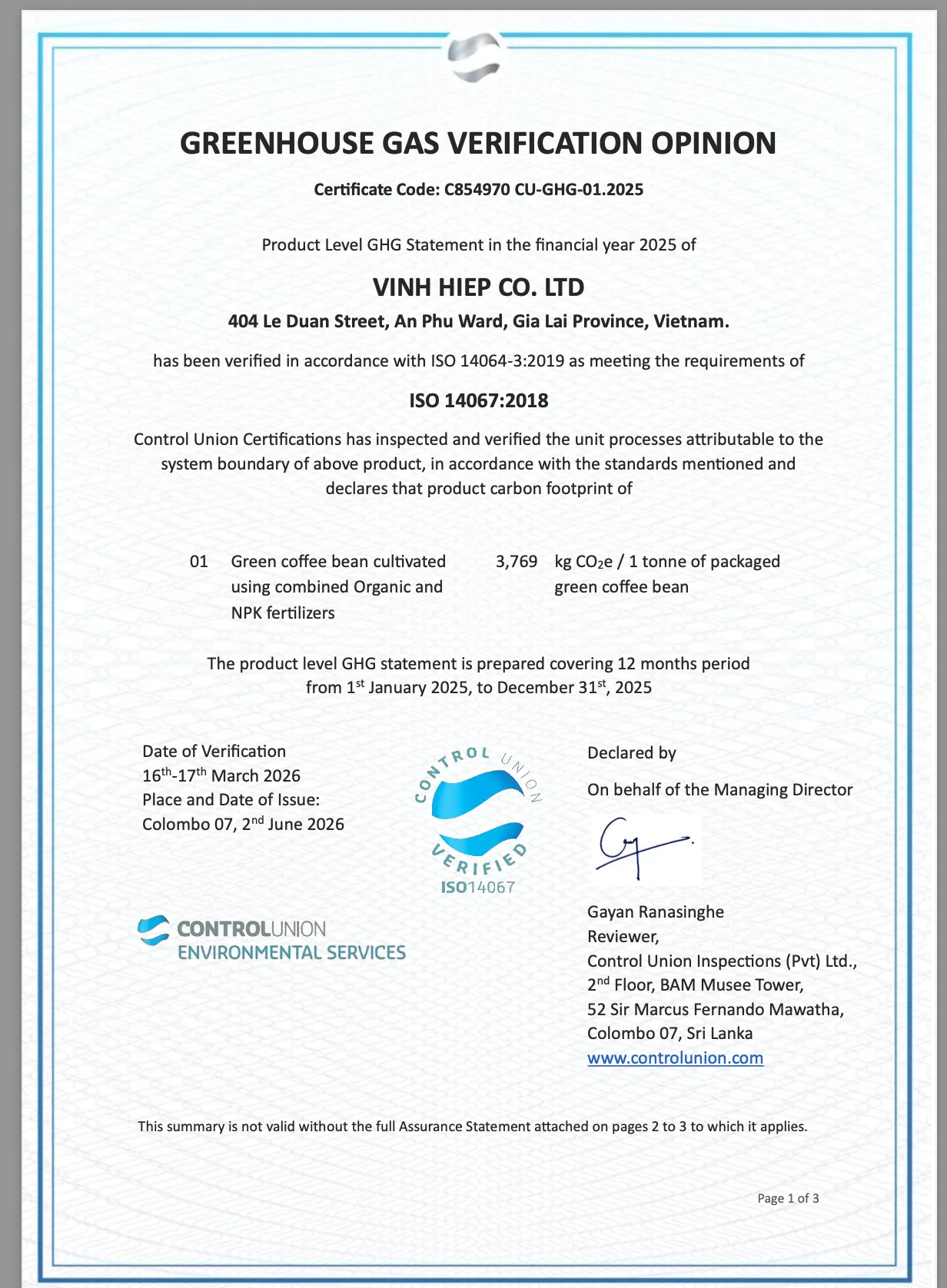
Vinh Hiep has published a product-level greenhouse-gas verification opinion for green coffee assessed for the 2025 financial year. The summary reports 3,769 kg CO₂e per tonne of packaged green coffee beans, equivalent to 3.769 kg CO₂e per kilogram, commonly rounded to 3.77.
The opinion was issued on 2 June 2026 following verification on 16–17 March 2026. Understanding the product, period and boundary behind the figure is essential before using it in a purchasing or environmental assessment.
The result shown in the verification summary
The document identifies Vinh Hiep Co. Ltd. and describes the assessed product as green coffee beans cultivated using combined organic and NPK fertilisers. It covers the twelve-month period from 1 January to 31 December 2025.
The reference printed on the summary is C854970 CU-GHG-01.2025. Control Union Inspections (Pvt) Ltd. is named in the signed verification document.
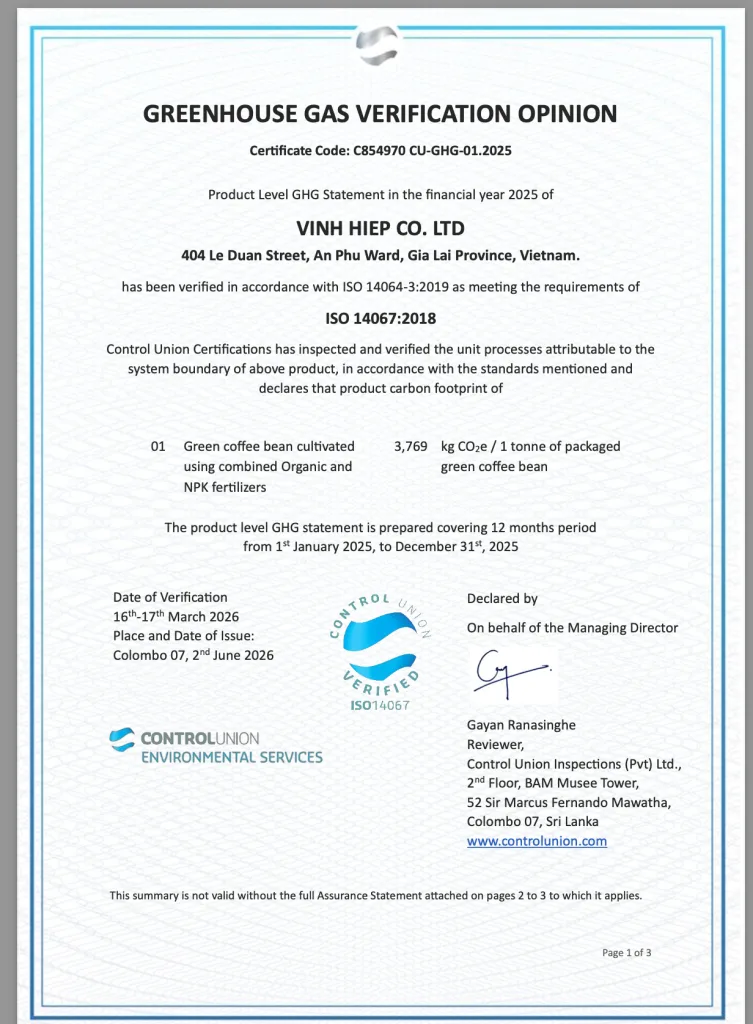
The summary states that the product-level greenhouse-gas statement was verified in accordance with ISO 14064-3:2019 against the requirements of ISO 14067:2018. It also states that the summary is not valid without the full assurance statement on pages 2–3. A buyer requiring reliance on the result should request that complete document.
What ISO 14067 addresses
ISO’s description of ISO 14067:2018 explains that the standard concerns quantification and reporting of a product’s carbon footprint using life-cycle assessment principles. It provides a framework for defining and reporting the assessment.
The standard and the verification opinion have different roles. The standard sets the framework; the opinion records the verifier’s conclusion concerning the stated assessment. Neither should be read without the scope, assumptions and supporting study.
Study and verification roles
Vinh Hiep’s project report identifies Peterson Solutions Australia and Vietnam as the consultants carrying out the life-cycle assessment work. This involved collecting information and preparing the calculation and report for the production system studied.
Control Union performed the separate verification activity. The dates on the opinion distinguish the reporting year, the verification visit and the issue date. They are different parts of the record: a document issued in 2026 can concern production data from 2025.
Keeping these roles and dates clear helps readers understand who prepared the assessment, who checked it and which period the result describes.
Read the system boundary before comparing numbers
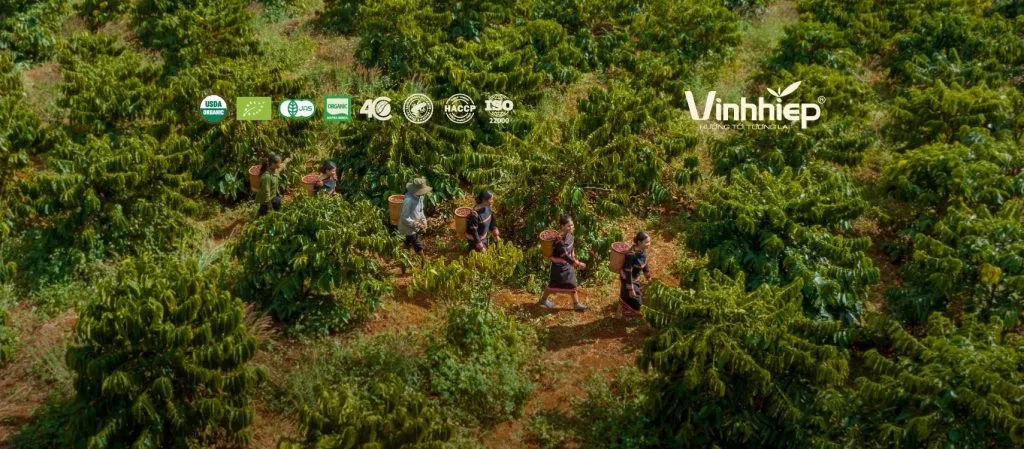
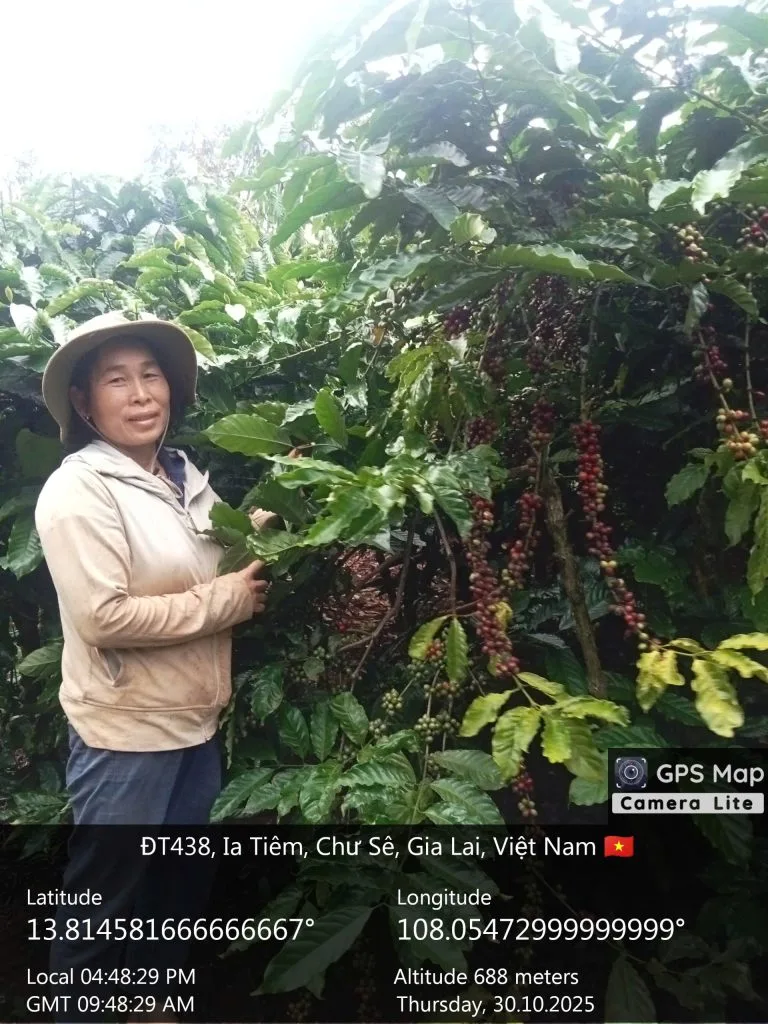
The company report describes a production scope extending through cultivation, post-harvest handling, drying, milling and packaging. The public summary names a tonne of packaged green coffee as the reported unit, but does not itself list every included process.
Readers should therefore obtain the full study and assurance statement to confirm the precise boundary, exclusions and allocation choices. A short label such as “farm gate” or “farm-to-packaging” is not an adequate replacement for that detail.
A packaged-green-coffee result should not be presented as the footprint of a roasted product, a delivered shipment or a prepared cup unless the additional stages have been assessed. Transport after the stated boundary, roasting, retail packaging and brewing can belong to a different assessment scope.
What the figure does and does not show
The reported 3.769 kg CO₂e/kg is an emissions figure for the defined product system and period. It is not a statement that the coffee has zero emissions or that an equivalent quantity has been removed from the atmosphere.
The figure also does not establish an emissions reduction by itself. A reduction claim requires an appropriate comparison with a baseline or another assessed period, using methods that allow the results to be compared.
Likewise, a product footprint is distinct from an organic certificate, a deforestation-related due-diligence record and a company’s overall greenhouse-gas inventory. A buyer may need several of these records, each for a different purpose.
Fertiliser management within the project
The study’s product description refers to combined organic and NPK fertilisers. The company report connects the work with biological organic fertiliser supplied through Ajinomoto Vietnam and cooperation involving AGF and Mitsui.
That description identifies part of the assessed production approach. It does not, by itself, quantify the contribution of a single input to an emissions reduction. To assess the effect of a management change, readers need the study’s assumptions and an appropriate comparison.
Comparing with other coffee studies
Coffee footprint studies can differ in their product units, periods, data sources, boundaries and treatment of land use and co-products. A number from one study cannot be ranked against another solely because both are expressed in kilograms of CO₂e.
Before making a comparison, check whether both results concern the same product form and include the same stages. Review the calculation method and explain any remaining differences. The company does not use the published summary alone to claim that its result is lower than all other coffee origins.
Questions for a buyer using the data
Ask which product and sourcing population the study covers and how the proposed supply relates to that population. Request the reporting period, declared unit, complete system boundary and full verification statement.
If the result is intended for the buyer’s own reporting, the reporting team should confirm that the data are appropriate for its method. Record any additional stages that need separate information. Retain the document version and the explanation linking it with the proposed product.
A basis for further measurement
Vinh Hiep presents the 2025 study as a starting point for continued measurement and improvement. Repeating an assessment with a consistent and clearly documented method can help identify where changes occur over time.
The company thanks AGF, Mitsui, Peterson Solutions Australia and Vietnam, Control Union, its technical team and the participating growers for their work on the project. Future progress should be evaluated against the actual measured results and the records supporting them.
Frequently asked questions
What is the reported footprint?
The public summary reports 3,769 kg CO₂e per tonne of packaged green coffee beans for the defined 2025 product system, equal to 3.769 kg CO₂e/kg and rounded to 3.77.
Does the figure mean the coffee is carbon neutral?
No. It is a quantified greenhouse-gas result for the stated system. It does not establish zero emissions, carbon neutrality or an offset claim.
Which dates apply to the study and verification?
The reporting period is 1 January–31 December 2025. Verification took place on 16–17 March 2026 and the opinion was issued on 2 June 2026.
Which document should a buyer request?
Request the full study information and the complete assurance statement. The published summary explicitly says it is not valid without the attached assurance pages.
Related reading
Sustainable sourcing records · Coffee traceability documents