


Coffee Traceability: From Growing Areas to Green Coffee Products
A roaster may know the country printed on a sample bag and still have questions about the coffee behind it. Which growing area does that description cover? Does the sample relate to a particular lot? Can the same origin wording be used on the roasted product? Coffee traceability connects those questions to information recorded as material moves between people, places and production stages.
Start with the decision you need to make. For a blend trial, identifying the product and sample may be your immediate priority. For a coffee sold with a regional story, you will also need to establish what origin information can support that story. Vinh Hiep’s green coffee range gives you a product starting point. When enquiring, connect your chosen grade with the origin information you intend to use.
Choose the level of origin information
Country, region, producer group and individual farm describe different levels of origin. A statement about Vietnamese coffee does not identify a particular growing district. A regional description does not automatically establish a single farm. Before collecting information, decide which level matters to your buying decision and the product you plan to sell.
For a first roasting trial, you might need the country, product grade and sample identity, then build a more detailed picture if the material suits your application. For a regional release, origin may be central from the beginning. In that case, discuss the intended claim before designing packaging or commissioning a story about a named place.
An importer supplying several roasteries may have a different need again: consistent information that purchasing, quality and sales teams can use without interpreting the same description differently. Agreeing the meaning of a place name early helps those teams work from the same material. It also makes later questions more specific than asking for “full traceability” without explaining the required depth.
Turn a broad request into a useful question
Instead of asking only whether a coffee is traceable, state what you need to establish. For example: “We intend to describe the roasted product as coming from a named region. What information can be provided for the coffee being proposed, and how is it connected to the sample?” This identifies both the intended use and the material concerned.
For background on one regional sourcing discussion, see Gia Lai coffee origins and Vinh Hiep products. Keep that regional context alongside the information for the actual product you are considering. Each answers a different part of the purchase.
Connect events with the material involved
The GS1 traceability framework distinguishes events from the data describing them. Receiving, processing and shipping are events. Identifiers, participants, places and dates help explain what happened to the material at each point. The practical value comes from preserving the connections between those records.
Think about an ordinary handover. A receiving team can identify the material arriving at its site. A processing team may create an output with a different reference. The buyer later receives a sample or delivery under another reference. To follow the material, the relationship between those references needs to remain understandable.
Start with a stable reference
When you receive a sample, keep the product name and any supplied reference together. If the beans move into another container, transfer the identification too. An unmarked jar on the roasting bench can quickly become difficult to connect with the supplier’s description, especially when several people are preparing trials.
This simple habit supports a more useful supplier conversation. You can identify the exact sample behind a question, describe the application you tested and ask how that sample relates to the material being discussed for purchase. It avoids rebuilding the conversation from a photograph of beans that look similar to other samples.
Ask about the transition that matters
You do not necessarily need every internal record. Focus on the link relevant to your decision: the growing area to the proposed product, the sample to the offered material, or the delivered bags to the agreed reference. A clear transition is easier to discuss than a request for an unspecified collection of documents.
Where you need information for a particular market or customer requirement, explain that purpose. The supplier can then identify which information is available and what needs further discussion. This article explains an information approach; it does not describe a tracking platform or internal system confirmed for Vinh Hiep.
Follow a hypothetical information chain
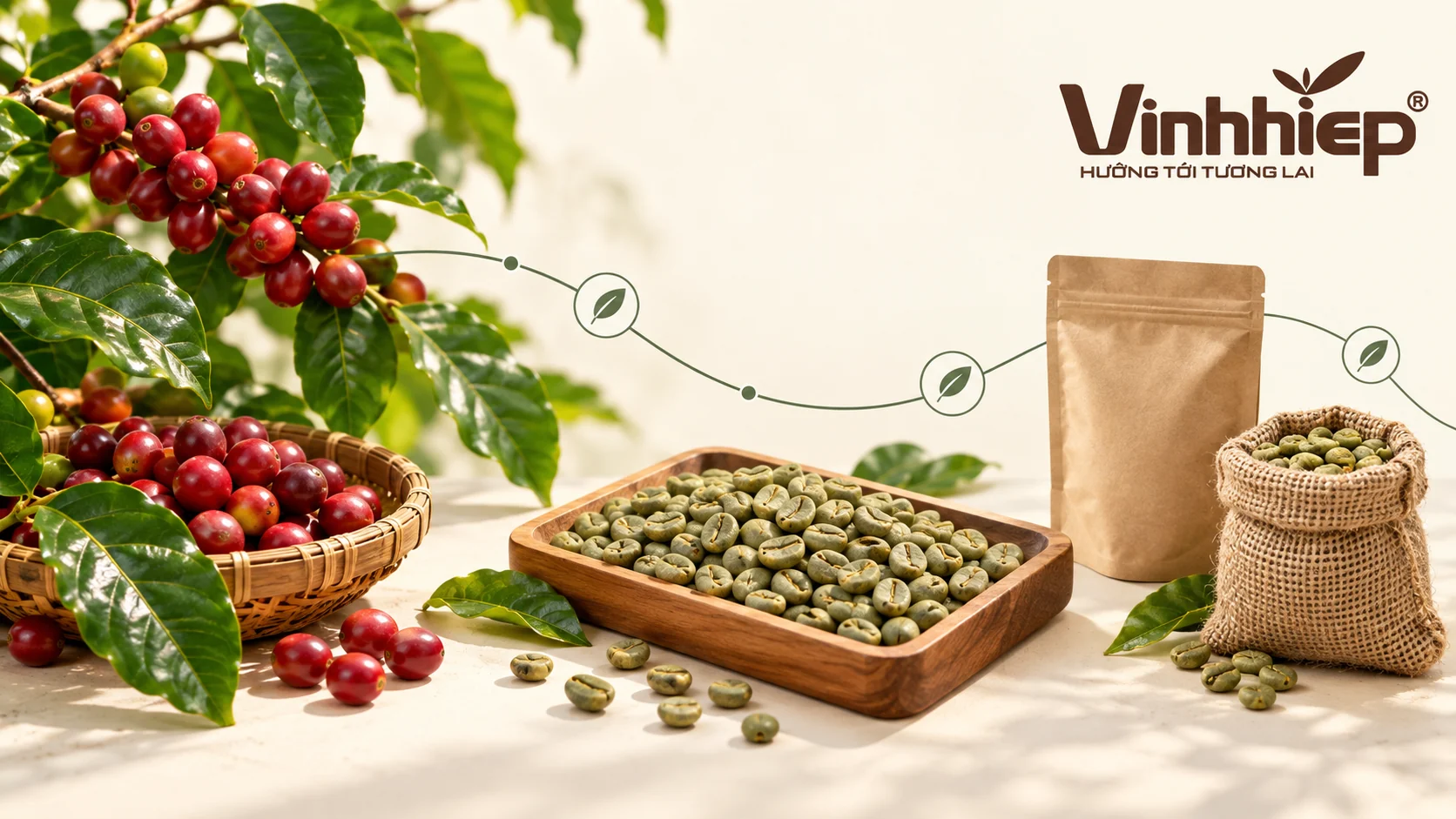
Consider an illustrative example involving a fictional processor. It receives material under references A and B. Part of A becomes output C; the remainder becomes output D. Output C is then divided into bags, and a sample is prepared for a roaster. These letters are invented solely to explain the connections, not to describe a Vinh Hiep lot.
If the processor keeps only the commercial name of C, a buyer cannot use that name alone to follow its relationship with A. If the relationship A → C is preserved, there is a starting point for the upstream question. When C is divided, the bag references need an understandable connection back to C.
| Point in the example | What the buyer needs to understand | Useful connection |
|---|---|---|
| Material is received as A | Which incoming material is being discussed? | Receiving reference and the origin information associated with it |
| Output C is created | How does this output relate to the inputs? | Input-to-output relationship |
| C is divided into bags | Which delivered units belong to this output? | Bag or delivery identification linked to C |
| A sample is prepared | What does the trial material relate to? | Sample reference linked to the product or lot described |
The example also shows why quantities need context. A weight recorded for coffee cherries and a weight recorded for green beans belong to different material states. Before comparing quantities, establish what was weighed and where in the process the measurement occurred. A list of numbers without those definitions can create a misleading impression of continuity.
For a buyer, the aim is an intelligible relationship between the coffee being evaluated and the information used to purchase or describe it. The amount of detail shared may differ from the supplier’s internal records. Agree the information needed for your purpose rather than assuming every buyer needs an identical package.
Keep product, sample and lot identities separate
A product name identifies a commercial line. A sample reference identifies the material on your tasting bench. A lot reference identifies a defined quantity within the supplier’s system. Those references can be connected, but treating them as interchangeable can make repeat buying confusing.
For example, selecting S16 Clean from a catalogue identifies the grade you want to discuss. It does not, by itself, identify a particular harvest, farm or shipment. If origin is important to the intended purchase, request the relevant information for the material proposed under that grade. Preserve the answer with the sample and commercial discussion.
Read the content behind a QR code
A QR code can make information convenient to access. Check whether the destination describes the business generally, a product line or a particular lot. Look for the scope and date of the information before applying it to the beans in front of you. The access method does not establish the level of detail on its own.
The same principle applies to photographs. A genuine photograph of a growing area can explain a region without proving the origin of every product sold by a company. If you want to use it for a particular roasted release, establish the connection and the permission to publish it.
Keep one shared buying record
Store the sample reference, relevant origin information, tasting notes and unresolved questions together. This can be a straightforward internal file rather than a complex new system. Its purpose is to help your roasting, purchasing and marketing colleagues recognise which information belongs to the coffee they are discussing.
When a product moves towards purchase, make sure the important references survive that handover. The person arranging delivery should be able to identify the material selected by the roasting team. The person writing the product description should know which origin statements have actually been established.
Pass a defined question to the next team
Suppose the roasting team approves a candidate for development, but the proposed retail description names a growing area more precisely than the supplier’s information. The useful handover is to keep the sample reference, the proposed wording and the unresolved origin question together. Purchasing can then address that question while the roaster continues developing the coffee.
When the answer arrives, update the shared description rather than leaving different versions in separate messages. Marketing should know which wording is available for publication, and production should retain the reference linking that wording to the material. If a new candidate replaces the original sample, revisit the information attached to it.
This is particularly useful when several colleagues work at different times. The person writing a label may never have attended the tasting. A short, connected account of the selected material and the origin statement gives that person something accurate to use without having to infer the story from a folder of photographs.
Use origin information in a roasted product
Origin becomes commercially useful when it helps explain the coffee accurately. A roaster might discuss the country and region, the processing method where confirmed, and why the material was chosen for a particular application. There is no need to add an individual farm story when the available information supports a regional description.
Draft the factual part separately from your own roasting observations. The supplier’s origin information explains where the material is described as coming from. Your trial notes explain what happened in your roaster and cup. Keeping those roles clear allows you to create an original product story without attributing your results to unconfirmed growing conditions.
If the first sample works for your espresso blend but the origin wording is unresolved, continue the product development while clarifying the wording before publication. These tasks can progress together. A packaging deadline should not force a more precise origin claim than the information supports.
Repeat orders deserve a fresh connection
A familiar grade name can continue across more than one purchase. When reordering, ask which information applies to the newly proposed material, particularly if your packaging names a region, producer group or processing story. Keep the new reference alongside the previous one so the team understands what has remained the same and what has changed.
For the product side of this decision, the green coffee sample evaluation guide explains how to organise comparative trials. When origin wording is the remaining buying question, send Vinh Hiep the proposed product description and grade so that the discussion addresses the information you actually intend to publish.
Discuss a specific requirement with Vinh Hiep
Choose the material route first. If you are new to green Robusta and need a defined starting point for evaluation, S16 Clean is one option to discuss because its physical limits are published separately. If you already buy to a specification, use that specification as the starting point and identify the Vinh Hiep grade you want to assess.
Then describe the origin requirement in plain terms. You may need country-level information for an internal record, regional information for a product description, or a more detailed discussion for a particular buyer. State the intended use and any wording already planned. Do not assume that a question about provenance requires an immediate commitment to a finished packaging design.
You can introduce your business, intended application, expected quantity and destination through Vinh Hiep’s contact page. Include the sample reference if one has already been supplied. The next useful outcome is a clear answer about the product and information under consideration, alongside the commercial conditions for proceeding.
For buyers still defining that first message, the green coffee enquiry guide provides worked examples. The English coffee knowledge collection offers optional technical background. Your enquiry can proceed with the information already known and a specific question about the part still unresolved.
Common buyer questions
Is a regional name enough for coffee traceability?
It provides one level of origin information. To follow material through a supply chain, you also need understandable connections between the relevant stages and references. The depth required depends on your purpose and the claims you intend to make.
Do screen size and defect limits establish origin?
They describe physical product characteristics. Origin information concerns where material comes from and how the relevant records connect. A purchase can require both, but one does not replace the other.
Should a first enquiry request every available record?
Start by explaining the question you need to resolve. A product-specific request for regional information or a sample-to-lot connection gives the supplier a more useful task than an undefined request for everything.
Can a supplier’s image be used on retail packaging?
Discuss permission, the content of the image and its relationship with the intended product. An image available on a website is not automatically cleared for every commercial use.
References
- GS1: what the traceability standard covers: events and the data describing them.
- GS1 Global Traceability Standard: identification and connections across supply-chain participants.
- Vinh Hiep green coffee products: product starting points for an enquiry.