Coffee traceability documents: connecting sourcing and lots
Coffee traceability documents help a buyer connect the proposed product with the records created as it moves through the supply chain. The useful question is whether the information can be followed from the sourcing stage to the sample and delivery lot being considered.
For a roaster or trading business, the review can begin with the sample received. Identify what it represents, then work back through the relevant references. This guide explains how to organise that review, deal with changing codes and record questions where a connection is missing.
Start with the purpose of the traceability request
Write down the decision the documents need to support. A buyer may need to confirm a growing region, compare deliveries over time or examine the records associated with a certification programme. These purposes can require different levels of information and different people to review it.
If Gia Lai origin is essential, state the geographic requirement in the enquiry. If the objective is to connect an approved sample with delivered goods, focus on the sampling record and lot proposal. A large collection of files is less useful than a clear list of questions with appropriate evidence beside each one.
Agree on a minimum data set before requesting documents. For each field, name the expected source and the person responsible for checking it. Where detailed grower information is involved, establish who may receive it and how it will be exchanged.
A practical starting question is: which product are we checking, at what stage, and for which decision? Use the answer to define the scope of the request.
Build a reference table
| Field | What to record | When to ask a follow-up question |
|---|---|---|
| Product | Name, product form and described grade | The quotation and sample use different names |
| Reference | Sample, intake, processing or lot code | One code appears to cover several unclear scopes |
| Dates | Receipt, processing and transfer dates | The sequence needs an explanation |
| Record owner | Organisation and its role | Responsibility for confirmation is unclear |
| Quantity | Amount, unit and product form | A change is not explained |
| Document | File name, version and provider | Pages or supporting references are missing |
Different systems use different field names. Understand what a field means rather than insisting that every organisation use your template. A processing-batch code and a finished-lot code can differ while still being connected by a clear conversion record.
Mark missing information as “not provided” or “awaiting confirmation”. Do not fill a gap with an assumed value to make a table look complete. An accurately recorded gap tells both parties what needs to happen next.
Follow the information through each stage
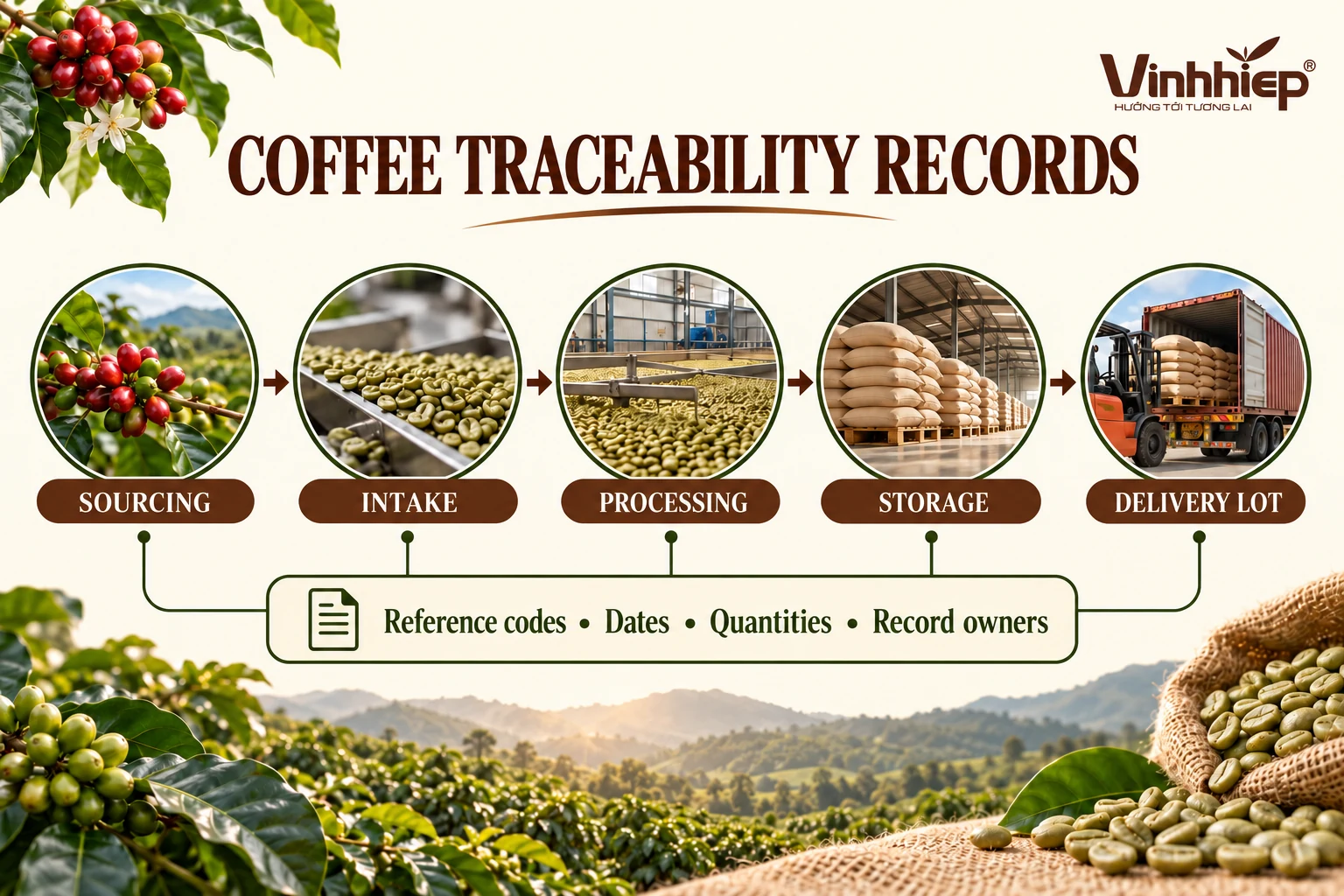
At sourcing, establish whether the description concerns a region, a supply group or another defined source. A supplier’s office address does not identify the growing location. If material from several sources is combined, ask how that scope is described and maintained in the records.
At intake, compare the date, quantity, delivering party and reference created for the received material. At processing, look for the connection between the inputs and the batch or lot produced. Changes in product name or form should have an explanation consistent with the actual operation.
For storage, review the relevant receipt and dispatch records and any location reference needed for the enquiry. Establish which record connects processed material with the proposed sale. A photograph of bags provides visual context but does not supply the missing transaction fields.
At transfer, compare the product, reference and quantity across the agreed commercial, transport and quality records. Ask the responsible party to explain differences before concluding that the documents match.
Deal with code changes, split lots and combined sources
One intake may be divided into several later lots, or several inputs may be combined within a production scope. A cross-reference table should show the earlier code, later code, date and supporting record for the relationship.
For example, intake may use code A, processing code B and the sample code C. Do not assume they concern the same material because the product name is similar. Ask which record connects C to B and identifies the inputs associated with B.
Read quantities with the product form and process in mind. Where handling loss or a change in form occurs, ask how it was recorded. Avoid imposing a single conversion factor on every situation; the responsible operator should explain the basis used.
The aim is a record that another reviewer can follow from the proposal backwards. It should show both the confirmed relationships and any connection still awaiting explanation.

Connect the sample with the proposed supply
A product-introduction sample helps a buyer explore a grade. A sample drawn from an offered lot supports a more specific review. Record the sample type, sender, receipt date, packaging condition and reference before evaluation.
Keep the offered specification and measured results separate. If the laboratory assigns a blind code, retain a controlled mapping to the supplier’s code. That allows sensory assessment to use anonymous labels while purchasing staff can still identify the source of the results.
After sample approval, ask how that decision will be linked with the proposed lot. Record the scope of acceptance, outstanding conditions and the process for changes. An acceptable introductory sample does not establish the characteristics of every later delivery.
The green coffee sample evaluation guide explains how to organise physical, roasting and sensory records. Linking the two files by reference allows the buyer to consider both product suitability and supporting origin information.
Distinguish traceability and certification records
Traceability explains how product information is connected through a chain. Certification concerns the requirements and scope of a particular programme. A buyer may need both, with a separate evidence line for each question.
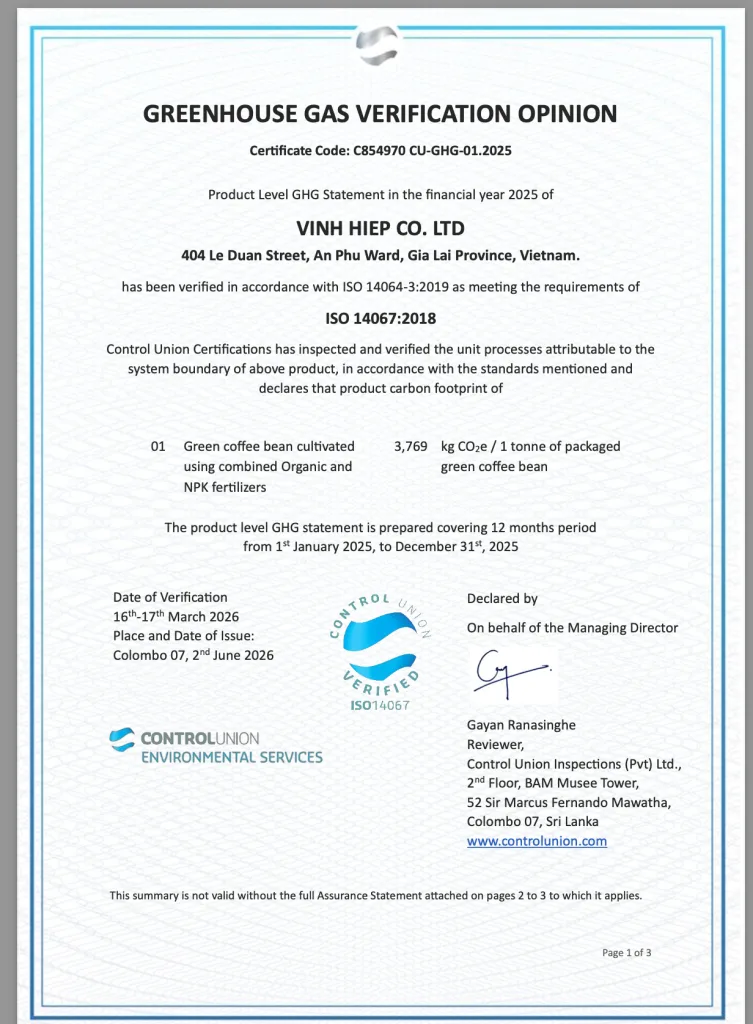
A certificate naming an operator and activity does not necessarily explain the relationship between a sample and a lot. A clear code map does not establish that the coffee belongs to an organic programme. Request the evidence appropriate to each requirement.
Use the sustainable coffee verification guide for questions about certificate scope and environmental information. This article concentrates on the links among records.
If documents are needed for a destination-market procedure, the responsible team should identify the official requirements and each party’s responsibilities. An internal purchasing table should describe what has actually been checked.
Record gaps and document revisions
Describe each issue precisely, with its document and owner. “Sample record lacks a preparation date” is more useful than “traceability is unclear”. “No link provided between warehouse code and quotation reference” tells the supplier exactly what is missing.
Use distinct statuses such as received, compared, clarification required and not provided. Receiving a file does not mean its contents have been reconciled. When a new version arrives, record the date and identify which earlier file it replaces.
Before closing the review, ask another person to follow the proposal from the sample or lot reference. If an essential link depends on an explanation outside the file, add the supporting note or document.
Keep confidential supply information and personal data in an appropriately controlled location. Agree on access and permitted use so that the record remains reviewable without unnecessary disclosure.
Frequently asked questions
Must one code remain unchanged throughout the chain?
No. Different stages can use different references. The important point is that documents explain their relationships, scope and record owners so that the review does not depend on assumptions.
Does a farm photograph prove a lot’s origin?
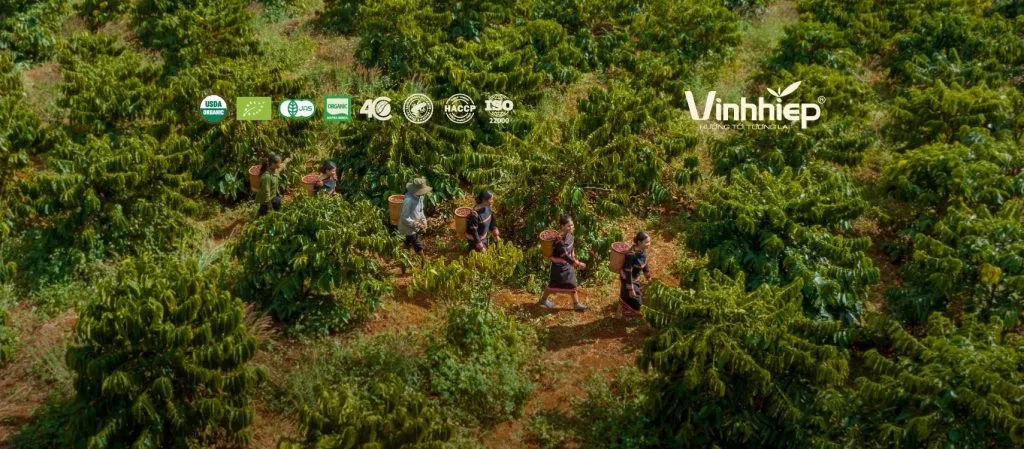
A photograph can illustrate a location when its source is known. Confirming a proposed supply requires the relevant product and lot records. Appearance and the seller’s address do not establish the growing origin.
What should a buyer do if part of the file is missing?
Record the exact gap, its purpose and the person responsible for clarification. The purchasing team can then decide the next step under its requirements while keeping the unresolved item visible.
What should an enquiry to Vinh Hiep include?
Send the product, grade, expected quantity and origin scope to be checked. If a proposal or sample already exists, include its reference and a consolidated list of questions.
Prepare a practical traceability enquiry
Identify the product, explain the purpose of the review and list the fields needed. The Vietnam coffee sourcing guide places these requirements within the wider supplier-selection process.
Review the green coffee range and contact Vinh Hiep to discuss the proposed product and supporting information. The process diagram explains how to organise a review; confirmation must come from the records applicable to the supply.