Choosing a Vietnam Coffee Supplier for Your Roastery
The next green coffee purchase may be solving a very specific problem. Your house blend needs a replacement component, a new café account wants a different drink, or you are preparing the first product for a new roastery. A supplier choice becomes easier when it follows that work. Start with the ingredient’s job, find a suitable product to test, and check whether the proposed purchase fits how your operation will receive and use it.
When choosing a Vietnam coffee supplier, begin with the offer relevant to that task. Vinh Hiep’s green Robusta range gives you named products and published specifications to discuss. You do not need to shortlist every grade before making contact. You need a reason for the first candidate and a trial that can answer whether it deserves a place in your product.
Start with the production decision you need to make
A new product and an existing recipe need different starting points. For a new espresso blend, define the drink and serving context before selecting ingredients. Is the coffee mainly being evaluated as black espresso, in milk drinks or across both? The intended use determines what the development work needs to observe.
For a working house blend, use the current ingredient as the reference. Describe what must remain familiar to customers and what you hope to improve or change. A proposed coffee can then be assessed against that actual requirement. Without the reference, the team may end up choosing a sample it enjoys while overlooking the product it must continue selling.
Your first statement can be short: you are replacing the Robusta component in a current blend, developing a phin coffee, or investigating an additional origin product. That gives the supplier a starting task. It also gives your own team a way to reject suggestions that do not address the purchase.
Separate conditions that are essential from preferences you can explore. A receiving destination or required physical specification can determine whether an offer is usable. A flavour direction may need a sample and further development. Treating both as equally settled at the beginning can make an early enquiry unnecessarily rigid.
Find a product you can evaluate, rather than a slogan
Supplier introductions often describe experience, origin and quality. These can provide useful background, but the roastery still needs a named green ingredient. A practical shortlist should connect a product with its published description and the use you intend to test.
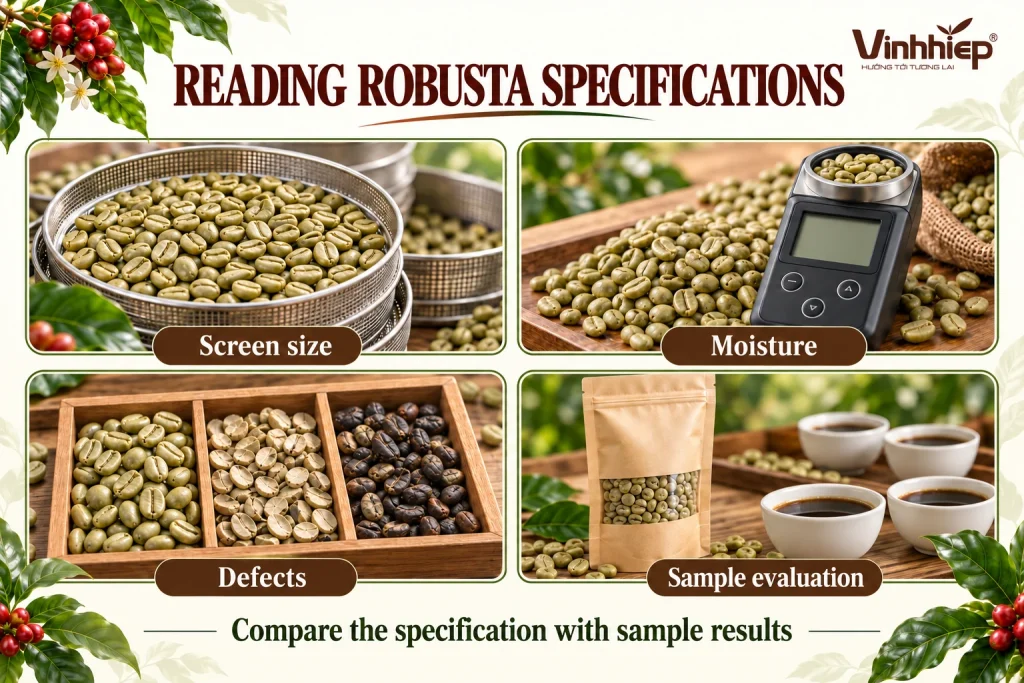
In Vinh Hiep’s range, S16 Clean is one possible starting discussion if you do not yet have a reference product. Its separate published limits for black beans, broken beans and foreign matter give the trial a defined physical basis. The reason to begin there is clarity about the input, not an assumption about its flavour.
If the roastery already buys a defined grade, start by comparing that requirement with a candidate’s specification. Keep the parameter names and qualifiers intact. A combined black-and-broken limit is different from two separate limits; a minimum screen percentage answers a different question from a maximum moisture content.
The Vietnamese Robusta range guide explains the naming. Use that explanation when a term is unfamiliar, then return to the product decision. A shortlist is useful when each candidate could reasonably solve your current requirement, rather than simply offering a different name.
Compare products on the variable you actually want to change
Suppose you want to investigate a different defect specification while retaining a screen group. S16 Standard and S16 Clean provide a product-specific comparison within S16. You can examine their stated limits before arranging an evaluation. That comparison stays focused on the grade question.
If you instead want to investigate a different size classification, choose the candidate for that purpose and record the change clearly. Do not combine a new screen, a different grade and several recipe changes without a plan to interpret the outcome. Otherwise, a difference in the cup will be difficult to connect with a purchasing decision.
The Clean versus Standard comparison shows the actual published values. It does not assign a taste to either label. The roastery’s job is to decide what physical conditions are needed, then test whether the proposed ingredient works in the drink.
Once you have that candidate, discuss the product trial with Vinh Hiep. Explain the ingredient you are replacing or the product you are developing. That gives the discussion a purpose: select an appropriate sample route and determine what needs to be confirmed before a purchase.
Give the sample a job in your roastery
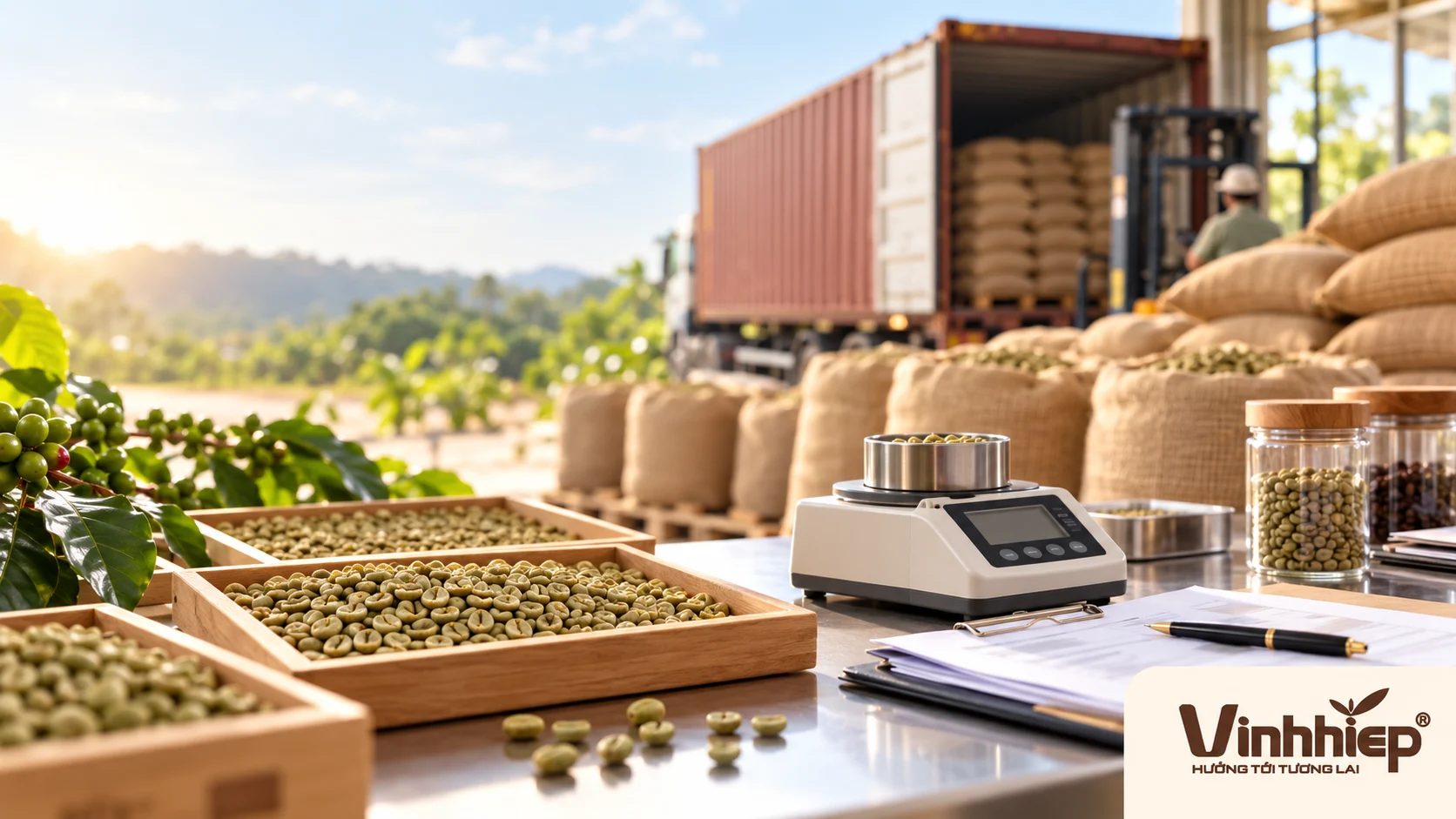
A sample trial should finish with a decision, even if the decision is to investigate further. Before roasting, write down what would make the candidate useful. You might need to preserve an established blend profile, explore a different product direction or check a physical requirement against the material received.
Keep the sample identity with the roast and tasting notes. Record enough preparation information to understand what happened when the result is reviewed later. A notebook full of words such as strong, smooth or good is less useful if nobody can tell which sample or recipe produced the drink.
The SCA Coffee Value Assessment distinguishes physical assessment, sensory description, preferences and information about a coffee. You can use that distinction without claiming that a simple internal trial is a formal assessment under the system. The practical lesson is to avoid confusing a physical specification with a tasting observation or a personal preference.
For an established blend, taste the candidate in the recipe as well as any separate evaluation you organise. A component is being selected for the part it plays in a finished product. For a phin product, include the intended phin preparation and serving style before deciding that a sample is ready for launch.
Compare first, then develop
There can be a useful difference between the first comparison and the next development roast. In the first, you establish what changes under a recorded approach. In the next, you explore whether adjusting the roast makes the candidate work better for the intended use.
Keep those purposes visible. If a sample differs from your reference, decide whether the difference is desirable, needs further development or makes the candidate unsuitable for the current product. You do not need to label the coffee universally better or worse. You need to decide whether it helps your roastery deliver the drink it is developing.
Use company information where it affects the choice
A supplier’s business history can explain its connection with coffee and origin. Vinh Hiep’s published history records an office in Pleiku, Gia Lai, in 1999 and direct exports beginning in 2004. These milestones provide context for a company introduction; they do not establish the terms or availability of a new purchase.
For a company-specific introduction, Vinh Hiep’s products, facilities and partnerships brings those records together. The useful question for your current choice is what the company can confirm about the named product and proposed transaction. Keep that discussion separate from a general appreciation of the business history.
If your brand needs origin information, state the intended origin use while selecting the ingredient. A company’s location is not automatically the growing location of every product. Similarly, a historical programme cannot be used to establish a current certification for the coffee you are considering.
Relevant evidence should answer an actual condition of purchase. If a particular site, certification or programme matters to your operation, identify the condition and confirm its scope for the proposed supply. If it does not affect this purchase, do not let a large information request distract from the ingredient and trial you need to complete.
Make sure the purchase fits the receiving operation
A coffee can suit a drink and still need a purchasing arrangement your roastery can handle. Consider the estimated quantity in relation to production, storage and the timing of use. Buying more than your operation can manage is a separate decision from liking a sample.
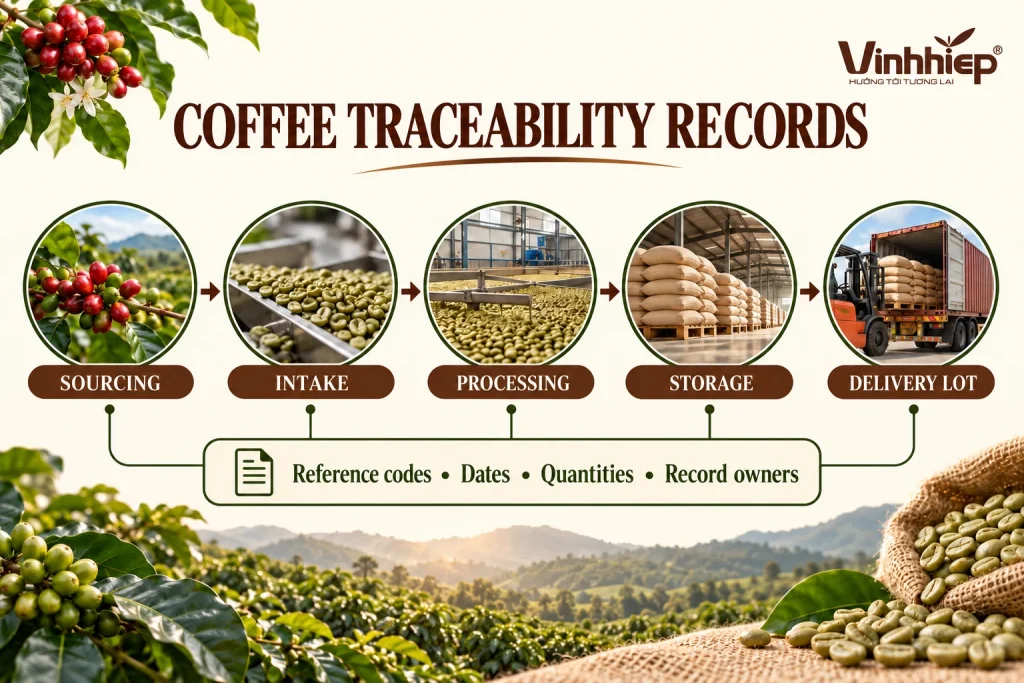
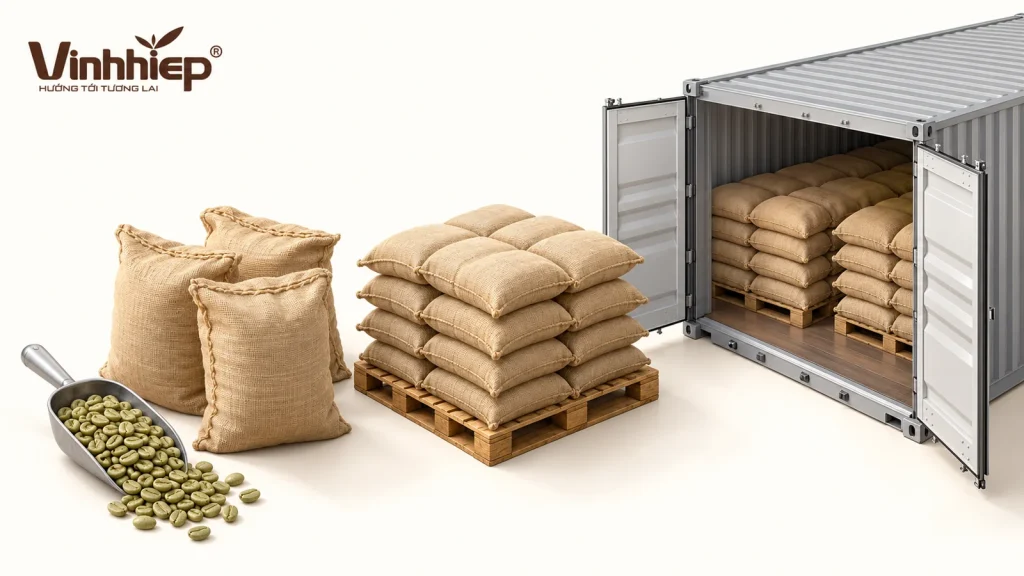
Packaging must work at the receiving site. Think about how bags will be unloaded, moved, opened and stored. Confirm the format proposed for the purchase rather than assuming every supplier offers the same bag size, liner or pallet arrangement. The receiving team should know what it will actually handle.
Destination matters too. The arrangements for delivery within Vietnam differ from those for an overseas purchase that involves freight and import handling. Establish the receiving location before relying on a quoted total or planning a launch. The scope of the offer needs to match the part of the journey you expect the supplier to arrange.
For this stage, ordering green coffee from Vietnam explains packaging and shipment planning. The aim is to agree the practical purchase, with responsibilities and timing clear enough for both sides to prepare. Minimum quantities, prices, payment and sample conditions require confirmation for the request.
Compare the offer your operation will actually use
A price per unit is meaningful only with the product and commercial basis attached. Keep the grade, quantity basis and delivery scope visible when comparing offers. Otherwise, a lower figure may describe a different ingredient or a different portion of the journey.
Do not invent a processing allowance or expected roasting yield to make the comparison look precise. Use your own production results and confirmed terms where available. If an item remains unknown, identify the decision it affects and resolve it before treating the offer as ready to approve.
The same discipline helps after a trial. If the sample you tested and the product in the proposed offer differ, address that change explicitly. A successful tasting session should not become approval of a different named line merely because both products are Vietnamese Robusta.
Choose the next step according to what remains uncertain. A product question may need a further sample; a commercial question may need an updated offer; a receiving problem may need a revised arrangement. Progress comes from resolving the specific issue, rather than repeating the complete supplier search each time.
Let the tasting result reach the purchasing decision
In a growing roastery, the person who tastes the sample may not be the person who approves the order. Pass on a conclusion that procurement can use. Identify the candidate, the intended product and the decision from the trial: suitable to continue, needs another development step, or unsuitable for the current requirement.
Keep a preference separate from a condition. A taster may prefer one variation but still consider another usable for the recipe. Conversely, a sample may be enjoyable while failing a physical requirement the business must maintain. The purchasing team needs to know which finding actually affects approval.
Then connect the conclusion with the proposed offer. If the coffee passed the trial but packaging or delivery remains unresolved, continue on those terms instead of reopening the sensory decision without cause. If the material changes, return to the relevant evaluation. This keeps the work moving while preserving the reason behind the choice.
It also helps when a trial is inconclusive. Record what the next evaluation must answer and who will make that decision. A focused follow-up is easier to organise than another round of samples with no shared view of what the roastery is trying to settle.
Begin a sourcing discussion with a clear next decision
If you are starting out, choose a brewing use and a named candidate to investigate. If you already have a product, explain the ingredient you want to replace and the result you need to preserve. If testing is complete, move into the actual quantity and destination discussion.
Contact Vinh Hiep about your green coffee requirement to continue from that stage. Our Vietnam coffee supplier overview introduces the range and company, while coffee sourcing and green coffee knowledge offer explanations for the purchasing and technical decisions involved.
The right supplier conversation should leave the roastery able to do something concrete: test a suitable ingredient, refine a candidate or assess an offer that fits its operation. Keep the customer’s finished drink at the centre, and let each specification, trial and commercial detail serve that decision.
Sources
- Vinh Hiep, S16 Clean: named product and physical specification.
- Vinh Hiep, S16 Standard: product-specific grade comparison.
- Vinh Hiep, company history: dated Pleiku and direct-export milestones.
- Specialty Coffee Association, Coffee Value Assessment: distinction between physical, sensory and informational assessments.