
Vietnam Coffee Supplier
Browse by topic

Vietnam Coffee Supplier: Vinh Hiep Products and Sourcing Guides
A supplier search becomes more useful when it leads to a product you have a reason to test. For a new roastery, that may be a first Robusta ingredient for an espresso blend. For an established operation, it may be a replacement that needs to preserve a familiar recipe. Vinh Hiep's green coffee products give those conversations a named starting point. You can discuss a product or intended use with Vinh Hiep before trying to choose across the entire catalogue. The purpose is to identify a relevant candidate and the decision the next trial should answer.
These Vietnam coffee supplier guides explain the choices behind that work: understanding a product name, interpreting a grade difference, using confirmed origin information and preparing a purchase the receiving operation can handle. A specification describes the proposed input; your roast and preparation establish how it works in the drink. Company history provides business context, while the terms for a new transaction need their own confirmation. Keeping those roles clear makes it easier to use the information without turning a general introduction into an assumption about a particular shipment.
Start from what is already known in your operation. If you have a working recipe, retain its current ingredient and record what you want to keep. If you are creating a new product, choose the brewing method and serving style first. From there, the range can be narrowed to a candidate with a clear physical description. The next useful step may be an evaluation, a further development roast or an offer for the product your team has selected.
A named Robusta line makes a practical starting point
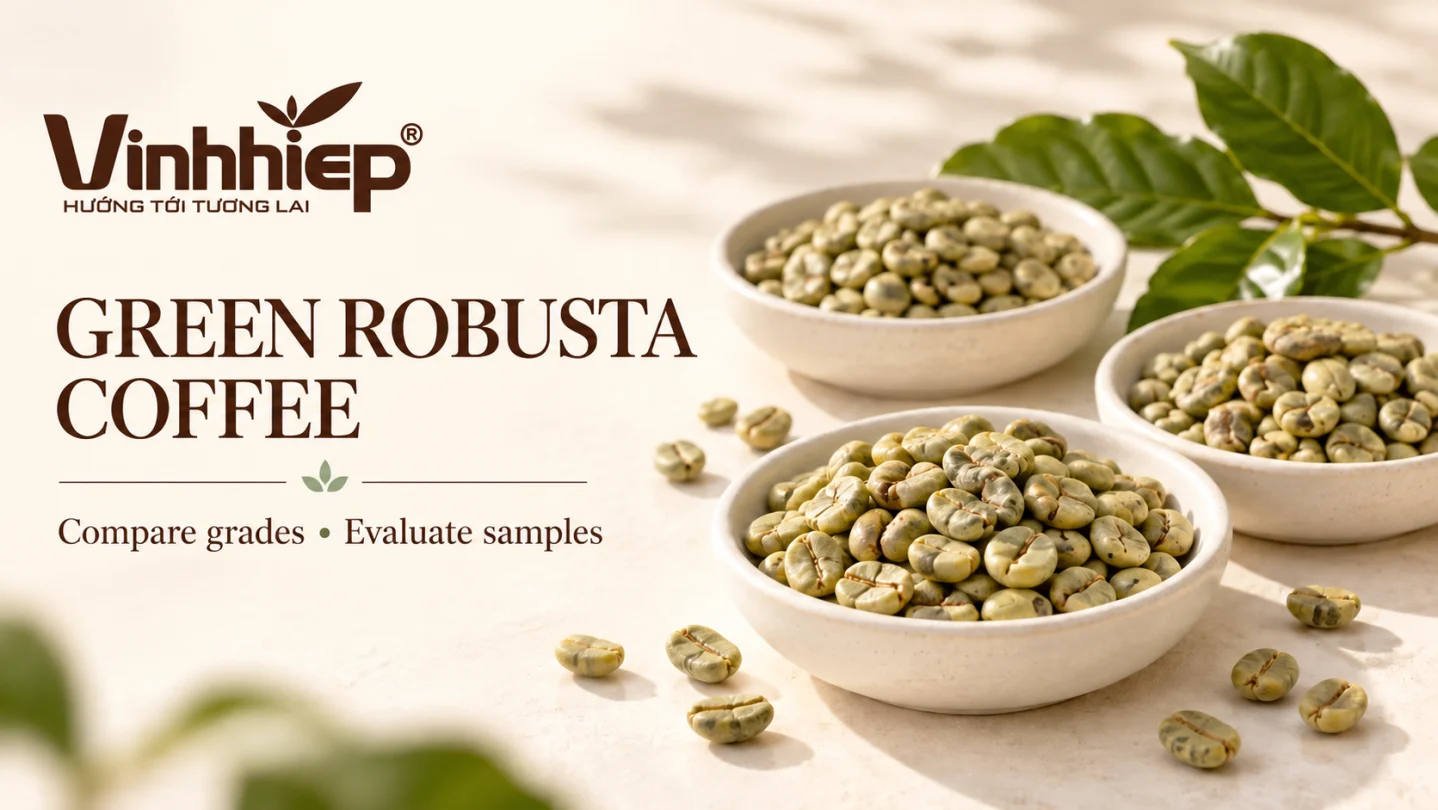
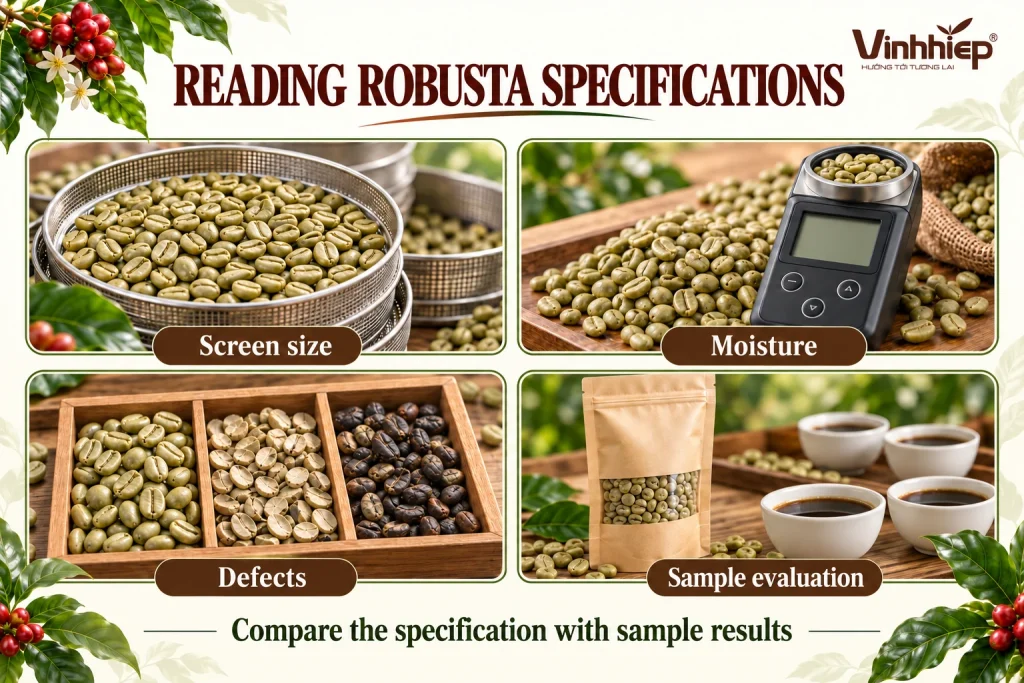
Vinh Hiep presents green Robusta using screen and grade names. Those descriptions let you discuss an actual line rather than request the best Vietnamese coffee without defining a use. Understanding the product range explains how the names relate to physical conditions and the work still needed in the roastery.
If you have no reference ingredient, S16 Clean is a possible starting discussion because it publishes separate black-bean, broken-bean and foreign-matter limits. That gives the first trial a defined input to investigate. It does not establish a predetermined cup profile. Select the intended drink and assess the candidate in that use before deciding whether to continue.
For a phin trial, decide whether the target drink will be served black or with milk, then include that preparation in the evaluation. For a blend, assess the proposed component in the recipe as well as separately. The result should help you choose the ingredient for that actual product.
Compare the grade condition that affects your purchase
When an existing recipe already has a physical requirement, keep that requirement visible. S16 Clean and S16 Standard share a screen designation but publish different defect and foreign-matter conditions. Their comparison answers a grade question within that screen group.
The Clean versus Standard explanation preserves the actual values and distinguishes separate limits from a combined category. Read those conditions before treating the products as interchangeable. Then test the candidate against the drink your customers know. A larger screen designation is not evidence that one line belongs to a more experienced roaster or always produces a better coffee.
Keep company context separate from the current offer
A company's published activities help explain its connection with coffee and origin. Vinh Hiep records an office in Pleiku in 1999 and direct exports beginning in 2004. Those dated milestones provide background for the business you are considering.
The company-specific supplier introduction connects products, infrastructure and partnerships using published information. A new order still needs its own product, availability and terms. If a location, programme or certification matters to the purchase, establish the relevant scope for the proposed supply rather than infer it from a general company profile.
Let a real selection support the product story
A regional story can help customers understand a coffee, but it needs to stay attached to confirmed information. Your own contribution may be the ingredient you selected, the roast development you completed or the way you recommend preparing the finished product. Those are useful details when they reflect actual work.
Using Gia Lai origins in a product range explains how place, processing and tasting observations can be communicated with their correct scope. A supplier's location is not automatically every product's growing origin, and historical activity does not establish present certification. Confirm the origin condition while selecting the ingredient if it will be central to your own product.
Move into the purchase once the candidate is clear
The next conversation should match the stage your team has reached. Before testing, identify the intended drink and candidate. After testing, explain whether the coffee deserves another development step or a purchasing discussion. When ready to assess an offer, connect the named line with the estimated quantity and receiving destination.
Contact Vinh Hiep about that next step. The Vietnam supplier overview introduces our range, while coffee sourcing and green coffee knowledge provide purchasing and technical explanations. Use the guides to complete a real choice: a suitable ingredient, a purposeful trial or a purchase your operation can receive and use.