Grower Partnerships Behind Gia Lai Coffee: Vinh Hiep’s Published Projects
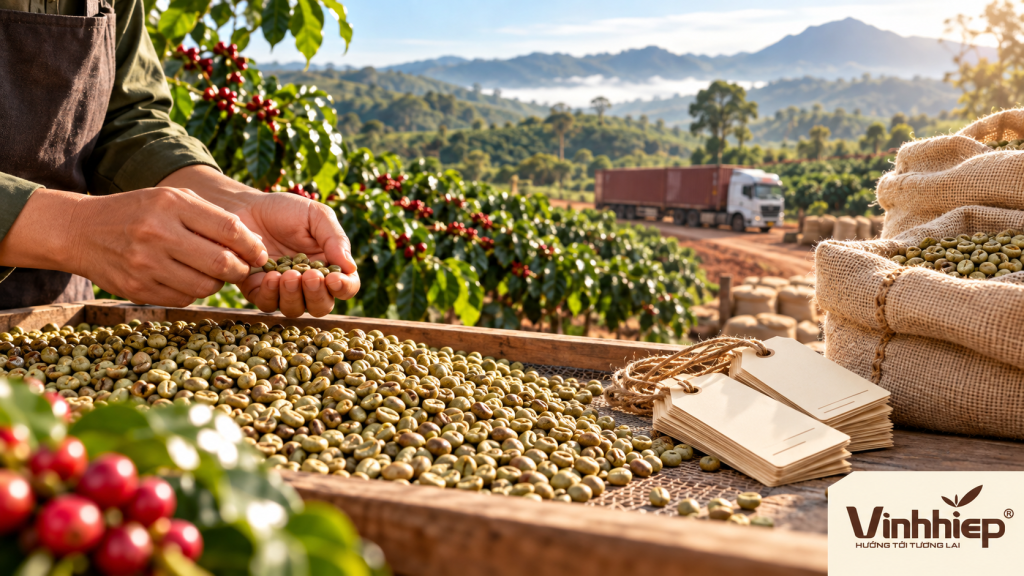
The story of a green coffee begins before a roaster receives the sample. Growers care for trees and harvest fruit; other participants handle, process and prepare the coffee for its next use. A partnership account becomes interesting when it shows where these people meet in that journey. Vinh Hiep’s published Gia Lai projects provide dated examples of that connection, including a quality-coffee linkage announced in 2021 and later activities involving farming communities.
These accounts describe the activities and periods named in each report; a current product or cooperation proposal needs its own defined scope. For a roaster or importer, begin with the coffee or work you want to develop. Explore our green Robusta products or discuss a growing-origin or partnership enquiry with Vinh Hiep. Begin with the product or work you want to develop, so a historical account leads to a concrete and appropriately scoped conversation.
The Gia Lai linkage announced in October 2021

On 8 October 2021, Vinh Hiep announced the launch and signing of a quality-coffee linkage in Gia Lai for the 2021–2025 period, together with a specialty-coffee initiative. The company’s report describes the participation of cooperatives and farming households, alongside representatives of local institutions. It also introduces Honey and Natural processing directions as part of the initiative’s plan. These are the principal details of the dated announcement.
The report places different participants in the same coffee story. For a reader unfamiliar with origin cooperation, begin with the handovers: a household harvests fruit, a group may coordinate collection, and the next participant needs material suitable for the intended processing. When discussing a new proposal, establish who handles each handover and who makes the decision if the incoming material differs from the agreed condition. That makes cooperation understandable as work people can organise.
The 2021 project announcement gives a useful starting subject for that discussion: linking growing activity with quality-coffee development. A roaster can explain the product it wants to develop and the information needed from the growing side. A prospective programme partner can identify the activity it could support, the people it can involve and the resources it brings.
Follow the work from the farm to the next participant
A grower partnership is easier to understand when each part of the coffee journey has a clear role. Growing and harvesting concern the fruit coming from the farm. Processing concerns what happens to that material after harvest. Preparing green coffee for sale involves further decisions and handling. In a proposed cooperation, identify where participants need to coordinate and what information must pass between them to support the work.
For a buyer, a useful first question is where the proposed relationship sits in that journey. Are you discussing a selected green coffee, learning about a growing area or proposing work connected with farm practices? These conversations may eventually meet, but they begin with different responsibilities. Naming the stage avoids asking a general project report to answer a question about an unspecified commercial product.
Cooperatives and farming households appear in Vinh Hiep’s 2021 account as participants in the initiative. In a new cooperation discussion, agree on a practical contact for each group and the information that contact needs. For example, a proposed processing trial needs an agreed material, a responsible person at receipt and a way to identify the resulting coffee. Clear handovers give the partners a workable first task.
Why processing directions belong in the partnership story
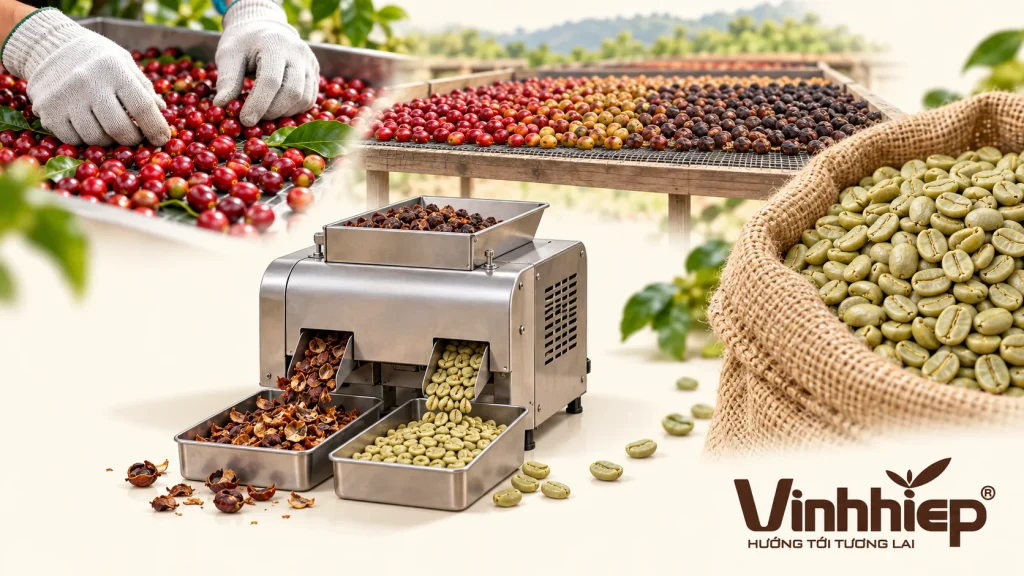
The introduction of Honey and Natural directions in the 2021 announcement connects grower cooperation with what happens after harvest. In general industry terminology, Natural processing dries the whole coffee fruit before the dried layers are removed. Honey processing involves pulping while retaining mucilage during drying. These descriptions explain the process names; they are not sensory promises for every coffee bearing those names.
For a roaster, processing information can shape a trial question. You might be exploring how a proposed coffee works in a particular product, or deciding whether a named processing option deserves further development. Identify the actual candidate and test it in the intended application. A historical project’s interest in a processing direction should not be treated as proof that all coffees currently supplied use that process.
If a processing-related product is central to your enquiry, discuss the intended coffee and application with Vinh Hiep. Ask what information applies to the proposed product and organise the next evaluation around that product. Our Gia Lai origin guide gives wider background, while green coffee knowledge explains terminology when it affects the choice you are making.
A later example: trees for intercropping in 2023
Vinh Hiep’s news archive records another dated activity on 7 August 2023: the distribution of more than 8,000 trees to growers in several Gia Lai communities for intercropping in coffee gardens. The report describes cooperation between the company’s sustainable-development function and local authorities. It places the activity within a project concerning awareness and the reduction of child labour in the coffee sector.
The account adds work connected with the farming environment to the chronology. For a partner considering a similar idea, the planning begins with a garden and its needs. Establish why another crop is being considered, who will advise on the planting arrangement and who can care for the trees after distribution. Then identify a sensible follow-up: checking which trees established, what care was needed and whether participants encountered a practical difficulty. These are planning questions for a new proposal, with any measured outcome assessed through an agreed method.
The 2023 tree-distribution report can help a prospective partner introduce that farming subject. Put the intended participants and follow-up responsibilities into the proposal alongside the initial activity. For a coffee buyer, keep the enquiry closer to the product: identify the coffee of interest and the growing information needed to explain it to a customer.
Community programmes add another part of the picture
In a report published on 31 March 2025, Vinh Hiep describes its involvement with Rainforest Alliance in a programme concerning awareness and the reduction of child labour in Vietnam’s coffee sector. The article looks back at activities during 2022–2024, including children’s clubs, vocational training for young people and support in project areas. It is a dated company account of the programme described.
For an international reader, this background makes the people involved more visible. A community proposal may need the participation of households, local organisations and people with suitable programme experience. Establish the purpose of the proposed activity, who it serves and who can organise the next scoping conversation. When the work concerns children or young people, programme planning should be handled with the relevant qualified partners and their procedures.
Our community and growers section brings together related stories. For a broader farming discussion, see sustainable Vietnamese Robusta. The value of these accounts is their specific work and context. Keep that detail visible rather than compressing every different activity into a single adjective attached to all coffee from the company.
Use the chronology to decide what to ask next
A timeline gives each part of the story a useful place. The 2021 account introduces a linkage and processing directions. The 2023 report records trees distributed for intercropping. The 2025 article reviews community activities during a programme period. Select the subject closest to your intended contribution, then describe the next piece of work in a short proposal: what would happen, who would participate and what decision the first discussion should produce.
Decide what the next conversation must resolve. If you want to learn about a particular initiative, identify its name and period. If you want to understand a selected coffee, name the product and the information required. If you want to propose joint work, explain the intended contribution and the stage where participants would cooperate. This makes the request practical and prevents a large collection of historical links from obscuring the decision.
You can keep a short internal note with the statement under consideration, the supporting account and the question that remains. For example, an announcement may support a dated background paragraph while the link to a product still needs discussion. That note allows the purchasing and communications teams to proceed with the parts already understood without silently treating every open question as answered.
Turn a cooperation idea into a workable proposal
An initial proposal does not need to be elaborate, but it should say what work is intended. Perhaps a roaster wants to develop a product with a clearly described origin connection, or an organisation wants to explore cooperation concerning a farming subject. Explain why the connection matters to the project and what your organisation expects to contribute. This gives the discussion more substance than a request to be associated with a general sustainability story.
Identify the people who need to participate in the next decision. Product development, sourcing and programme work can involve different contacts and time frames. A proposal may need a scoping discussion before any commercial or activity commitments are appropriate. Keep those stages separate so a useful first conversation is not mistaken for an agreed programme, a confirmed supply arrangement or permission to publish a particular claim.
Bring a specific cooperation idea to Vinh Hiep with the intended work, the relevant coffee or growing-area subject and the next decision you want to reach. If the immediate aim is purchasing, say so directly. If the aim is programme development, make that purpose clear. The historical archive then supplies context for a new conversation rather than a set of assumptions about what has already been agreed.
Keep the coffee evaluation connected to the buying task
A partnership story does not remove the need to choose a product that works in the roastery. A new buyer can start with a defined product such as S16 Clean and an intended drink. An established roaster can use the current ingredient as the reference. In either case, the trial should answer a concrete application question while the origin or cooperation information is considered alongside it.
Keep the conclusions distinct. A promising sample may justify further development while a proposed origin statement still needs confirmation. A useful historical account may support background reading while the candidate ingredient does not fit the current recipe. These are ordinary results of doing the two tasks carefully. Stating them clearly is more useful than forcing one favourable impression to stand for complete approval of the product and its story.
The coffee sourcing section supports the practical move toward an enquiry, and coffee traceability examines the information travelling with coffee. When the product direction is clear, discuss the intended quantity and destination with the relevant outstanding questions. Availability, sample arrangements and commercial conditions need confirmation for the specific request.
Tell a story that follows the work
For customer communication, choose the details that genuinely explain the product or partnership. Retain the date of a historical initiative and the action it describes. Use product information applicable to the coffee being sold. Describe your own roasting contribution from the development work you have actually done. This produces a story with people, places and actions rather than a broad claim that asks the reader to infer more than the information supports.
Review the wording when the ingredient or programme changes. A dated background account may remain useful, while a statement connecting it to a particular product may need revision. Keeping the approved description with the product record makes this review easier for the people updating labels, websites and wholesale information. The result is a story that can be maintained as the commercial work develops.
Contact Vinh Hiep about Gia Lai coffee or grower cooperation. Start with the work you want to do and the connection you need to establish. The published projects provide a meaningful history; the next conversation can define the product, information or partnership relevant to your current plan.
Questions about published partnerships
How can a roaster begin a partnership conversation?
Name the product you want to develop, the proposed origin connection and the contribution your business can make. A focused first discussion might establish the candidate coffee, the people who need to be involved and the next evaluation task.
What makes a proposed activity easier to organise?
Give it a defined purpose, participants, responsibilities and a follow-up. For an intercropping idea, for example, identify who can advise on the planting plan and who can check establishment afterwards. Agree how any intended result would be assessed.
What should a prospective partner explain first?
Describe the work, the intended participants or coffee connection, your proposed contribution and the decision needed next. That is enough to begin a focused scoping discussion without assuming an existing programme can simply be reused unchanged.
References
- Vinh Hiep’s Gia Lai linkage announcement, 2021: project period, participants and processing directions introduced.
- Vinh Hiep tree-distribution report, 2023: dated activity involving trees for intercropping.
- Vinh Hiep community programme account, March 2025: the activities and 2022–2024 period described in the company report.
- CBI coffee value-chain analysis, Annex VII: general processing terminology, separate from company product claims.