Vietnam coffee sourcing: a buyer’s checklist
Choosing a Vietnamese coffee supplier begins with the intended use and the information needed to assess a product. For green coffee, buyers normally compare grade, sample results, origin records and transaction terms. A quotation containing only “Robusta” and a screen size is an incomplete basis for that decision.
This guide follows the sourcing process from the initial brief through supplier review, sample selection and later changes. It is intended for roasters, traders and purchasing teams. Commercial availability and terms need to be confirmed for the actual proposal.
Define the product before building a supplier list
Distinguish green coffee from roasted whole beans and ground coffee. Green-coffee buyers need material for further roasting or processing. Finished-product buyers also need roast, grind, brewing, packaging and label information. Asking for the wrong form makes the responses difficult to compare.
For green Robusta, describe the application: phin, espresso, blending or another use. Record the specification fields already known, including screen retention, defects, foreign matter, moisture and any processing requirement. Mark undecided fields as requiring advice.
Expected quantity, purchasing frequency and destination help the supplier assess the enquiry. Do not assume a minimum order before receiving confirmation. If you are exploring a new market, say so and explain the sampling stage you need.
Separate mandatory criteria from negotiable details. A product’s performance in the intended application may be essential while packaging can still be discussed. This distinction helps the team assess a suitable option without rejecting it for an unresolved detail.
Understand the supplier’s role in the chain
A supplier can be a processor, trader, exporter or an organisation combining several roles. Identify who is responsible for the product, documentation and response to quality questions.
Ask for the legal name on the quotation, the contracting party and the main contact. If another facility or warehouse is involved, clarify its role and relationship. A supplier does not need to own every stage, but the responsibilities should be understandable.
Compare the website, product records and direct response. Where several addresses appear, distinguish office, processing site and delivery point. None of these should automatically be treated as the growing location.
Begin with the information needed for initial fit. For a suitable proposal, move to the more detailed supplier due-diligence review. A staged approach keeps effort focused on the decision being made.
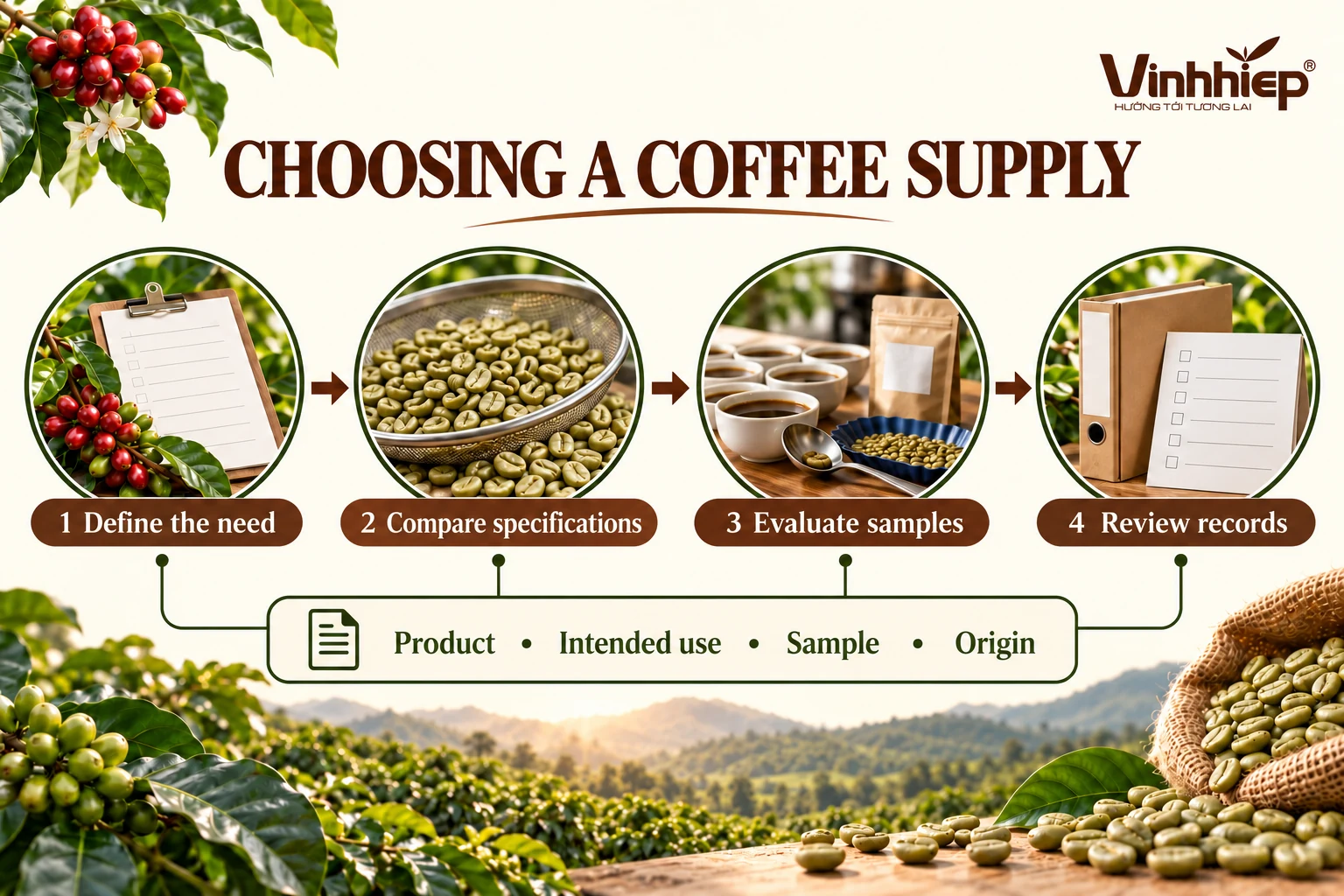
Compare proposals on the same basis
| Comparison group | Information to clarify |
|---|---|
| Product | Species or type, product form, grade and processing description |
| Physical quality | Screen retention, moisture, defects and foreign matter |
| Sample | Type, code, preparation date and represented scope |
| Supply | Origin scope, crop information and supporting references |
| Transaction | Quantity, packaging, delivery point, timing and responsibilities |
| Documents | Quality, traceability and required programme records |
Do not compare S18 Clean and S18 Standard as if screen size makes them identical. Put the limits into separate fields and retain the method or interpretation confirmed by the supplier.
Also identify differences in commercial scope. A quotation including transport is different from one describing goods at a specified handover point. Ask which costs and tasks are included rather than adding an assumed amount and treating it as the final price.
Once the common table exists, send the missing fields in one question list. Keep the response date and the person providing it. This is easier to maintain than separate questions across several channels.
Use samples to examine suitability
Before receiving material, ask whether it introduces the grade or represents an offered lot. Identify the evaluation objective, receiver and information required with the package.
Separate physical checks, sample roasting and sensory assessment. Record enough conditions to discuss different results. A poorly controlled roast or an unidentified sample is an unreliable basis for a conclusion about an entire supplier.
For blends, retain the trial recipe and conditions under the buyer’s procedure. A coffee that performs well alone may behave differently in the intended product. An attribute less preferred on its own may still need assessment within the application.
Send feedback with the sample code and specific questions. The sample evaluation guide provides a connected record. Approval should identify its scope and outstanding conditions.
Review origin and certification requirements
Describe origin through the records applicable to the proposal. A business based in Gia Lai may work across several regions. If a particular growing location is required, state it in the initial brief.
Request the relationship between sample, offered lot and sourcing records. Different stages may use different codes, with a documented mapping explaining the links. Use the traceability guide to organise this review.
For organic or other programmes, examine the operator, scope, status and products. A logo or project announcement offers context but does not replace the records relevant to a transaction.
If the buyer has separate environmental or social criteria, list each with its supporting evidence. The sustainable sourcing guide helps keep certification, traceability and project information clear.
Consolidate the proposal and open items
After product and sample evaluation, bring together the agreed description, specification, quantity, packaging, destination and document requirements. Check that the latest version includes changes made after sampling.
Keep outstanding items with an owner and next step. A sample might be approved while lot identification or packaging remains open. When the answer arrives, record its date and which earlier information it replaces.
Commercial responsibilities should be confirmed in the appropriate written transaction record. This guide does not set a payment schedule, delivery promise or claims procedure. Those need agreement between the parties.
Distinguish proceeding, waiting for clarification and declining a product. A proposal awaiting a document has a different status from material that does not fit the application. Clear status avoids repeating work when new information becomes available.
Monitor the supplier after the first purchase
Use verifiable observations from the working relationship: completeness of documents, clarity of answers, product suitability and handling of changes. Choose measures that can be supported by records rather than a general impression.
For regular purchases, retain the standard brief and evaluated samples. When source, crop period, grade or packaging changes, record the change and approval. The reassessment can focus on the affected areas under the buyer’s procedure.
Confirm availability and important fields for each new proposal. Earlier terms should not be assumed to remain available indefinitely. Share a longer purchasing plan where it can help both parties discuss coordination.
Use experience to improve the enquiry template. If the same field repeatedly requires a follow-up, add it. A better sourcing process improves comparison and reduces repeated questions, alongside developing supplier relationships.
Frequently asked questions
Can the lowest quoted price decide the purchase?
First compare the product, limits, delivery scope and required records. An unclear price does not provide enough information to decide which proposal fits the requirement.
Which grade should a new roaster start with?
Describe the planned product, equipment and application. Compare published specifications and evaluate samples under suitable conditions. One screen size will not suit every roasting business.
Is detailed due diligence needed at the first enquiry?
The review can be staged. Start with product fit and supplier role, then examine detailed records for a suitable proposal according to the buyer’s requirements.
How can a buyer obtain a clear response?
Send a consolidated brief with product, application, specification, quantity and destination. Put sample and document questions into answerable fields and mark where advice is needed.
Discuss a proposal with Vinh Hiep
Review the green coffee range and Robusta specifications. Use the sampling questions to prepare the next conversation, then contact Vinh Hiep with the requirements for the actual supply.