


Central Highlands coffee: products, growing areas and buyer checks
Central Highlands coffee describes coffee associated with Vietnam’s Tay Nguyen region. A buyer will encounter several product forms and descriptions, including green beans, roasted coffee, ground coffee, variety names, origin names and screen grades. Choosing the right form is the first step towards a useful proposal.
This guide moves from the intended use to specifications, samples and origin records. Vinh Hiep’s green Robusta products provide examples for comparison. Regional background should be connected with the quality and documentation of the actual product proposed.
Understand the region name
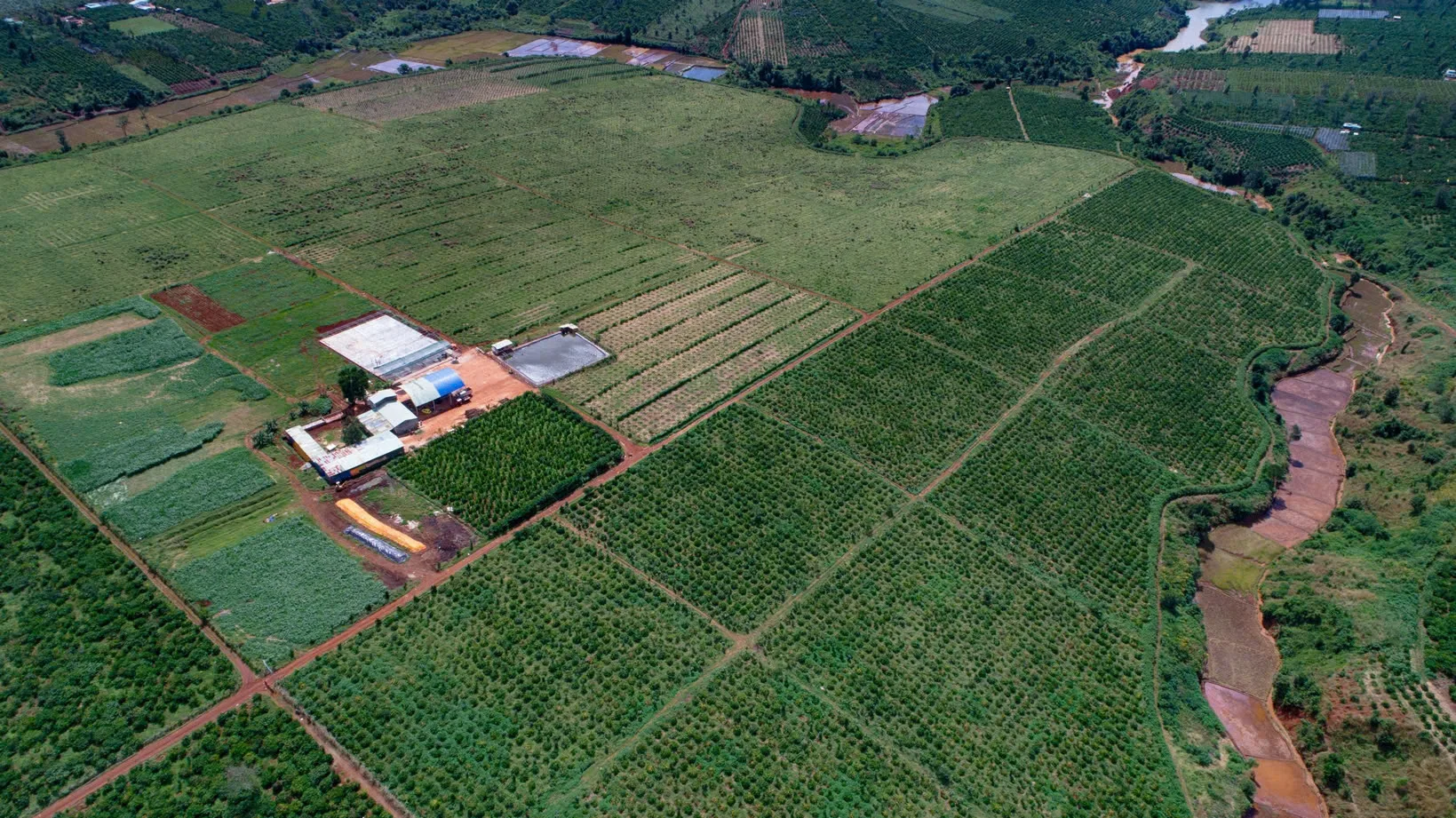
The Central Highlands is a broad production region containing many growing areas, collection activities and processing operations. A regional introduction does not give the variety, processing method or trial result for every coffee sold under that description.
The Western Highlands Agriculture and Forestry Science Institute, WASI, provides research background on coffee production in Vietnam. Older reference material should be read with its date and not treated as current production statistics.
If the requirement concerns Gia Lai, narrow the regional description to the scope that must be confirmed. The Gia Lai coffee guide explains the product and origin questions. Final confirmation needs records appropriate to the proposal.
Distinguish growing, collection, processing and dispatch locations. They may differ within one supply chain. Reading each location by its role prevents a business address being mistaken for the growing origin of every product.
Choose the form for the intended use
| Form | Typical use | Information to request |
|---|---|---|
| Green coffee | Roasting, processing or trade | Grade, processing, screen, defects, moisture and sample |
| Roasted whole beans | Cafés, distribution or customers with grinders | Composition, roast information, date and storage guidance |
| Ground coffee | Brewing with the intended equipment | Composition, grind, preparation and packaging |
If you roast, begin with green coffee specifications. A comment about a finished drink cannot establish the quality of every green lot bearing the same regional name. Preparation steps separate the raw material from the cup.
For a café or home use, describe the brewing equipment and whether a grinder is available. The supplier can then discuss the appropriate finished product. Read roast and grind information with the product guidance.
Vinh Hiep’s catalogue introduces green Robusta grades. For other forms, state the requirement so the responsible team can confirm options. This article does not establish stock or a complete finished-product range at every date.
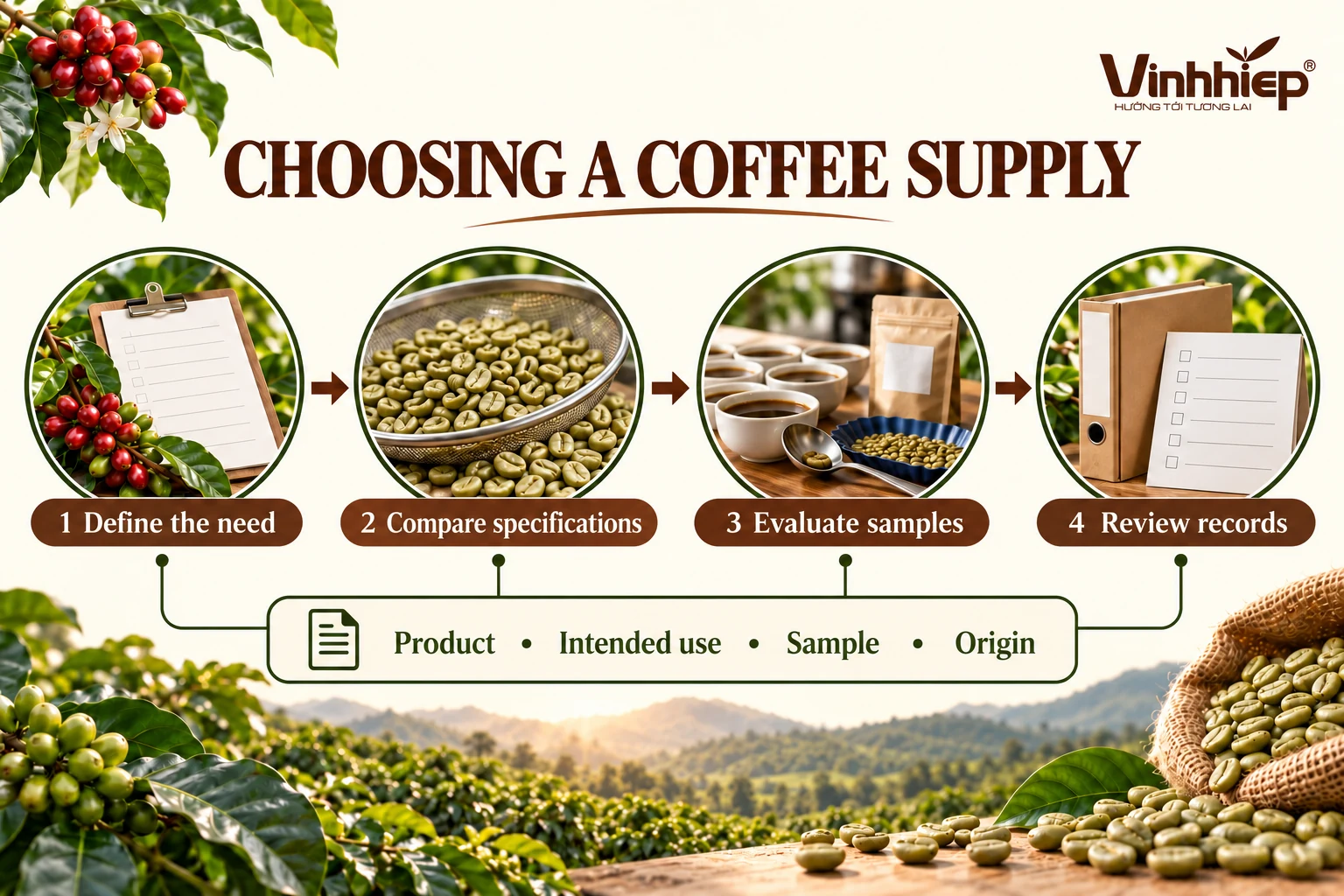
Ask for more than the word Robusta
Include the product name, grade, processing description and any crop or source scope you wish to understand. Add physical requirements and the planned roasting use. These fields help the supplier assess product fit.
If S13, S16 and S18 are unfamiliar, start with the application. Phin, espresso and blending can involve different priorities. Request samples and evaluate them against your criteria rather than assuming that a larger screen is always preferable.
Ask which processing description applies to the actual product. It provides information about handling, while sensory suitability remains a sample question. Keep observations connected to a sample reference.
Quantity, frequency and destination also belong in the brief. Price, minimum order and delivery timing should be confirmed separately for the proposed transaction.
Read the complete grade specification
Screen size should be read alongside retained percentage, moisture, defects and foreign matter. Preserve whether black and broken bean limits are separate or combined.
Vinh Hiep’s S18 Standard example publishes minimum 90% retention on screen 18, maximum 12.5% moisture, a combined black-and-broken allowance of 2% and maximum 0.5% foreign matter.
The S18 Clean example uses the same stated screen retention and moisture maximum, with separate limits of 0.1% black beans and 0.5% broken beans and a 0.1% foreign-matter maximum.
S13 Standard publishes minimum 90% retention on screen 13, maximum 13% moisture, combined black and broken beans of 5% maximum and foreign matter of 1% maximum. These examples were checked on 24 October 2026 and require confirmation for the offered supply.
The Robusta specification guide brings the examples into a comparison table. Do not turn a grade description into a claim about every lot’s origin, price or flavour.
Compare samples under suitable conditions
Identify whether the sample introduces a line or comes from an offered lot. Record code, receipt date, sender and packaging condition. With blind assessment, keep a controlled mapping from internal to supplier references.
Use the selected method for physical checks, then record sample roasting and sensory conditions. If samples are roasted very differently, consider the effect of those conditions before attributing the outcome to the raw material.
For blends, retain separate observations from the standalone and application trials. Describe what fits, what needs adjustment and which questions remain. Referenced data supports a clearer response than a request for “stronger coffee” alone.
After selecting a direction, ask how the lot and documents will be confirmed. The sample evaluation guide covers identification, testing and decisions. An introductory sample does not guarantee all future supply.
Verify origin through the proposed supply
Explain the level of origin confirmation needed: the broader region, a specific growing location or the source described by the available records. A precise requirement helps the supplier identify the relevant evidence.
Compare references on the sample, proposal, processing and warehouse records where applicable. Different stages can use different codes, with a documented connection. Record missing links rather than matching files by similar product names.
Read origin information with the relevant dates and quantities. Ask how split lots, combined sources or code changes are recorded. A regional photograph or company presentation does not answer every part of that review.
Use the traceability guide for a reference table. Detailed grower and source data should be exchanged through appropriate access arrangements.
Define organic and sustainability criteria
Name the required programme, product and purpose. Review the operator, scope, status and connection with the proposal. A programme logo is a starting reference rather than the complete evidence.
Cultivation, grower-support and environmental projects can add useful context. Check their dates and participants before applying the information. An activity in one area does not create a claim for every Central Highlands product or facility.
For environmental reports, identify the product, unit and boundary. Ask a specialist to assess comparability where needed. Retain the document and unresolved questions with the purchasing record.
The sustainable sourcing guide separates these evidence groups while keeping them connected with product quality and application.
Prepare the enquiry
Start with form, application and quantity. Add the specification of interest, Central Highlands origin scope, destination and sample required. Mark any field needing advice.
When comparing suppliers, use a common response table with document and confirmation dates. Keep missing fields open rather than borrowing a value from a different proposal. Record changes when a revised response arrives.
Use the sampling questions and supplier selection guide to plan the next stage. Collect enough information for the current decision, then add the detail required as the proposal develops.
Frequently asked questions
How are Central Highlands coffee and Gia Lai coffee related?
The Central Highlands is the broader region, while Gia Lai is a location associated with coffee production within it. Confirm the precise origin required through the proposal’s records.
Are larger beans always more suitable?
Screen size is one selection field. Defects, moisture, processing and sample performance also matter. Size alone does not determine application suitability.
Can green coffee be used directly for brewing?
Green coffee is raw material for roasting or further processing. For a brewing product, identify roasted whole beans or ground coffee appropriate to the equipment.
Does the catalogue establish Central Highlands origin for every lot?
The catalogue introduces products and published specifications. Origin, samples and supporting records need confirmation for the actual supply.
Begin with the product and application
Explore the green coffee range and send the intended use, sample needs and origin questions. Contact Vinh Hiep to discuss the product and records that can be considered for the proposal.
Central Highlands context for Gia Lai coffee export
Gia Lai coffee export should be read with the product, origin and document scope stated in the source. A regional description helps a buyer frame questions; it does not confirm the origin of every lot.
If you are comparing a Vietnam coffee supplier, request the sample identity, specification, sourcing role and records that can be checked for the product under discussion.