Vietnamese Robusta coffee: specifications and sample checks
Vietnamese Robusta is presented under grade names including S13, S16, S18, Standard and Clean. Choosing a roasting raw material requires reading those names alongside moisture, black beans, broken beans, foreign matter and screen-retention limits, followed by evaluation for the intended use.
This guide helps purchasing teams build a comparison that preserves those details. The examples reflect Vinh Hiep’s published information checked on 24 October 2026. The specification, availability and terms of a particular lot still require confirmation.
Robusta is a starting description
Two proposals labelled Robusta can differ in size distribution, defects, processing, crop period, source and sensory performance. Review those differences against the product you intend to make.
Before choosing a grade, describe the application: phin, espresso, blending or another process. Then list the attributes to evaluate and mandatory limits. Mark undecided fields as requiring advice rather than copying an unrelated product’s table.
Read a proposal in three layers: product name and screen reference; physical limits; then sample, sourcing records and transaction details. Each contributes information, and one layer alone cannot resolve the whole decision.
If Gia Lai or Central Highlands origin is required, state it separately. Screen size describes a physical field rather than a growing location.
Read S13, S16 and S18 with their percentages
Screen references describe a size classification. Ask for the minimum retained percentage, method and associated limits. The screen label alone does not give the entire size distribution of a sample.
If a product states “screen 18, minimum 90%”, retain both the screen and percentage in the brief. Reducing the entry to S18 loses part of the requirement. Share a buyer-specific method where it affects interpretation.
Size can assist planning for roasting, while sensory suitability still needs an appropriate trial. Larger beans should not automatically be assumed to perform better in every product, or to give identical results across samples.
Place size beside moisture, defects and foreign matter. This reveals the meaningful differences between products sharing the same screen name.
Distinguish limits from actual measurements
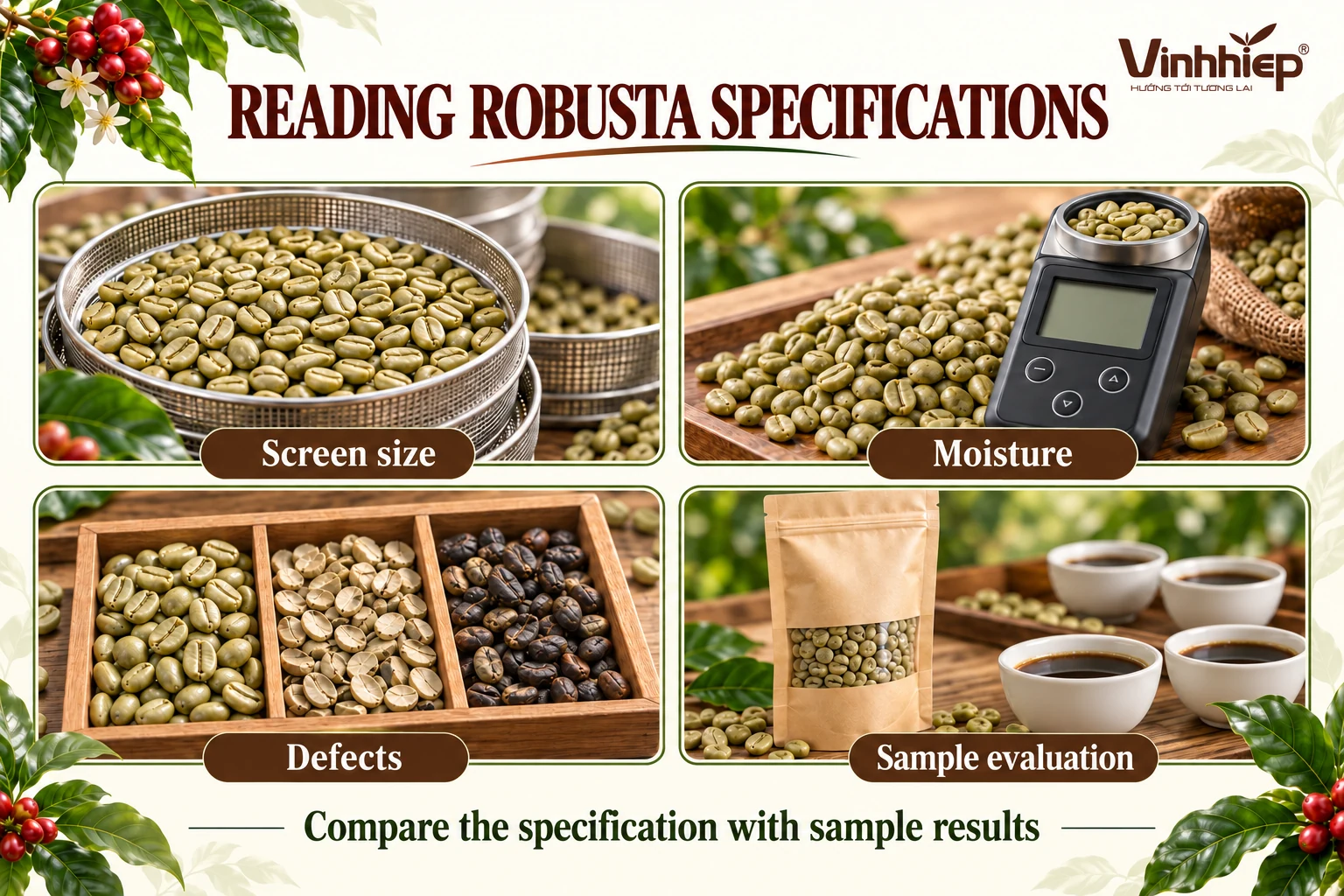
A maximum moisture value is a published limit, not a reading from every sample. When receiving a measured result, identify the sample or lot, test date and applicable method.
Black and broken beans may have individual limits or a combined allowance. Preserve the supplier’s definition. Do not turn a combined limit into two separate allowances, or add separate maxima and present the sum as an agreed condition.
Foreign matter also needs a defined unit and method. A name such as Clean is insufficient on its own; request the actual specification for that product.
If results differ, review the test portion, sample condition, equipment and procedure. Keep data linked to the reference and agree any additional checks through the responsible quality teams.
Compare the published grade examples
| Vinh Hiep product | Minimum screen retention | Maximum moisture | Black and broken beans | Maximum foreign matter |
|---|---|---|---|---|
| S18 Clean | Screen 18: 90% | 12.5% | Black 0.1%; broken 0.5%, separate maxima | 0.1% |
| S18 Standard | Screen 18: 90% | 12.5% | Combined maximum 2% | 0.5% |
| S13 Standard | Screen 13: 90% | 13% | Combined maximum 5% | 1% |
The source products are S18 Clean, S18 Standard and S13 Standard. Their English product links are used where an English equivalent is available.
The two S18 examples have the same stated screen retention and moisture maximum, with different defect and foreign-matter limits. Compare the entire row before price or sample selection.
S13 Standard has its own published limits. Suitability depends on the intended application and trial result. The table is not a universal ranking of grades and does not establish price, origin or available quantity.

Ask about processing separately
A processing name introduces how the material is described as having been handled. Ask for the description applying to the proposed product. Do not infer processing solely from screen size, colour or grade name.
When comparing processes, keep the description, product scope, reference and receipt date in the sample file. Then use suitable common assessment conditions. A process name does not guarantee a fixed flavour profile or preference.
State any special application and desired result plainly. A roaster seeking repeat consistency may ask different questions from one developing a new product line. The enquiry should reflect that need.
If marketing material and the sample response use different process descriptions, request confirmation of the applicable one. Do not combine information from separate products simply because both are Robusta.
Move from the specification to the trial
Choose the fields to be checked and how results will be retained. Record the sample code, type, reference specification and application. Ask whether it introduces a product or represents an offered lot.
Use the agreed procedure for physical checks and retain relevant conditions. Sample roasting needs a batch reference and enough data to explain the outcome. Sensory notes should distinguish observed characteristics from suitability for the application.
For blends, record the trial recipe and preparation factors under the buyer’s procedure. A coffee may suit one use and require a different approach for another. The conclusion should answer the application question established before testing.
Use the sample evaluation guide and sampling questions together. Give feedback by sample reference rather than only the product name.
Prepare a Robusta enquiry that can be answered
| Buyer field | What to describe |
|---|---|
| Product form | Green Robusta coffee |
| Application | Planned roasting or blending use |
| Grade interest | S13, S16 or S18, with advice requested if undecided |
| Quality | Mandatory limits and methods needing alignment |
| Origin | Geographic scope and supporting records required |
| Demand | Quantity, frequency and destination |
| Sample | Trial purpose, receiver and reference information |
Leave price, minimum order, availability and delivery timing for supplier confirmation. A brief with clearly marked questions is preferable to a complete-looking table built on assumptions.
Retain the specification version and confirmation date when a reply arrives. If a different grade is proposed, record why and evaluate that sample. The approver needs to know which product supports the decision.
Avoid common comparison errors
The first is using screen size alone. Without the other limits, a buyer cannot explain why two S18 quotations differ. The second is assuming that Clean or Standard means the same specification across every company.
The third is extending one sample result to an entire supply base. Identify what the sample represents and how it relates to the proposal. The fourth is combining sensory suitability with origin or certification, which need different evidence.
Finally, keep the test conditions. A short file containing code, method, result and decision is more useful than a long description without references.
Frequently asked questions
Is S18 always more suitable than S13?
Suitability depends on the application, all relevant limits and sample results. Screen size alone does not determine sensory performance or blending suitability.
Can Clean and Standard be substituted?
Compare the actual specifications and intended use. In these examples, the S18 products have different defect and foreign-matter limits despite sharing a screen reference.
Can physical specifications establish origin?
No. Origin needs relevant sourcing records linked with the product or lot. Keep the origin requirement separate from physical quality fields.
Does a website specification confirm an offered lot?
It provides a starting point. The parties need to confirm the specification, sample, records and terms applying to the proposed supply.
Discuss grades and samples with Vinh Hiep
Review the green coffee range, then send the application and fields above. For regional requirements, use the Gia Lai guide or Central Highlands guide. Contact Vinh Hiep to discuss the actual proposal.